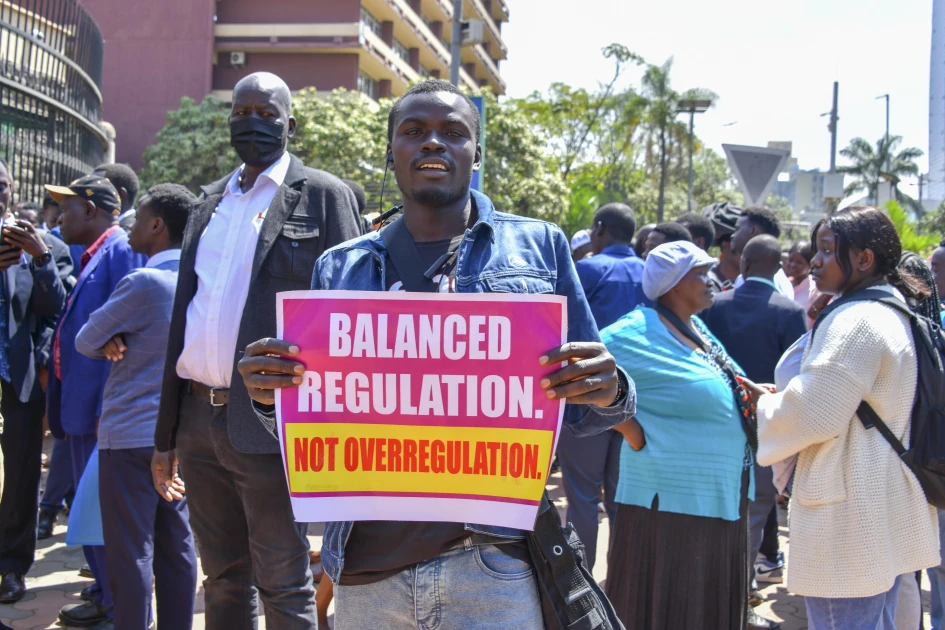
Stakeholders from Kenya's retail, harm reduction, and entertainment sectors have called for a review of the proposed Tobacco Control (Amendment) Bill, 2026. They expressed concerns that the legislation in its current form could fuel illicit trade, increase the cost of doing business, and negatively affect livelihoods. The stakeholders were speaking in Nairobi on the sidelines of a public participation exercise on the Bill hosted by the National Assembly's Committee on Health.
The stakeholders, including the Retail Trade Association of Kenya (Retrak) and the Pubs, Entertainment and Restaurants Association of Kenya (PERAK), urged lawmakers to adopt a balanced and evidence-based approach. They support efforts to reduce the harmful effects of tobacco use and strengthen regulatory oversight but caution that some proposed amendments may create unintended market distortions. These distortions could benefit illegal operators at the expense of compliant businesses.
According to Retrak CEO Wambui Mbarire, overly restrictive measures and heightened compliance costs could pressure small and medium-sized enterprises. These businesses are already grappling with rising operational expenses. The increased regulatory burden may force some businesses to scale down operations, potentially affecting jobs and reducing revenues generated through legal trade. Mbarire noted that an additional license for selling tobacco products would complicate the business environment and defeat the purpose of a unified business permit.
The Pubs, Entertainment and Restaurants Association of Kenya (PERAK) National Chairman, Michael Kiragu, echoed these sentiments. He expressed concern that punitive measures targeting legal businesses without corresponding investments in enforcement could embolden illicit trade networks. Kiragu argued that multiple licenses proposed by the Bill would overburden businesses by duplicating the licensing regime.
The Bars, Hotels and Liquor Traders Association of Kenya (BAHLITA) is challenging the proposal to ban flavors in tobacco products. BAHLITA Secretary-General Boniface Gachoka argued that such a move would open the market to illicit products, denying businesses and the government much-needed revenue. Gachoka also stated that banning flavors would expose consumers to unregulated products, as they would opt for illicit flavored products.
The stakeholders urged parliament to reconsider these issues to ensure the final law balances public health objectives with the need to protect legitimate businesses and employment opportunities. The National Assembly Committee on Health is holding public participation engagements on the Bill across several counties, including Nairobi, Uasin Gishu, Bungoma, Kisumu, Meru, Tharaka Nithi, and Laikipia.
The public participation engagements aim to gather input from various stakeholders before the House resumes sittings. The stakeholders' concerns will be considered as the Committee on Health reviews the Bill. The outcome of these engagements will shape the final legislation, which is expected to have a significant impact on the tobacco industry and public health in Kenya.
Key points
- Stakeholders urge lawmakers to adopt a balanced approach to the Tobacco Control (Amendment) Bill.
- Proposed amendments could fuel illicit trade and increase the cost of doing business.
- The Bill's impact on small and medium-sized enterprises and employment opportunities is a major concern.