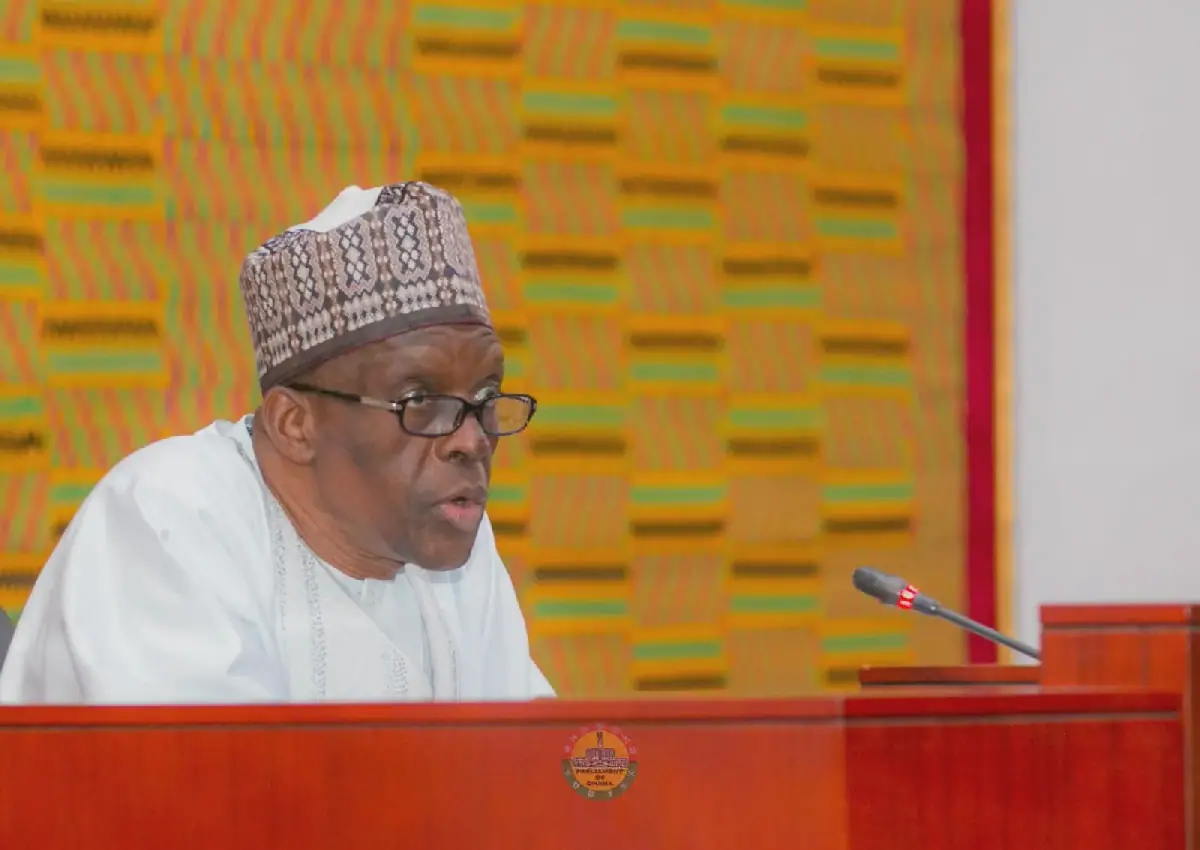
Speaker of Parliament Alban Bagbin has urged Members of Parliament to prioritize national interest over partisan politics in the constitutional review process. Addressing Parliament on November 3, 2026, he emphasized the need for lawmakers to demonstrate a willingness to accommodate differing views and engage in constructive dialogue. This, he believes, will ensure that the reforms serve the country's long-term interests. Bagbin's call comes as the country prepares to amend entrenched provisions of the 1992 Constitution.
The constitutional review process follows the work of an eight-member Constitution Review Committee, chaired by Professor H. Kwasi Prempeh. The committee was appointed by President John Mahama in January 2025 to examine the 1992 Constitution and propose reforms to strengthen Ghana's democratic governance. The committee presented its final report to the President in December 2025 after conducting nationwide consultations and engagements with various stakeholders.
The review committee's recommendations covered several areas of governance, including the separation of the Executive from the Legislature, presidential appointments, local government, and the length of the presidential term. Following Cabinet's consideration of the recommendations, the government published its position paper on July 30, 2026, outlining its response and proposed approach to implementing the reforms.
An 11-member Constitution Review Implementation Committee (CRIC) was inaugurated on August 28, 2026, to examine the government's position alongside the recommendations of the review committee and prepare the proposed constitutional amendments. The committee is expected to develop two amendment bills, one covering non-entrenched provisions and the other dealing with entrenched provisions of the Constitution.
While amendments to non-entrenched provisions require parliamentary approval by a two-thirds majority, changes to entrenched provisions must undergo a national referendum, in accordance with Article 290 of the Constitution. This process is crucial in ensuring that any reforms are thoroughly vetted and approved by the Ghanaian people.
The Speaker's call for consensus-building and accommodation of differing views is significant, as it highlights the need for MPs to put aside their partisan interests and work towards a common goal. This approach will help to build trust and ensure that the reforms are in the best interests of the country.
The constitutional review process is a critical exercise that has the potential to shape Ghana's democratic governance for years to come. As the process moves forward, it is essential that all stakeholders, including MPs, civil society organizations, and the general public, are engaged and informed. This will help to ensure that the reforms are comprehensive, inclusive, and beneficial to all Ghanaians.
Key points
- The Speaker of Parliament, Alban Bagbin, has urged MPs to prioritize national interest over partisan politics in the constitutional review process.
- The constitutional review process aims to strengthen Ghana's democratic governance and has covered several areas, including the separation of the Executive from the Legislature and presidential appointments.
- The proposed constitutional amendments will be developed into two amendment bills, one covering non-entrenched provisions and the other dealing with entrenched provisions of the Constitution.