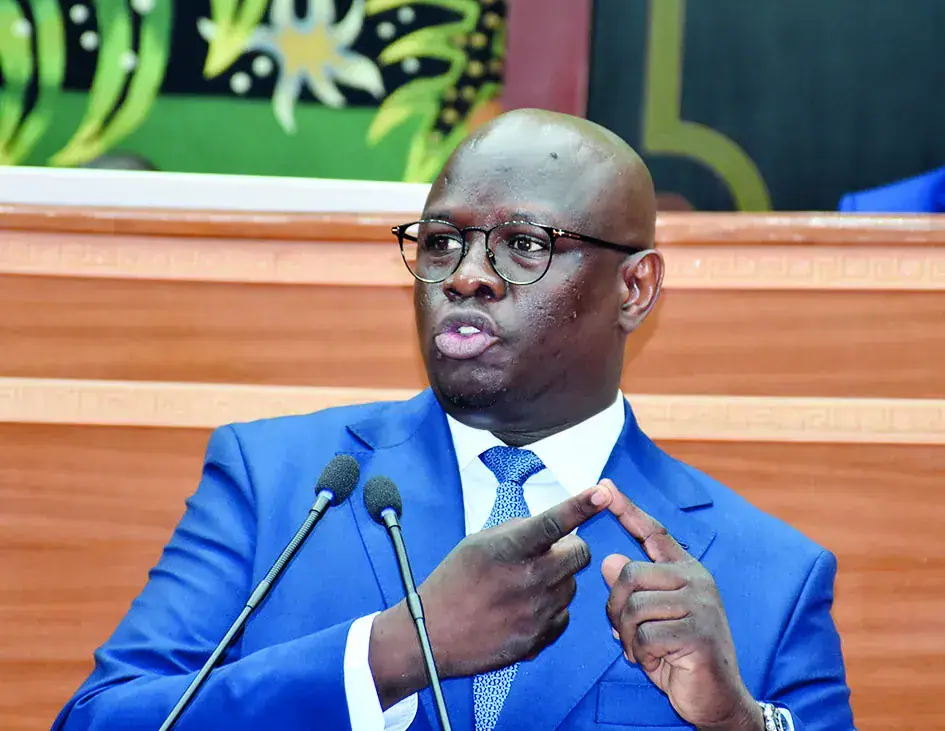
Tensions ran high in Senegal's National Assembly on Tuesday, March 3, as Finance Minister Cheikh Diba strongly responded to accusations of insincerity and amateurism from lawmakers. The confrontation came after parliamentarians voted 109 against the government's proposed 2026 supplementary budget, a historic setback for the administration. Diba defended the government's plans, citing the Constitution and the Organic Law on Finance Laws.
During his intervention, Diba repeatedly used the Wolof phrase "Thiakhane bakhoul" or "Enough of childishness!", describing the lawmakers' criticisms as sterile and politicized posturing. He emphasized that budget adjustments during the fiscal year were normal and in line with previous practices, such as in 2025. Diba's comments underscored the deep divisions between the executive and legislative branches.
The minister addressed concerns over revenue collection, revealing that 173.3 billion CFA francs had been collected by the end of September, falling short of the initial target of 762 billion CFA francs. However, he rejected suggestions of technical failure or inefficiency within his administration. Diba attributed the revenue shortfall to difficulties in collection rather than incompetence.
Diba also responded forcefully to personal attacks, pointing out the contradictions of his critics and highlighting his past collaborations with prominent figures such as former Prime Minister Ousmane Sonko and parliamentary session president El Hadji Malick Ndiaye. He questioned the motives of his detractors, suggesting they were driven by politics rather than a genuine interest in the country's financial well-being.
The rejection of the 2026 supplementary budget and Diba's subsequent defense of the government's plans have exposed a significant rift between the executive and legislative branches. This development comes at a challenging time for Senegal, with macroeconomic imbalances and social unrest adding to the pressure. The country's financial situation remains a pressing concern.
The National Assembly's decision to reject the budget has been seen as a significant blow to the government, with some lawmakers accusing the administration of insincerity and a lack of transparency. The development has sparked concerns about the potential impact on Senegal's economic stability and the government's ability to implement its policies.
The clash between Diba and the parliamentarians reflects broader tensions within Senegal's political landscape. The government's ability to navigate these challenges and find common ground with lawmakers will be crucial in determining the country's economic trajectory. The situation remains fluid, with ongoing debates about the budget and the government's financial plans.
Key points
- The Senegalese government faces significant challenges in navigating its economic policy, with tensions between the executive and legislative branches adding to the complexity.
- Finance Minister Cheikh Diba has strongly defended the government's budget plans, citing the Constitution and Organic Law on Finance Laws.
- The rejection of the 2026 supplementary budget has exposed deep divisions between the government and parliament, with implications for Senegal's economic stability.