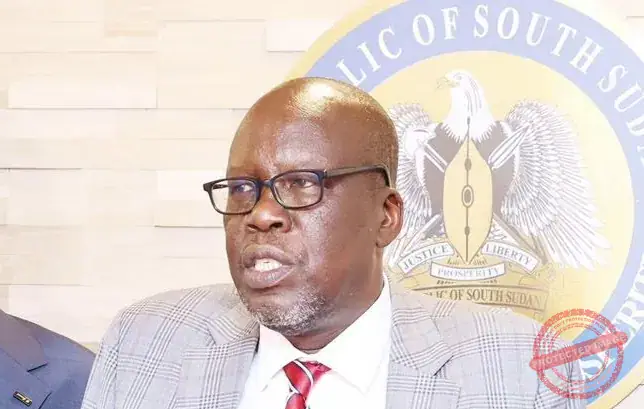
The South Sudanese government is facing a significant challenge in meeting the growing demand for university education. According to Dr. Kuyok Abol Kuyok, Caretaker Minister of General Education and Instruction, over 40,000 candidates are projected to qualify for university admission next year. This represents a substantial increase from the current number of 36,000 students who qualify annually. Dr. Kuyok made these remarks during the University of Juba's graduation ceremony.
The minister highlighted that the existing infrastructure of universities in South Sudan is already under pressure, and the current capacity of universities remains below demand. He emphasized that efforts to expand access to higher education should not compromise academic standards, research quality, or students' learning experiences. The minister's comments come as the country seeks to address inequalities in access to higher education.
Dr. Kuyok identified unreliable electricity and poor internet connectivity as major challenges to introducing blended and hybrid learning in universities. He also noted that public universities, which accommodate more than 80 percent of students nationwide, face significant financial constraints. These constraints make it difficult for universities to invest in infrastructure, equipment, research, and staff development.
To address these challenges, Dr. Kuyok called for the implementation of the Student Funding Bill, which was approved in 2023. He emphasized that financial difficulties should not prevent students, particularly those from disadvantaged backgrounds, from accessing university education. The minister also stressed the need to invest in postgraduate education and academic staff development to produce more qualified South Sudanese lecturers, professors, researchers, and specialists.
Dr. Kuyok welcomed President Salva Kiir's decision to establish new universities in Yei, Wau, Aweil, and the Defence sector. He believes that this move will help address inequalities in access to higher education across the country. The minister also called for stronger quality assurance and accreditation systems, urging the National Council for Higher Education to be adequately empowered and resourced.
The University of Juba's graduation ceremony, where Dr. Kuyok made these remarks, brought together diploma, bachelor's degree, postgraduate diploma, master's degree, and PhD graduates. The event marked a significant milestone for the graduates and the university. The minister's comments reflect the government's efforts to address the challenges facing the higher education sector in South Sudan.
Dr. Kuyok emphasized that expanding university access will require innovative approaches while maintaining academic excellence. He noted that the government must adopt new strategies to expand access to higher education while preserving excellence. The minister's call for innovative approaches reflects the need for the government to balance access and quality in the face of growing demand for university education.
Key points
- The government projects over 40,000 students will qualify for university admission next year.
- Existing university infrastructure is under pressure due to rising demand.
- The minister calls for innovative approaches to expand access to higher education while maintaining academic excellence.