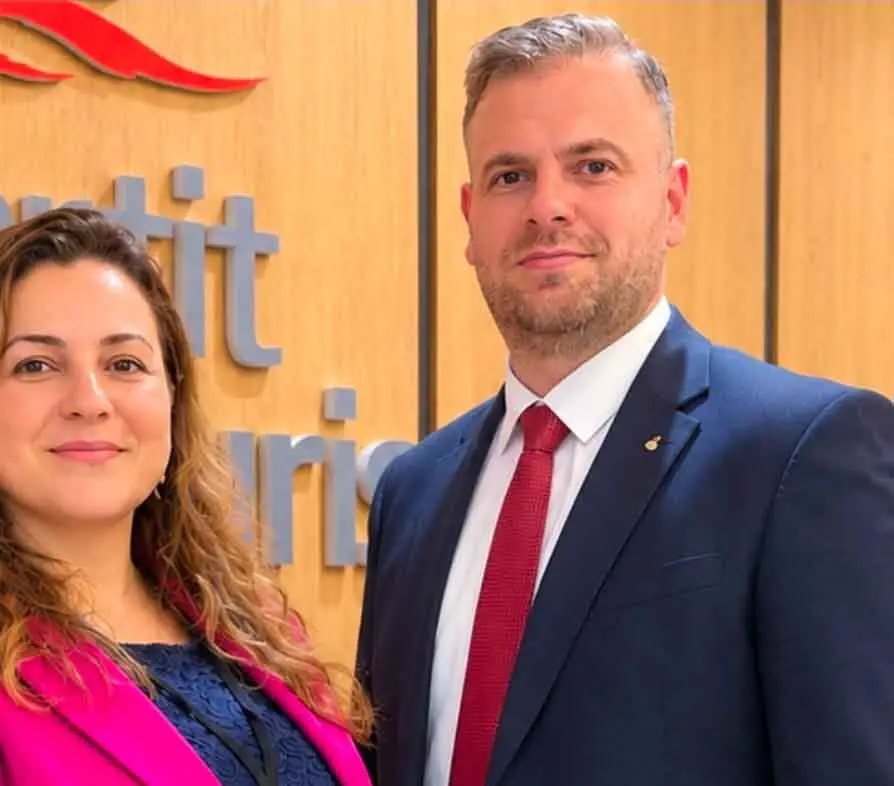
The capital city of Malta, Valletta, recently hosted a meeting of the Mediterranean Committee of the Socialist International. The event, which took place on November 21, 2026, brought together representatives from socialist and progressive parties in the region. The meeting was convened under the theme "The Mediterranean at the Crossroads of Geopolitical Tensions: A Progressive Path for the Future." Moroccan politician Fadoua Rajwani, a member of the Political Bureau of the Socialist Union of Popular Forces, represented the party at the meeting.
In her intervention, Rajwani highlighted the current political context in Morocco following the recent legislative elections. She emphasized the importance of the Socialist Union's participation in the government, alongside three other parties, as a demonstration of the party's commitment to assuming political and institutional responsibility. Rajwani stressed that the success of democracy is closely tied to its ability to protect rights and freedoms, reduce social and regional disparities, and promote trust in institutions.
The issue of the Moroccan Sahara was a significant focus of Rajwani's intervention. She emphasized that a lasting solution to the conflict requires a political approach under the auspices of the United Nations. The Moroccan initiative for autonomy was presented as a realistic and credible framework for achieving a permanent political solution. Rajwani also highlighted the importance of the UN Security Council's Resolution 2797, adopted on October 31, 2025, which recognized the Moroccan initiative as a basis for negotiations.
The Palestinian issue was another key topic addressed by Rajwani. She reaffirmed the Socialist Union's support for the legitimate rights of the Palestinian people to establish an independent state within the 1967 borders, with East Jerusalem as its capital. Rajwani emphasized the need to protect civilians, respect international humanitarian law, and implement relevant UN resolutions. She also stressed that sustainable security cannot be achieved under occupation or humiliation, and that the international community must defend human rights and dignity.
Climate change and its impacts on the Mediterranean region, particularly in the Sahel and Sahara areas, were also discussed by Rajwani. She highlighted the need for a comprehensive approach to address the interrelated challenges of poverty, economic fragility, and political instability. Rajwani called for a strategy that prioritizes peacebuilding, democratic governance, education, employment, and sustainable development.
The issue of migration was another key focus of Rajwani's intervention. She advocated for a more humane approach to addressing migration, recognizing the complex interplay of factors driving migration, including conflict, persecution, poverty, and environmental pressures. Rajwani emphasized the need for safe and legal migration channels, cooperation to combat human trafficking, and protection of migrants' rights.
On the sidelines of the meeting, Rajwani engaged in a bilateral discussion with John Grech, President of the Mediterranean Committee of the Socialist International. The conversation highlighted the importance of inter-party dialogue and parliamentary cooperation in promoting progressive policies and addressing regional challenges. The meeting in Malta holds significant political and historical importance, given the role of the Maltese Labour Party in the Mediterranean socialist movement.
Key points
- The success of democracy relies on protecting rights and freedoms.
- A lasting solution to the Moroccan Sahara conflict requires a political approach under the auspices of the United Nations.
- Climate change and migration are key challenges facing the Mediterranean region.