South Sudan's National Elections Commission announced on November 14, 2026, that it would postpone the country's December 2026 elections to February 11, 2027. The Commission cited the need for additional time to complete electoral preparations. However, confidential sources within South Sudan's National Security establishment alleged that the decision was influenced by external pressure and domestic political considerations.
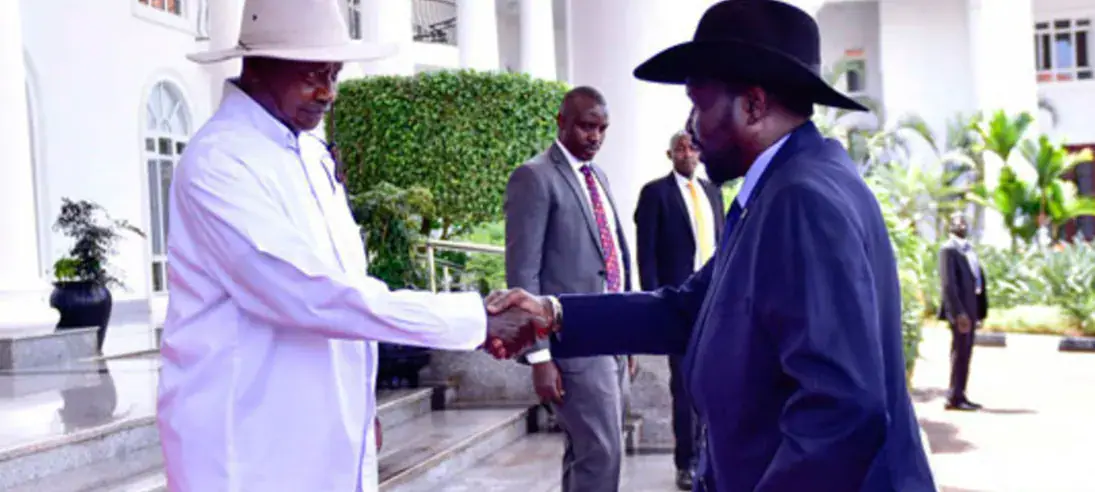
According to the sources, on November 11, 2026, two Ugandan nationals claiming to be members of the Uganda People's Defence Forces met with President Salva Kiir at his residence. They reportedly urged Kiir to suspend the December elections due to overwhelming international pressure. The sources suggest that these individuals were actually employees of Uganda's External Security Organisation.
The alleged encounter has raised questions about the influence of foreign security operatives on South Sudan's electoral process and the country's political independence. President Kiir reportedly disliked the suggestion but was reluctant to disregard the position of Uganda's President, Yoweri Museveni. Museveni had previously encouraged Kiir to proceed with elections in April 2026, despite external pressure.
The confidential sources also alleged that Museveni's operatives presented Kiir with two possible dates for the elections: February 11 or March 15, 2027. The February date was eventually adopted by the National Elections Commission. A senior Sudan People's Liberation Movement-In-Government official cautiously confirmed the accuracy of the information but declined to comment further.
The postponement has sparked concerns about the country's democratic legitimacy and the ability of its citizens to determine their own political future. The crisis goes beyond the government's failure to organize elections; it reveals how external political interference and domestic political dependency threaten the country's sovereignty.
In addition to external pressure, the sources described political maneuvering within Kiir's domestic political circle. Stephen Par Kuol, leader of the In-Opposition party faction, was allegedly encouraged by an aide to the National Elections Commission to reject further postponement and demand immediate elections.
The postponement of South Sudan's elections has raised fundamental questions about the country's democratic transition and the role of external actors in shaping its political future. The country's democratic crisis cannot be reduced to a disagreement over electoral calendars; it requires functioning institutions and meaningful public participation.
Key points
- The postponement of South Sudan's December 2026 elections to February 11, 2027, has raised concerns about external influence on the country's electoral process.
- Confidential sources alleged that Ugandan security operatives influenced President Salva Kiir's decision to postpone the elections.
- The crisis highlights the challenges facing South Sudan's democratic transition, including the need for functioning institutions and meaningful public participation.