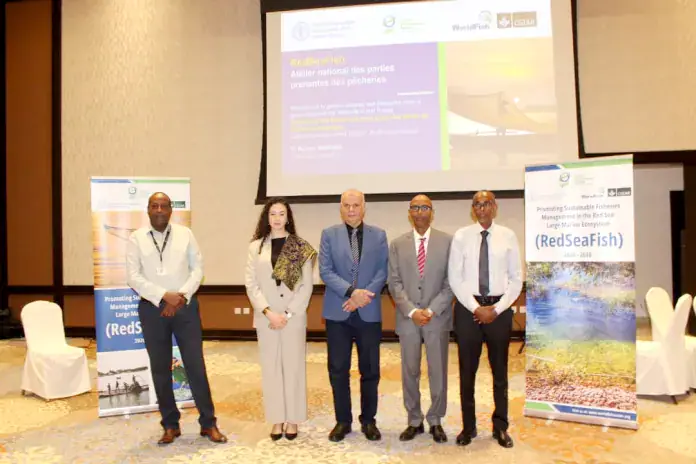
The Ministry of Agriculture, Water, Fisheries, Livestock, and Halieutic Resources in Djibouti recently launched a national workshop for stakeholders in the fisheries sector. The event, held at the Kempinski Palace Hotel, aims to promote sustainable management of halieutic resources and strengthen cooperation among six countries bordering the Red Sea. The workshop is part of the RedSeaFish regional project, funded by the Global Environment Facility (GEF).
The RedSeaFish project, implemented by the Food and Agriculture Organization (FAO) and executed by WorldFish and the Regional Fisheries Commission (RECOFI), brings together six countries: Djibouti, Egypt, Eritrea, Jordan, Sudan, and Yemen. The project's goal is to improve the management of shared fisheries resources in the Red Sea through a combination of regional cooperation and national interventions. This includes enhancing data and information systems, strengthening cooperation on shared resources, and developing national management plans.
The workshop in Djibouti is the second national exercise to be held under the RedSeaFish project, following a regional launch in Cairo in June and another event in Jordan. Over thirty participants from various institutions, research organizations, and professional fishing associations are attending the workshop. They aim to map out the national fisheries management system, identify responsible actors, and agree on a common vision for managing marine fisheries in Djibouti.
The approach adopted by the RedSeaFish project emphasizes participatory management, bringing together public institutions, researchers, and fishing industry professionals. This inclusive approach ensures that measures developed are adapted to local realities and can be effectively implemented. By combining scientific data with the experience of fishermen and sector agents, the project seeks to gain a comprehensive understanding of the resources and challenges faced.
During the workshop, participants will work to identify priority stocks and fisheries, as well as propose concrete actions for sustainable management. This includes addressing social, economic, legislative, and gender-sensitive dimensions. The exercise aims to strengthen the foundations of concerted governance of Djibouti's halieutic resources and contribute to responsible management of shared Red Sea marine resources.
In his opening remarks, Ibrahim Elmi Mohamed, Secretary General of the Ministry of Agriculture, Water, Fisheries, Livestock, and Halieutic Resources, emphasized Djibouti's strategic position on major maritime routes and the importance of halieutic resources for the country's economic development. He also thanked development partners, including WorldFish, for their commitment to sustainable fisheries development.
The RedSeaFish project runs until February 2030, focusing on four priority areas: improving fisheries data and information systems, enhancing cooperation on shared resources, strengthening national legislative frameworks and management plans, and sharing knowledge and raising awareness. The project's outcomes are expected to contribute to the sustainable management of Red Sea fisheries resources and support regional cooperation among bordering countries.
Key points
- The RedSeaFish project aims to strengthen cooperation among six Red Sea bordering countries to promote sustainable management of halieutic resources.