South Sudan is set to hold its first elections since gaining independence in 2011 on December 22nd. Despite being the world's youngest nation and having significant oil wealth, the country faces numerous challenges, including a tribalized political system that has led to a cycle of conflict and poverty. According to the UN's human development index, South Sudan ranks 193rd out of 193 countries.
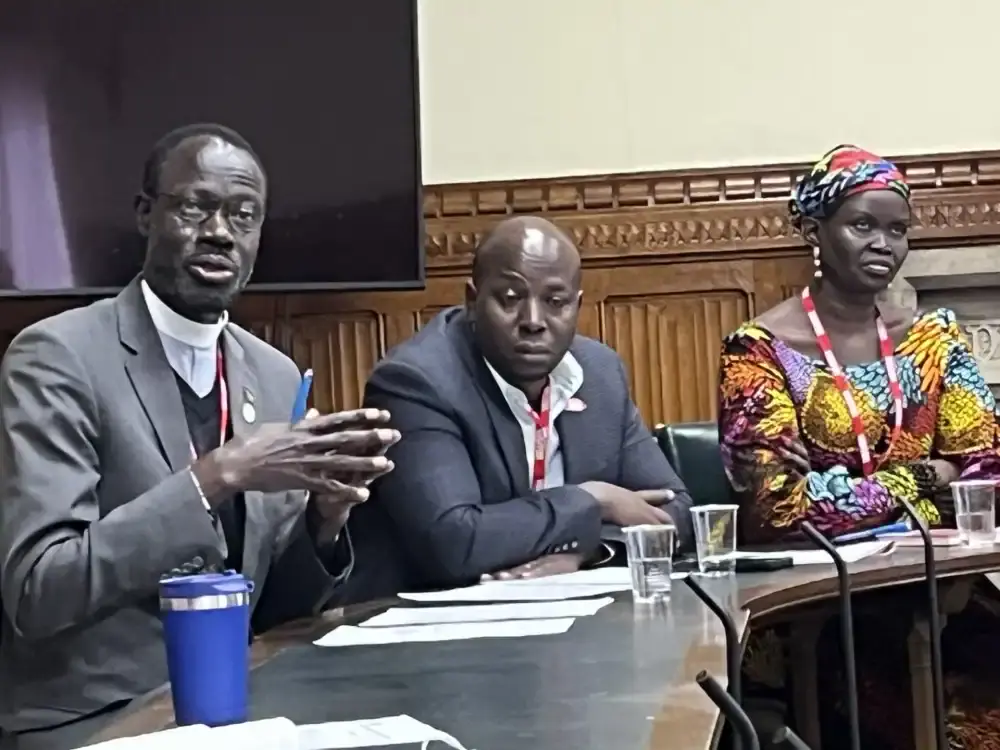
A delegation of civil society leaders from South Sudan recently visited London to lobby the UK government for support in their peace-building efforts and front-line aid work. The UK, as the former colonial power, has a significant role to play in helping the country address its challenges. At a meeting with British parliamentarians in Westminster, the delegation shared a message of hope and resilience from representatives of faith groups and NGOs.
The Reverend Tut Mai Nguoth told MPs that the South Sudan Council of Churches has played a crucial role in guiding successive peace processes and agreements, as well as providing essential services such as schools, clinics, and wells. The churches were instrumental in pushing for the Comprehensive Peace Agreement of 2005, which set South Sudan on the road to independence from Khartoum. They have continued to be central to numerous attempts to curtail conflict, including the civil war that resulted in an estimated 400,000 deaths.
Angelina Nyajima Jial of Hope Restoration South Sudan highlighted the humanitarian challenges facing the country, including the non-payment of salaries to teachers, doctors, and nurses for several months. Despite this, these civil servants continue to work, serving their communities. However, the reduction in international aid has had a direct impact on the number of girls being sent to school, as poverty increases and families prioritize educating their sons.
The challenges facing South Sudan have been exacerbated by the need to absorb 1.4 million returnees and Sudanese refugees fleeing the war to the north. This has put additional pressure on the country's resources, particularly in areas where conflict has prevented farmers from reaching their fields. The international aid community has also reduced its support, leading to a rise in child marriage and forced marriage as a consequence of poverty.
James Wani, Christian Aid's Programme & Partnership Lead in South Sudan, emphasized the need for the international community to look beyond the proposed elections in December and partner with the people of South Sudan for long-term peace and to build and strengthen governance mechanisms. He called for local civil society groups, women-led organizations, and faith actors to be at the center of a peaceful and democratic transition.
The UK government has cut its development aid to South Sudan by 39% from 2025-26 to 2026-27, which has raised concerns about the country's ability to address its humanitarian challenges. The international community must maintain pressure on the South Sudanese government and provide effective diplomatic partnership, global solidarity, and close collaboration with the C5, IGAD, and the AU to support conflict prevention and peace-building efforts.
Key points
- The South Sudan Council of Churches has played a crucial role in guiding peace processes and providing essential services.
- The reduction in international aid has had a direct impact on the number of girls being sent to school.
- The international community must partner with local civil society groups, women-led organizations, and faith actors to support a peaceful and democratic transition.