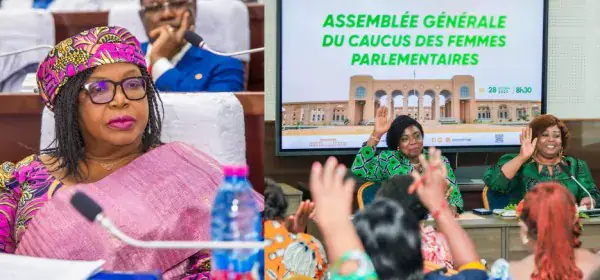
Togo's Deputy Brigitte Kafui Adjamagbo-Johnson, Secretary General of the opposition CDPA party, has publicly announced her refusal to take on the role of second vice-president of the Caucus des femmes parlementaires. In a statement released on October 31, 2026, Adjamagbo-Johnson explained that her decision was motivated by the fact that she was not consulted or given her consent for the designation.
Adjamagbo-Johnson emphasized that her choice to sit in the National Assembly was to combat the authoritarian system, disrespect for liberties, and anti-democratic practices that characterize the current regime. She views the Caucus's actions as another illustration of this system. As a committed feminist and democratic politician, she does not want to endorse practices she claims to be fighting against within the Togolese political system.
Adjamagbo-Johnson expressed her disapproval of the Caucus's functioning and role, particularly its silence on the arrests and detention of several Togolese women who were engaged in citizen and political activities. She cited cases of former Minister of Defense Marguerite Gnakadé, Leyla Mehiouwa Nambea-Tagba, Amavi Katanga, Grâce Bikoni Koumayi, Dora Dougbedji, and Chimène Akouvi Apevon, who experienced imprisonment, separation from their children, and deplorable detention conditions.
The Caucus des femmes parlementaires held its General Assembly on October 28, 2026, in Lomé, which resulted in the designation of a new leadership team presided over by Deputy Ibrahima Mémounatou. Established in 2011 within the National Assembly, the Caucus has developed a framework for dialogue, advocacy, and capacity building with the support of partners, including the United Nations Development Programme (UNDP).
The Caucus currently comprises 39 female parliamentarians, including 24 deputies and 15 senators. Adjamagbo-Johnson demanded that her name be immediately withdrawn from the composition of the Caucus and that any official communication presenting her as a member of the bureau be rectified. She discovered her name in the new bureau's composition through social media and the Caucus's communication platform.
Adjamagbo-Johnson described this approach as unacceptable and contrary to her democratic principles. She insisted that an organization aiming to defend women's rights must also be active in the face of individual freedoms and injustices. The Togolese MP therefore called for greater consistency in the actions of the Caucus des femmes parlementaires.
Adjamagbo-Johnson's decision not to occupy the second vice-president position has sparked debate within Togolese political circles. Her commitment to democratic values and women's rights has been highlighted, as has her willingness to challenge existing power structures. The Caucus des femmes parlementaires will need to address these concerns and redefine its role to effectively promote women's interests in Togo.
Key points
- Deputy Brigitte Kafui Adjamagbo-Johnson rejects Caucus des femmes parlementaires leadership role.
- Adjamagbo-Johnson cites lack of consultation and disagreement with Caucus's actions.
- The Caucus des femmes parlementaires currently comprises 39 female parliamentarians.