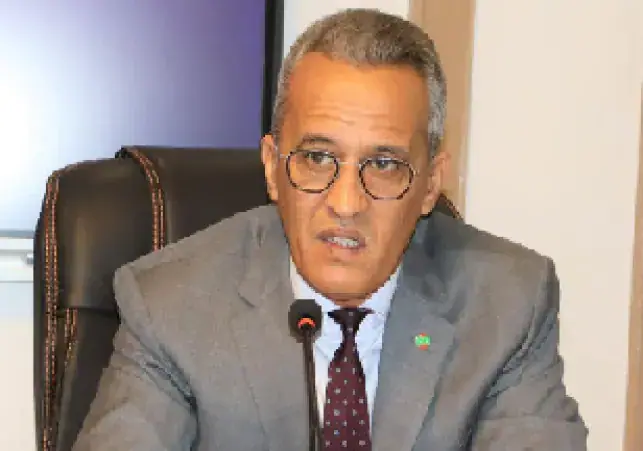
Mauritania's Interior Minister, Mokhtar Ould Ahmed Bouceif, recently chaired a meeting to assess the cleanliness situation in Nouakchott, the country's capital. The meeting also evaluated the performance of 'Arma', a subcontracting company responsible for maintaining the city's cleanliness. The minister expressed dissatisfaction with 'Arma's' performance, citing the company's failure to meet its commitments, including the persistent accumulation of waste and observed dysfunctions.
Minister Bouceif emphasized the need for 'Arma' to correct its dysfunctions by the end of December. In a move to enhance on-ground interventions, he decided to make 'Arma's' logistical means and equipment available to Nouakchott's walis, effective November 2. This decision aims to unify efforts and accelerate the removal of accumulated waste in the three wilayas of Nouakchott.
The minister also ordered the preparation of an emergency plan to remove waste from temporary dumps and activate all available dumps, rather than relying on a single one. Additionally, he instructed an assessment of the Tivirit sanitary landfill's condition and its readiness to operate. This comprehensive approach seeks to address the city's cleanliness crisis effectively.
Minister Bouceif stressed that alternatives to 'Arma' should be explored to ensure the continuity of cleanliness services in Nouakchott. He encouraged stakeholders to present practical proposals by the end of the week. A follow-up meeting is scheduled for November 8 to evaluate the results of interventions and discuss an integrated action plan to sustainably address the cleanliness crisis.
The meeting was attended by Minister Delegate Yacoub Ould Salem Fall and the three walis of Nouakchott. The minister's directives reflect the government's commitment to resolving the city's cleanliness issues. The involvement of multiple stakeholders, including local authorities and potential new service providers, is crucial to finding a lasting solution.
Nouakchott has faced significant challenges in maintaining cleanliness, affecting the city's aesthetic appeal and public health. The government's proactive measures, including the possible replacement of 'Arma', demonstrate its resolve to address these issues. The evaluation of 'Arma's' performance and exploration of alternatives are critical steps toward achieving a cleaner and healthier environment for Nouakchott's residents.
The situation in Nouakchott highlights the complexities of managing urban services in rapidly growing cities. Effective waste management is essential for maintaining public health and urban livability. As Mauritania's government navigates this challenge, the experiences and lessons learned from Nouakchott may inform broader urban development strategies across the country.
Key points
- The Mauritanian government is exploring alternatives to 'Arma' for maintaining Nouakchott's cleanliness due to the company's underperformance.
- Minister Bouceif has set a deadline for 'Arma' to correct its dysfunctions and has taken steps to enhance on-ground interventions.
- A follow-up meeting is scheduled to evaluate progress and discuss a long-term plan to address Nouakchott's cleanliness crisis.