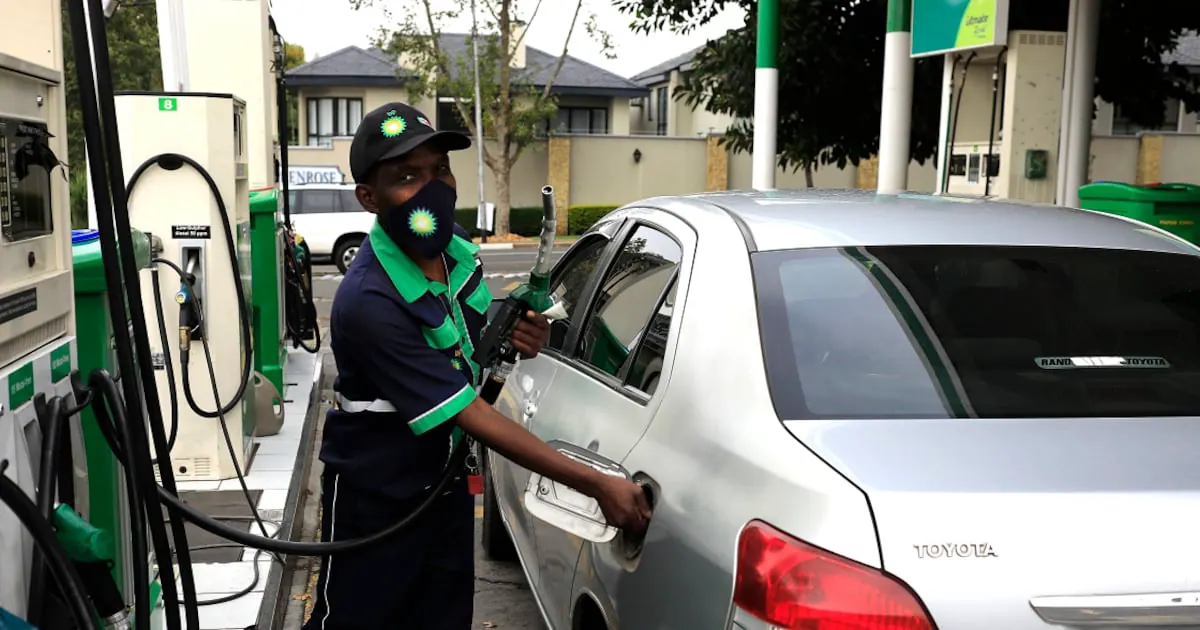
The recent fuel price increase has pushed inland 95-octane petrol to R30.25 a litre and 93-octane petrol to R29.88 a litre, effective from Wednesday. Filling a 50-litre tank with 95-octane petrol will now cost about R166.50 more. This increase will have far-reaching consequences, affecting not only motorists but also taxi fares, grocery bills, school transport, and delivery charges.
The timing of this fuel shock is particularly challenging, as the South African Reserve Bank's September rate increase lifted the policy rate to 7.25% and prime to 10.75%, making credit more expensive for households and businesses. With less disposable income, many households will be forced to cut spending on essential items such as food, electricity, education, and healthcare. Lower-income families will be hit hardest, as transport and food consume a larger share of their earnings.
The fuel price increase will also have a ripple effect on businesses, particularly small firms, which have limited room to maneuver. Hauliers, farmers, manufacturers, retailers, and service providers will face higher costs for financing their operations and moving workers, inputs, and goods. A truck consuming 4,000 liters of diesel a month could incur more than R12,000 in additional monthly fuel costs, depending on the grade.
The global energy market, reshaped by geopolitical risk, is a significant contributor to the fuel price increase. The Russian invasion of Ukraine in February 2022 led to a costly reordering of supply, and subsequent events, such as wars, refinery disruptions, and shipping risks, have added a geopolitical premium to energy prices. The latest Middle East escalation has pushed Brent crude above $100 a barrel, further exacerbating the situation.
A comparison with neighboring countries reveals that geography alone does not determine the final pump price. Botswana, Lesotho, and Eswatini, which source much of their fuel through South African refining, storage, pipeline, or road-distribution networks, have lower pump prices. Each government chooses its own mix of taxes, levies, regulated margins, subsidies, and price-stabilization mechanisms, allowing them to cushion consumers from steep increases.
The South African government retains policy choices to mitigate the impact of the fuel price increase. The pump price combines the basic fuel price with various levies, margins, and costs. While the government cannot control global events, it can decide how much of an exceptional external shock households and firms should absorb at once. A temporary, time-bound levy reduction, targeted assistance for public-transport users, and urgent reform of the Road Accident Fund could help alleviate the burden.
To prevent an extraordinary global shock from becoming a prolonged domestic cost-of-living crisis, the government should prioritize reliable rail freight and public transport, greater competition in fuel supply and storage, and investment in electric mobility and locally produced cleaner fuels. For now, recognizing the urgency of the moment and taking proactive measures can help mitigate the impact of the fuel price increase on households and businesses.
Key points
- The fuel price increase will erode household incomes and weaken South Africa's fragile recovery.
- The government retains policy choices to mitigate the impact of the fuel price increase.
- South Africa's exposure to global oil price shocks can be reduced through investment in alternative energy sources and infrastructure.