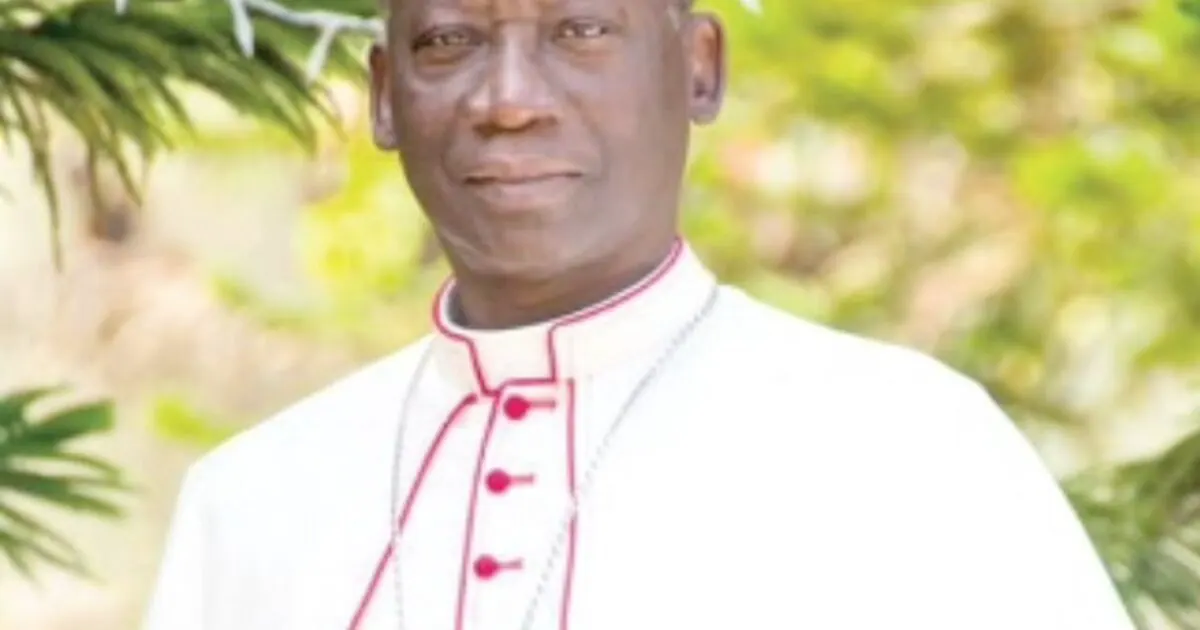
Catholic Bishop Kwasi Gyamfi has defended the Catholic Church's involvement in national issues, stating that its interventions are driven by a responsibility to protect human dignity. According to him, the Church's mandate extends beyond spiritual matters to include moral issues and matters affecting the well-being of the human person. Bishop Gyamfi made these comments in an interview with Joy News' Gemma Appiah.
Bishop Gyamfi explained that the Church considers the human person sacred and therefore has a responsibility to speak against issues it believes dehumanize people or undermine their dignity. He rejected suggestions that such interventions amount to the Church entering the political arena, stating that the Church's focus is on enhancing the human person. Bishop Gyamfi acknowledged that some of the issues raised by the Church may be viewed as political by others, but said the Church considers them matters of human development and community welfare.
The Catholic Church has called for qualified Catholic students to have access to Catholic schools, a demand that Bishop Gyamfi said should not be interpreted as a quota system. He explained that Catholic schools were established to provide academic and skills training alongside moral and spiritual formation. According to him, skills training alone or academic excellence alone is not enough for the human person.
Bishop Gyamfi emphasized that Catholic schools remain open to people of other faiths who share their values, but stressed that this should not result in the dilution of the Catholic character and purpose of the institutions. He maintained that qualified Catholic students who choose Catholic schools should have the opportunity to attend them because of the specific formation the Church seeks to provide.
According to Bishop Gyamfi, preventing qualified Catholic students from accessing Catholic schools could undermine the purpose for which the Catholic Church established them. He also pointed to the Church's investment in establishing many of the schools before the state assumed responsibility for paying teachers' salaries. Bishop Gyamfi stressed that the schools were established with a distinct educational philosophy that combines academic excellence with human, moral and spiritual formation.
Bishop Gyamfi further cited the history of formal education in Ghana, noting that missionary groups, including the Presbyterians, Methodists and Catholics, played a major role in establishing formal education before government became involved. He stated that the fact that the state pays salaries of teachers does not make the schools state schools, but rather institutions with a unique educational approach.
The Catholic Church's involvement in national issues has been a longstanding practice, with the Church playing a significant role in Ghana's development. President Mahama has commended the Catholic Church for its role in Ghana's development, and the Church has also been involved in initiatives such as the Agenda 111 hospitals project. Bishop Gyamfi's comments highlight the Church's commitment to promoting human dignity and well-being in Ghana.
Key points
- The Catholic Church has a responsibility to speak on issues affecting human dignity
- Qualified Catholic students should have access to Catholic schools
- Catholic schools provide academic and moral formation alongside skills training