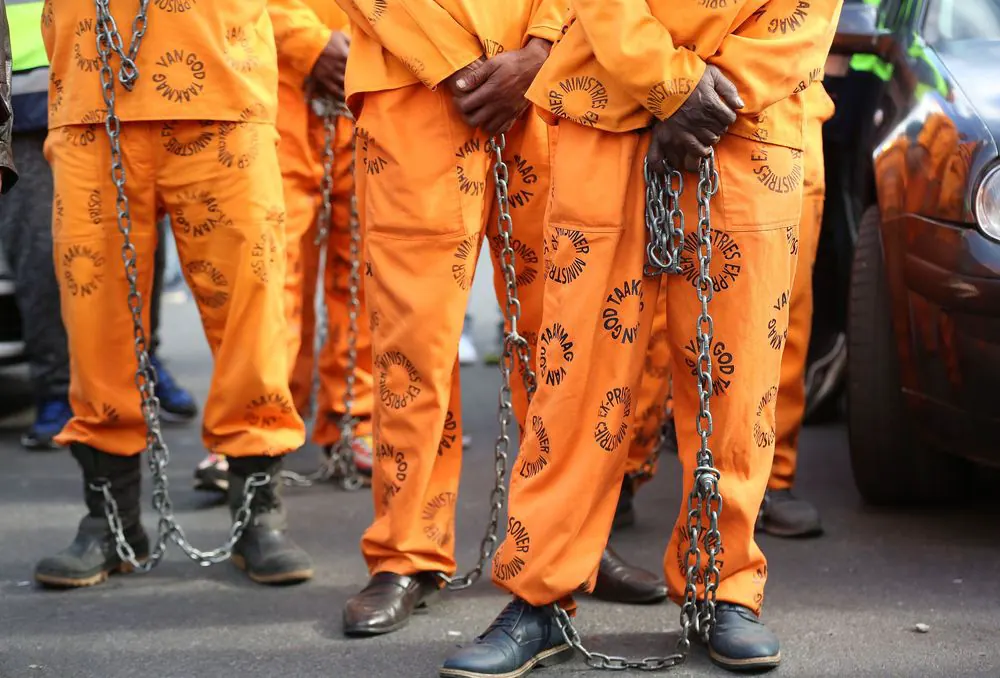
South Africa's prisons have become a breeding ground for gangs and criminal activity, according to Correctional Services Commissioner Makgothi Thobakgale. He warned that imprisonment does not necessarily sever criminals' links to the outside world or bring their criminal ambitions to an end. Thobakgale made these comments before the Madlanga Commission, highlighting the need for a comprehensive overhaul of the criminal justice system.
The problem of overcrowding was identified as a major contributor to the prisons crisis. Chairperson of the portfolio committee, Kgomotso Ramolobeng, said that severe overcrowding, critical understaffing, and outdated security technology create power vacuums that organised gangs exploit. Contraband smuggling, enabled by compromised officials, allows criminal syndicates to continue operations behind bars.
The Department of Correctional Services has no control over overcrowding, as they must house inmates referred to them via the criminal justice system. Ramolobeng also identified vetting backlogs as another problem, saying delays in security clearances left vulnerable staff exposed. She called for the streamlining of internal disciplinary processes and immediate referral of criminal cases to the police.
The DA's Janho Engelbrecht said the entire criminal justice system needs a redesign as it is "hugely dysfunctional". He highlighted overspending and budget shortfalls among other challenges, saying the department was sitting "with a lot" of funded vacancies on paper, but there was no money in the bank to pay those officials. Engelbrecht also pointed out that the overcrowding crisis is caused by a tremendous amount of remand detainees.
The EFF's Carl Niehaus blamed the country's intelligence services for failing to provide enough intelligence on how gangs operate and the identities of their imprisoned leadership. He said that without that picture, raids remain episodic, disciplinary cases remain individual, and the syndicate itself is never dismantled. Niehaus also highlighted the failure to hold officials to account, saying implicated officials are often protected by their colleagues.
Correctional Services Minister Pieter Groenewald reported that the latest overcrowding rate was 62% as correctional facilities accommodated 173 955 people. The department had about 107 100 bed spaces. In 2001, a commission led by Judge Thabani Jali was established to investigate allegations of corruption, maladministration, violence, and intimidation within the Department of Correctional Services.
The commission found widespread systemic failures, corruption, and human rights violations inside South African prisons. To address these issues, there is a need for a comprehensive overhaul of the criminal justice system, including addressing overcrowding, understaffing, and corruption. The redesign of the entire South African criminal justice system is necessary to fix the systemic problems that can't be fixed.
Key points
- Overcrowding and understaffing in South African prisons have created a breeding ground for gangs and criminal activity.
- The entire criminal justice system needs a redesign to address the systemic problems that have led to the prisons crisis.
- Intelligence services have failed to provide enough information on gang operations and leadership, hindering efforts to dismantle syndicates.