The recent local government elections in South Africa have sparked intense debate about the nature of political parties, particularly with regards to their racial and ideological leanings. The Concerned South Africans Group, formed in 1992, is cited as an example of a group that camouflaged its demand for a whites-only Afrikaner Volkstaat under the guise of "federalism" and "self-determination". This historical context has led to renewed discussions about what constitutes a "black party" and a "leftist" ideology.
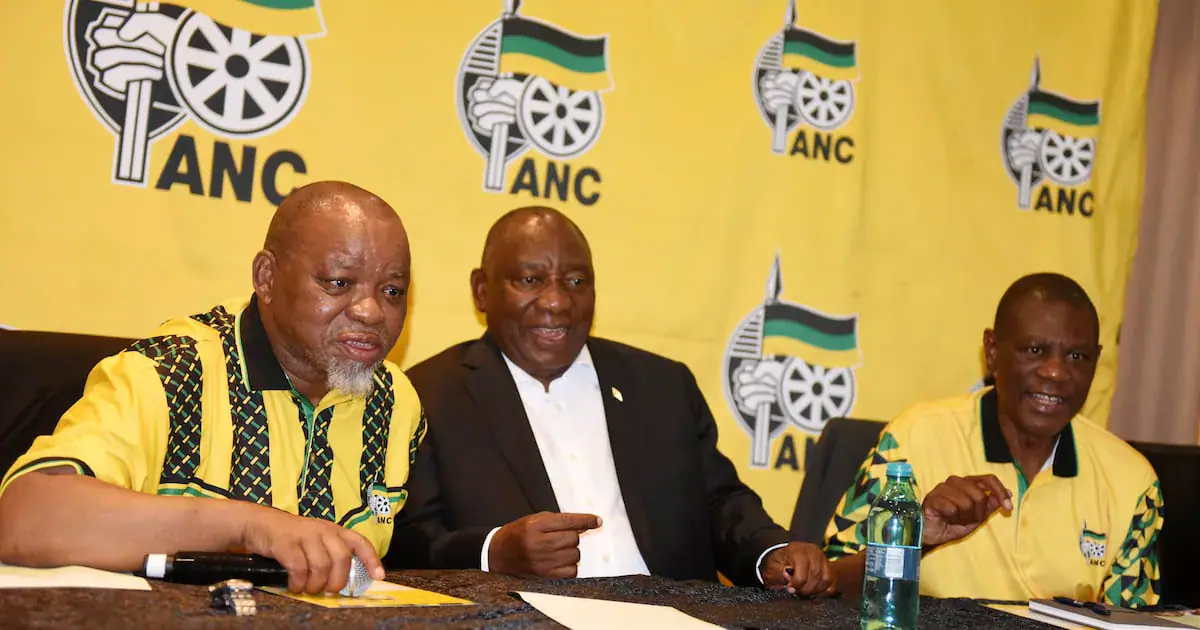
The term "black parties" has gained popularity in response to the electoral outcome, which saw the consolidation of the white vote under the Democratic Alliance (DA) umbrella and the splintering of the black electorate into smaller, regionalized entities. The African National Congress's (ANC) share of the vote dramatically dropped to around 30%, close to the DA's 26%. This shift has sparked panic among some quarters, who fear that South Africa may become the first country to surrender to its former colonizers after attaining freedom.
EFF leader Julius Malema and MK Party counterpart Jacob Zuma are calling for "black parties" to unite and work together to prevent a potential white president by 2029. Malema stated that the opportunity to unite before losing the country to white supremacy must be taken. However, there is no consensus within the ANC on whether it is a "black party", despite its predominantly black membership and stated objectives to liberate Africans and blacks.
The ANC has consistently defined itself as a "non-racial" organization, as stated in its 1955 Freedom Charter, which declared that "South Africa belongs to all who live in it, black and white". This self-definition has led to a breakaway by Africanists to form the Pan Africanist Congress (PAC) in 1959. The ANC's leadership is weighing the pros and cons of extending the Government of National Unity arrangement to hung metro councils and municipalities against entering into a new deal with the EFF, MKP, and other "black parties".
Some ANC leaders warn against forging new coalitions based mainly on race, citing an exchange between Walter Sisulu and apartheid judge Quartus de Wet during the 1963 Rivonia Trial. Sisulu stated that the "only solution in South Africa is living together as black and white", and that the ANC does not advocate for black domination. This historical context has led to questions about what the demand for democracy and majority rule truly means.
As the ANC's dominance diminishes and the prospects of a DA-led government at national level seem more realistic, citizens may have to redefine what they meant by democracy and majority rule. The question remains whether it means rule by a "black party" and "black president" or by whoever garners the most votes, regardless of race. This shift in the political landscape has significant implications for South Africa's future.
The debate surrounding "black parties" and "leftist" ideologies is likely to continue, with various stakeholders weighing in on the implications of these labels. As the country navigates its complex political landscape, one thing is certain – the conversation around what constitutes a "black party" and a "leftist" ideology is far from over. The ANC's national executive committee meeting is expected to discuss the postmortem on the local government elections and the way forward.
Key points
- The ANC's self-definition as a "non-racial" organization has led to tensions with those who advocate for a "black party" label.
- The recent electoral outcomes have sparked a renewed debate about what constitutes a "black party" and a "leftist" ideology.
- The call for "black parties" to unite and work together has gained momentum, with EFF leader Julius Malema and MK Party counterpart Jacob Zuma leading the charge.