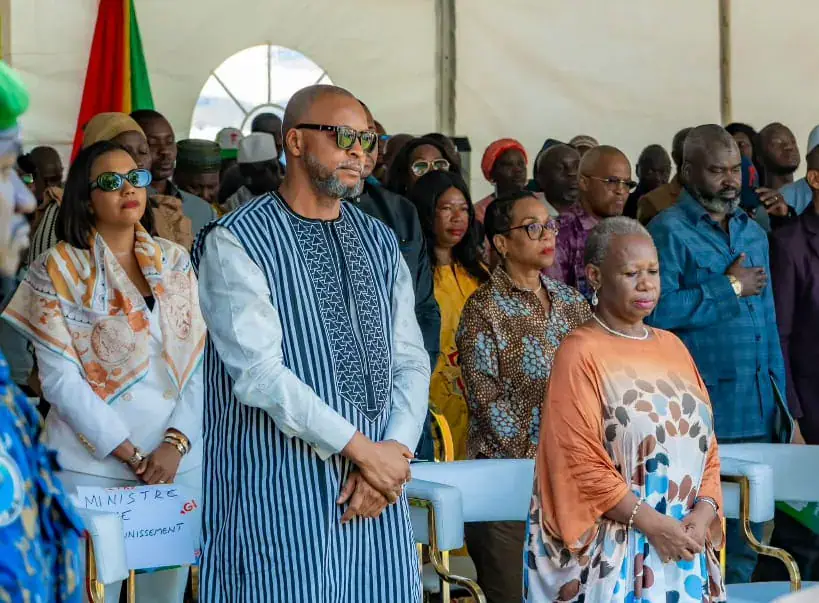
The Guinean government has initiated a program called "École propre, quartier exemplaire" (Clean School, Exemplary Neighborhood) to promote cleanliness and hygiene in schools. The program was launched on November 16, 2026, at Elhadj Oumar 1 primary school in Hafia, Dixinn commune. The six-month pilot program targets 100 schools, with 70 in Conakry and 30 in other parts of the country. The program aims to educate students about the importance of cleanliness and involve them in maintaining the hygiene of their schools.
The program includes the installation of trash cans, handwashing points, and the rehabilitation of toilets. Students will be organized into school governments to monitor the cleanliness of their schools and raise awareness among their families and neighborhoods. Minister of Sanitation, Hydraulics, and Hydrocarbons, Aboubacar Camara, emphasized that changing behavior and habits is crucial to addressing the issue of cleanliness. He noted that the program seeks to educate students about proper waste management and hygiene practices.
Minister Aboubacar Camara highlighted the severity of the sanitation problem in Conakry, with approximately 3,000 tons of waste generated daily. He stated that 41% of this waste is due to improper disposal and incivicism. The minister announced that participating schools will be evaluated monthly, and the best-performing schools will be rewarded. He encouraged students to become ambassadors of cleanliness in their homes and communities.
Minister of National Education, Bintou Keïta, emphasized the importance of hygiene in schools, stating that a clean school is a prerequisite for learning. She called on parents to reinforce the lessons learned at school at home, encouraging them to support their children in developing good hygiene habits. Keïta stressed that the health and hygiene of children should be a priority.
The representative of UNICEF in Guinea, Maddalena Bertolotti, reaffirmed the organization's commitment to supporting the government's efforts to improve sanitation and hygiene in schools. She emphasized that a clean school is not just one without waste but also one that provides students with access to clean water, toilets, and a healthy environment.
During the ceremony, the director of Elhadj Oumar 1 primary school, Condé Kerfala, highlighted the school's needs, including the reconstruction of its fence, latrines, and water point. The mayor of Dixinn, Aïssata Soumah, called on the government to address the shortage of school infrastructure in Hafia, particularly the lack of a public high school.
The pilot program aims to make schools learning spaces for citizenship, with plans to gradually expand the initiative to the entire country. The program is a collaboration between the Ministry of Sanitation, Education, and Youth. Authorities hope that by educating students about cleanliness and hygiene, they can change behaviors and habits and create a cleaner Guinea.
Key points
- The program targets 100 schools and aims to educate students about the importance of cleanliness and hygiene.
- The program includes the installation of trash cans, handwashing points, and the rehabilitation of toilets.
- The program seeks to involve students in maintaining the hygiene of their schools and raise awareness among their families and neighborhoods.