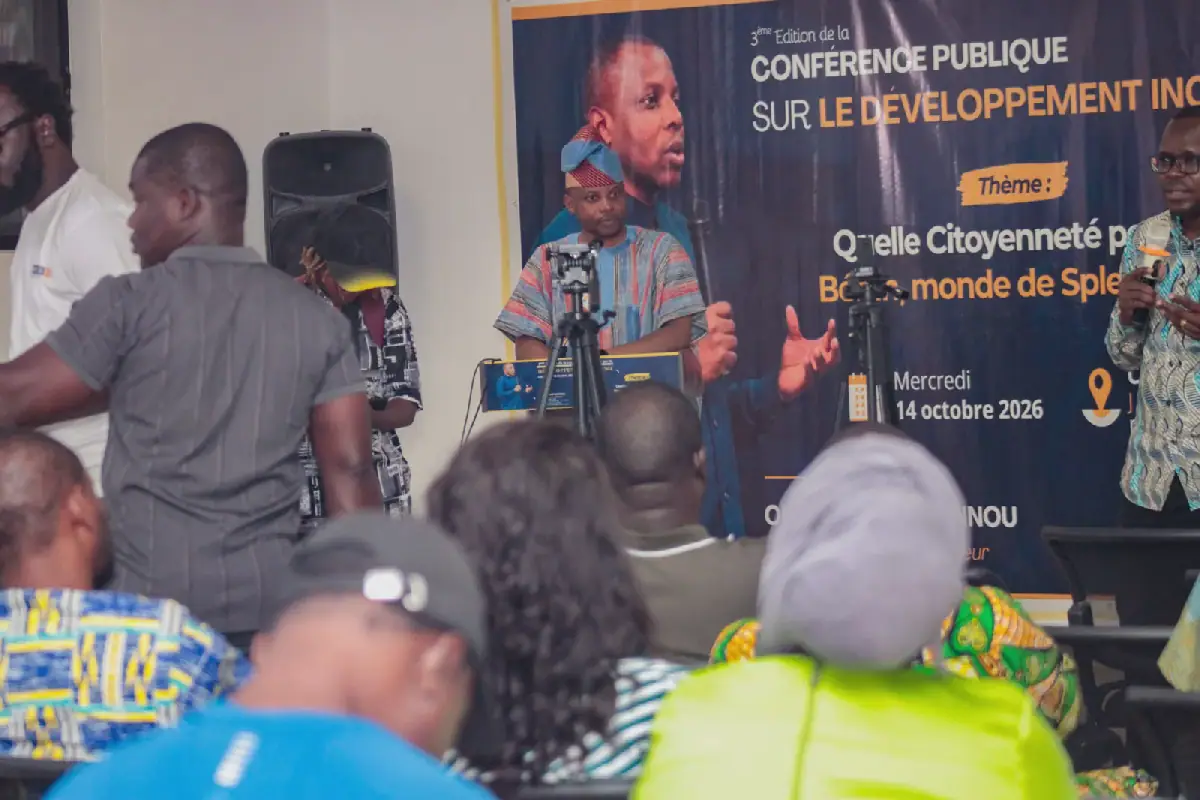
On October 14, the third edition of the public conference on inclusive development was held in Cotonou, Benin. The conference, initiated by Olivier Noukpokinnou, an expert in human capital development, focused on the theme "What Citizenship for a Benin, World of Splendors?" Noukpokinnou emphasized the need for responsible citizenship to drive the country's development. He denounced certain practices that undermine solidarity and hinder development, such as the diversion of school scholarships and undue commissions in public markets.
Noukpokinnou stressed that citizenship goes beyond rights and duties towards the nation, but also involves daily behaviors, individual integrity, and the ability to contribute to the common good. He criticized practices that prioritize individual interests over solidarity, citing examples of immoral behaviors in various sectors, including healthcare. The expert argued that such behaviors are unjust and should not be tolerated in society. He called for a transformation of behaviors, emphasizing the need to improve relationships with money and to prioritize integrity in professional competence and civic responsibility.
According to Noukpokinnou, the fight against poverty cannot succeed without addressing the practices that erode trust and divert resources meant for the community. He proposed four institutional mechanisms to strengthen integrity, civic engagement, and citizen participation. These include the creation of an Agency for the Promotion of Volunteering and Civic Engagement, an Agency for the Promotion of Citizen Participation and Local Economic Development, a Presidential Unit for the Moralization of Public Life, and a National Fund for the Development of Youth and Childhood.
The proposed Agency for the Promotion of Volunteering and Civic Engagement would aim to promote national service, integration, and positive citizenship. The Agency for the Promotion of Citizen Participation and Local Economic Development would focus on encouraging citizen involvement in public management, supporting local initiatives, and promoting diaspora investments. The Presidential Unit for the Moralization of Public Life would handle complaints, support victims, and conduct awareness-raising actions, particularly against corruption.
Noukpokinnou's proposals aim to promote a culture of responsible citizenship and integrity in Benin. He emphasized that the development of the country depends on collective engagement and a policy of zero tolerance against practices that hinder inclusive development. The expert's vision aligns with the goal of achieving a "Benin, world of splendors" by 2060. He encouraged citizens to adopt values of work, discipline, and ethics, and to prioritize the common good.
The conference provided a platform for participants to reflect on the requirements of responsible citizenship and its role in driving Benin's development. Noukpokinnou's message resonated with the audience, who acknowledged the need for a cultural shift towards integrity and civic responsibility. The expert's call to action emphasizes the need for collective responsibility in promoting development and achieving the country's vision.
The Benin government's adoption of policies and mechanisms to promote responsible citizenship and integrity will be crucial in driving the country's development. The implementation of Noukpokinnou's proposals will require collaboration between citizens, civil society, and government institutions. The outcome will depend on the collective commitment to promoting a culture of responsible citizenship and integrity in Benin.
Key points
- Expert Olivier Noukpokinnou calls for responsible citizenship to drive Benin's development.
- Noukpokinnou proposes four institutional mechanisms to strengthen integrity, civic engagement, and citizen participation.
- The development of Benin depends on collective engagement and a policy of zero tolerance against practices that hinder inclusive development.