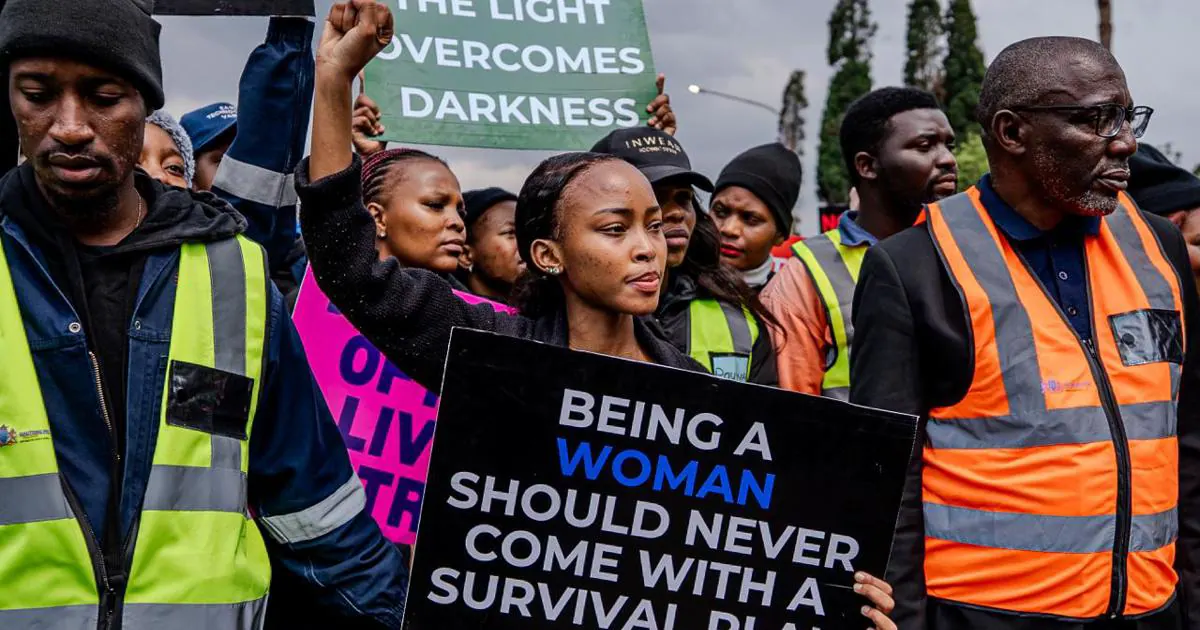
The South African government has been lambasted in Parliament for its failure to reduce attacks on women in the country. Members of Parliament have stated that while there are strategic plans in place, they are not leading to action nor yielding tangible results. This criticism comes as the country grapples with a high rate of gender-based violence and femicide.
The National Assembly debate on gender-based violence was held just hours before President Cyril Ramaphosa's address to the nation on the steps being taken to confront the issue. The debate highlighted the chronic underfunding of institutions meant to keep society safe, as well as cultural norms and patriarchy as major contributors to the way women are being treated. Many parliamentarians pointed to the need for more resources to bolster law enforcement agencies.
The Democratic Alliance's parliamentary leader, George Michalakis, expressed concern over the lack of police resources to protect women. He emphasized that men need to set an example to stop the chain of abuse by teaching young boys to respect and protect women. Michalakis argued that unless societal norms are changed, boys will continue to be raised with anger and resentment.
ActionSA's Kgosi Letlape, who lost his daughter to her partner in 2024, stressed that it is not enough for men to raise their boys well. He argued that societal structures, including traditions, religious institutions, and cultural norms, need to be changed to address the disrespect towards women. Letlape's sentiments were echoed by other parliamentarians who emphasized the need for a multifaceted approach to address gender-based violence.
Deputy Police Minister Polly Boshielo expressed concern over police officers being embroiled in sexual violence cases. The case of suspended deputy national police commissioner Shadrack Sibiya, who appeared in court on charges of raping a teenager, was cited as an example. Boshielo emphasized the need for police officers to be held accountable for their actions.
The debate also touched on the issue of the death penalty for perpetrators of violence against women. The African Christian Democratic Party and the African Transformation Movement called for capital punishment, but Deputy Justice Minister Andries Nel ruled out the proposal as unrealistic and populist. Minister for Women, Youth and People with Disabilities Sindisiwe Chikunga rejected assertions that the government's strategic plan is not leading to interventions.
The chairperson of the Portfolio Committee on Women, Liezl van der Merwe, emphasized the need for measurable success of the government's plans and more dedicated funding to implement them. She argued that South Africa is not short of legislation and plans, but rather real resources, action, and commitment. The government has recently established a Gender Based Violence Council, which has been directed to draft a budgeted action plan to give effect to the national strategic plan on GBV.
Key points
- The South African government has been criticized for its failure to reduce attacks on women, despite having strategic plans in place.
- Parliamentarians have called for more resources to bolster law enforcement agencies and address the root causes of gender-based violence.
- The government has established a Gender Based Violence Council to draft a budgeted action plan to address the issue.