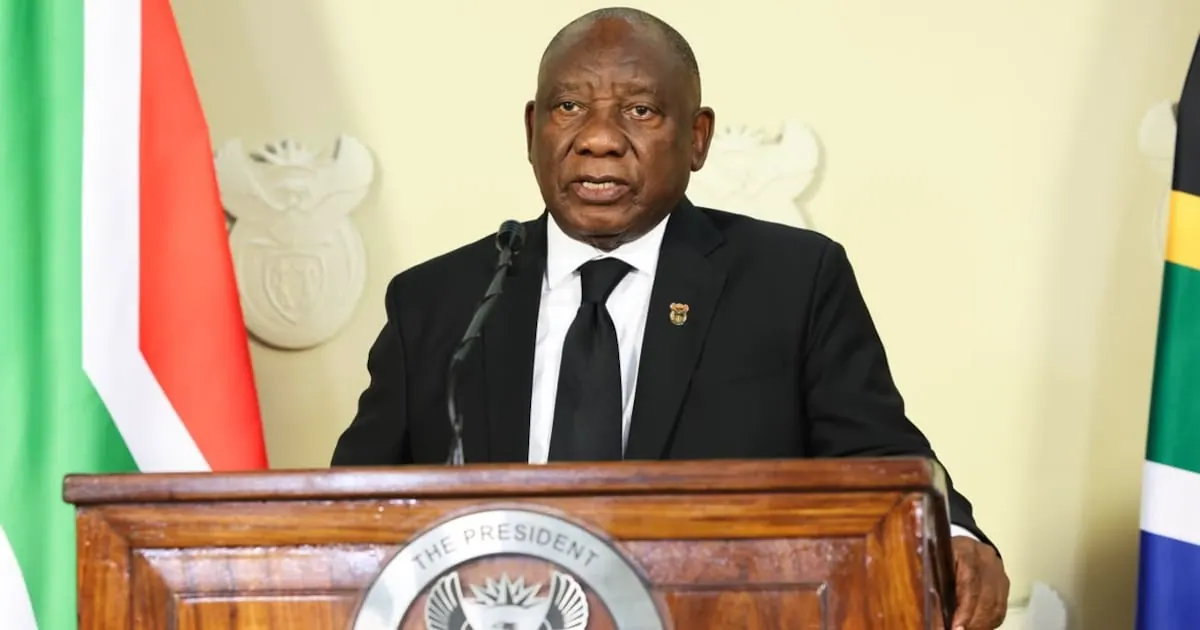
President Cyril Ramaphosa's recent address on gender-based violence and femicide has been met with criticism from opposition parties in South Africa. The criticism comes after a string of discoveries of women's bodies in Ekurhuleni and surrounding areas. Ramaphosa announced an emergency response and a four-point plan to combat GBVF, which includes municipal safety audits and a national recovery operation for unresolved sexual offences.
The Democratic Alliance (DA) has demanded immediate action, not promises, to curb the escalating GBV crisis. DA leader Geordin Hill-Lewis stated that women need to feel safe and that it's time for consequences for those who commit GBV crimes. He emphasized that Ramaphosa has made several emergency responses in the past without tangible progress, highlighting a gap between government announcements and the daily reality women face.
The Economic Freedom Fighters (EFF) labelled Ramaphosa's address as "yet another belated intervention" from a government that has long understood the crisis but consistently failed to act. The EFF stated that South Africa does not lack information about GBVF but suffers from a failure of political will, institutional capacity, and accountability. The party urged the administration to account for the failure of existing interventions and the high number of unsolved cases.
ActionSA leader Herman Mashaba described Ramaphosa's address as "a little too late," leaving women and children dangerously exposed. Mashaba raised concerns about the lack of resources at police stations and inadequate victim support services. He warned that Ramaphosa's new plan will yield few results unless systemic flaws are fixed, and the government addresses institutional failures that allow cases to be lost and investigations to stall.
The ATM Joburg mayoral candidate, Vuyo Zungula, demanded a concrete framework to ensure the newly announced measures are enforced. Zungula stated that South Africans need a clear implementation framework with identified budgets, responsible institutions, deadlines, measurable targets, and regular public reporting. He also called for the government to account for the money already allocated to GBVF and demonstrate what has worked and what has failed.
The opposition parties' criticism of Ramaphosa's GBV plan highlights the need for tangible actions to address the crisis. The DA, EFF, and ATM have emphasized the importance of implementation, accountability, and a clear framework to ensure the effectiveness of the new plan. The government is expected to provide more details on the plan's implementation and how it will address the systemic flaws that have hindered previous interventions.
The discovery of the 11th woman's body in Springs on Sunday has further intensified the debate on GBVF in South Africa. The opposition parties' criticism of Ramaphosa's plan is a call to action for the government to take concrete steps to address the crisis and ensure women's safety. The government will be under pressure to demonstrate its commitment to implementing the new plan and providing the necessary resources to support its effectiveness.
Key points
- The opposition parties' criticism of Ramaphosa's GBV plan highlights the need for tangible actions to address the crisis.
- The government is expected to provide more details on the plan's implementation and how it will address systemic flaws.
- The opposition parties have emphasized the importance of implementation, accountability, and a clear framework to ensure the effectiveness of the new plan.