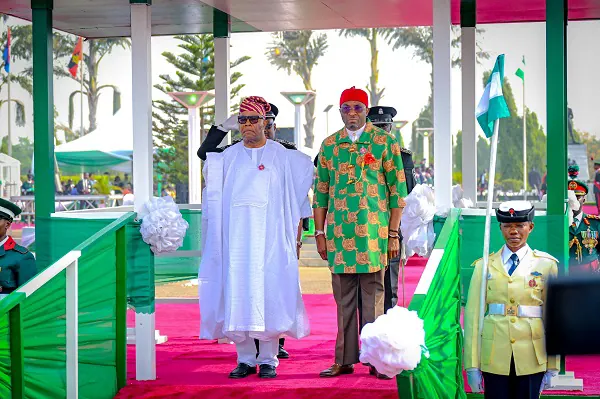
The Supreme Court of Nigeria has delivered a unanimous judgment upholding the Electoral Act 2026, thereby vindicating the National Assembly's efforts to amend the electoral law. The court's decision, delivered on September 24, 2026, by a seven-member panel led by Justice Adamu Jauro, dismissed the appeal filed by the Zenith Labour Party (ZLP) and restored Sections 77(5), 77(6), 77(7), and 84(2) of the Electoral Act 2026. This ruling has been hailed as a significant milestone in Nigeria's democratic journey.
The Electoral Act 2026 has been a subject of controversy, with various stakeholders debating its provisions. The ZLP had challenged the amendment, arguing that it encroached on the internal affairs of political parties. However, the Supreme Court's judgment has clarified that the provisions in question are not inconsistent with the 1999 Constitution. The court held that the National Assembly has the legislative competence to make laws on electoral matters, including the regulation of party primaries and conventions.
The provisions in question, Sections 77(5), 77(6), 77(7), and 84(2), have been designed to promote transparency and accountability in party primaries and conventions. Section 77(5) requires that only members whose names are contained in the register submitted to the Independent National Electoral Commission (INEC) at least 21 days before a primary, congress, or convention can vote or be voted for. Section 84(2) provides for direct primaries or consensus as a means of selecting candidates.
The judgment has been welcomed by many as a vindication of the National Assembly's efforts to deepen democracy in Nigeria. The Senate President, Senator Godswill Akpabio, and the Deputy Speaker of the House of Representatives, Rt. Hon. Benjamin Okezie Kalu, who chaired the Committees of the Whole in their respective chambers, have been commended for their leadership and commitment to the amendment. Their efforts have been seen as a significant step towards promoting transparency and accountability in Nigeria's electoral process.
The Committee of the Whole, chaired by the Deputy Speaker and the Senate President, played a crucial role in the amendment process. This committee is responsible for considering and debating the report of every committee, standing or ad hoc, after public hearings. It is also responsible for clause-by-clause consideration, where technical conflicts are resolved, and constitutional landmines are detected and defused.
The Supreme Court's judgment has also highlighted the importance of the Committee of the Whole in the legislative process. The committee's chairman must possess deep knowledge of Nigerian laws, especially constitutional law, to navigate the complexities of lawmaking. The chairman must also be conscious of extant laws to avoid conflicts and ensure that the legislation is consistent with the Constitution.
The judgment has been seen as a significant milestone in Nigeria's democratic journey, with many stakeholders hailing it as a victory for democracy. The Supreme Court's decision has provided clarity on the National Assembly's legislative competence and has paved the way for the implementation of the Electoral Act 2026. The court's decision has also underscored the importance of the National Assembly's role in promoting transparency and accountability in Nigeria's electoral process.
Key points
- The Supreme Court's judgment has upheld the Electoral Act 2026, vindicating the National Assembly's efforts to deepen democracy in Nigeria.