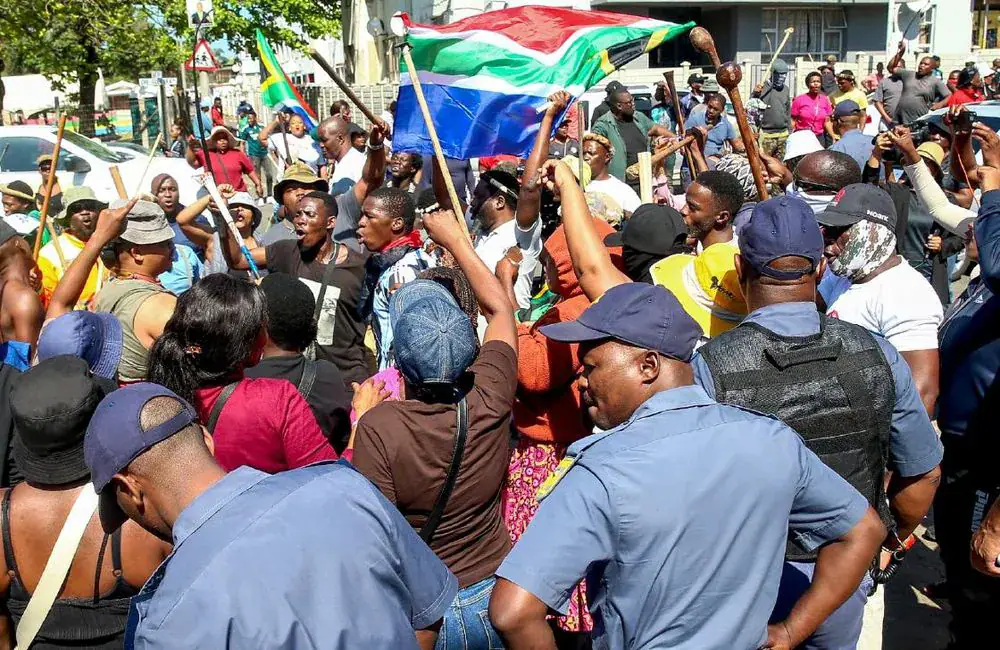
The Durban High Court has made a ruling regarding protests by the March and March organization, which is campaigning against illegal immigrants. The court has banned the use of vuvuzelas and face coverings during the protests. This decision was made in response to an application by the South African Police Service (SAPS) to restrict the protests. The protests are set to take place in the lead-up to the municipal elections on November 4.
The March and March organization had planned to protest against what they claim is the influx of undocumented immigrants in the country. However, the court has ruled that while the organization is allowed to protest, certain conditions must be met. The use of vuvuzelas, which are traditional South African horns, and face coverings has been prohibited. The court also specified that protesters will only be allowed to march during certain hours, from 9am to 3pm.
The decision was made by Judge Peter Olsen, who questioned why individuals carrying vuvuzelas during protests had not been arrested by the police, given that their use is already prohibited. The SAPS had argued that the restrictions were necessary to ensure public safety and to prevent the protests from becoming violent. The police had issued a statement indicating that they were not opposed to the protests, but that they had to be conducted in a manner that allowed for the maintenance of public safety.
General Fannie Masemola, the Provincial Commissioner of Police in KwaZulu-Natal, addressed a media briefing in Durban, emphasizing the importance of understanding that the police are not opposed to the protests, but that they must be conducted in a way that allows for the management of public safety. The police had expressed concerns that the use of vuvuzelas and face coverings could lead to public disturbances and undermine the safety of both protesters and bystanders.
The March and March organization has been vocal in its opposition to what it claims is the growing presence of undocumented immigrants in South Africa. The organization's protests have been widely reported in the media, with some arguing that they are fuelling xenophobic tensions in the country. The protests are set to take place in various parts of the country, including Durban, which is one of the largest cities in KwaZulu-Natal.
The municipal elections, which are set to take place on November 4, have been marked by a heightened sense of tension and controversy. Several parties have expressed concerns about the potential for violence and intimidation during the elections, and the police have been placed on high alert. The ban on vuvuzelas and face coverings is seen as a move to prevent the escalation of violence and to ensure that the protests remain peaceful.
The court's decision has been welcomed by some, who argue that it will help to prevent the escalation of violence and ensure public safety during the protests. Others have expressed concerns that the restrictions on the protests could undermine the rights of citizens to express themselves and to protest against issues that affect them. The March and March organization has not yet commented on the court's decision, but it is expected to continue with its protests in the coming weeks.
Key points
- The use of vuvuzelas and face coverings has been prohibited during protests by the March and March organization.
- The protests are set to take place in the lead-up to the municipal elections on November 4.
- The court's decision was made in response to an application by the South African Police Service (SAPS) to restrict the protests.