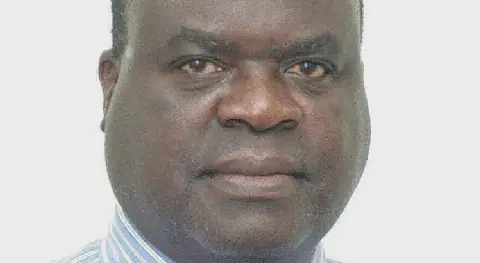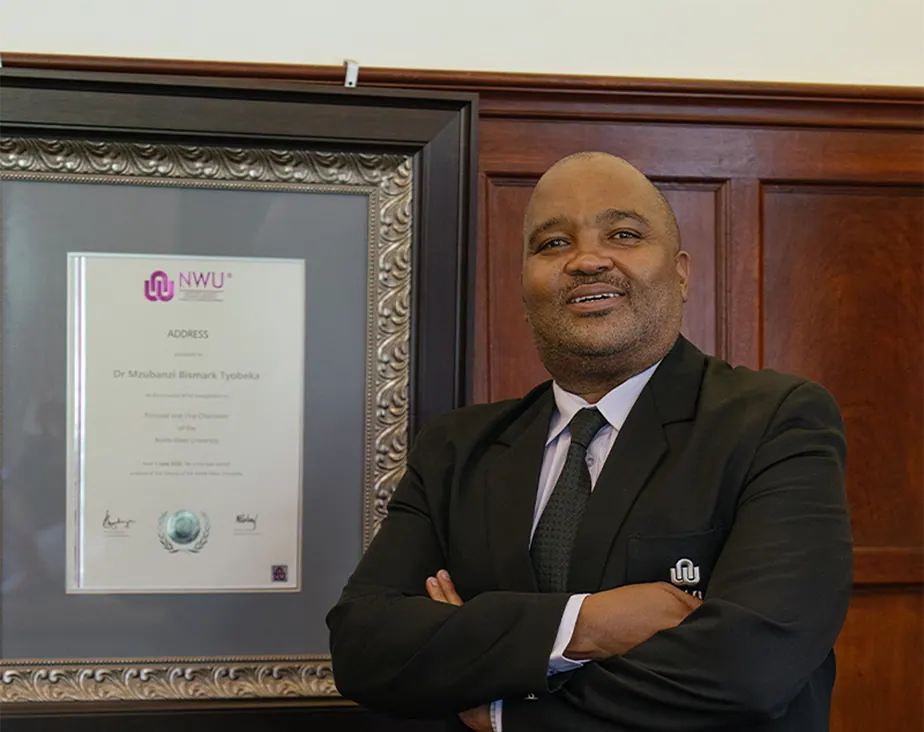
South Africa's ability to repair infrastructure, strengthen its economy, and make scientific progress begins with its young people. However, they can only achieve this if they acquire the necessary knowledge, skills, and self-confidence to experience science, technology, engineering, and mathematics as opportunities rather than obstacles. According to Prof. Bismark Tyobeka, Vice-Chancellor of the North West University (NWU), the country needs to have an honest national conversation about education in STEM subjects.
The challenges facing South Africa extend far beyond the classroom. The country's water and sanitation services are deteriorating, electricity supply is unreliable, transportation infrastructure is weakening, and municipal technical skills are limited. To address these problems, the country needs people with the right training and skills over the long term. The consequences are particularly significant for young people, as they will inherit these challenges and must help build a stronger and more sustainable South Africa.
South Africa's education outcomes reveal the magnitude of this challenge. The Progress in International Reading Literacy Study (PIRLS) published in 2021 ranked South African grade 4 learners with an average reading score of 288, significantly below the international midpoint of 500. Only 19% of South African learners reached the low international benchmark. The 2023 Trends in International Mathematics and Science Study (TIMSS) showed similar results in mathematics and science.
The NWU is helping to spark interest in STEM through its annual Vice-Chancellor's Science Day, held in rural communities such as Mabeskraal, Taung, Kuruman, and Wolmaransstad. The program brings learners into direct contact with scientists, researchers, and industry experts. Through demonstrations, exhibitions, and conversations, learners discover how science works, where it is applied, and which STEM careers they can consider.
Prof. Tyobeka's call ultimately revolves around shared responsibility. The government, schools, universities, businesses, organized labor, professional bodies, and communities must all contribute to shaping South Africa's STEM future. This collective effort must have clear goals, responsibilities, and achievable deadlines, with transparent reporting on progress.
The country's education system is not developing these skills on the necessary scale. South Africa has a strong higher education sector, with its universities occupying the top seven spots in the QS Sub-Saharan Africa University Rankings 2026. However, weak and unequal basic education determines who will succeed long before matriculation. Universities cannot solve this problem alone; learners must be exposed to STEM at a young age.
Young people must be part of the conversation and their dreams, experiences, and voices must be included in the national dialogue. A generation empowered by STEM can create the knowledge, ideas, and leadership required for the country's infrastructure, services, and economy. For the NWU, this is how purposefulness leads to impact: by connecting education with opportunities, bringing science closer to communities, and helping young people see their role in shaping the country's future.
Key points
- South Africa needs an honest national conversation about education in STEM subjects.
- The country requires a complete STEM system, including stronger schools, well-trained teachers, and modern infrastructure.
- Young people must be part of the national dialogue on STEM education.