South Africa's private sector purchasing managers index (PMI) slipped back into negative territory in September, registering 49, down from 50.5 in August. This decline marks the fastest rate of contraction since December 2025, driven by a significant drop in new orders and increased costs. The PMI, a composite gauge of operating conditions for private businesses, reflects the challenges faced by companies in the country.
According to David Owen, principal economist at S&P Global Market Intelligence, the downturn in September was largely influenced by a sharp rise in fuel prices across the South African economy. This increase was the main driver of higher purchase costs, with purchase price inflation reaching its highest level since June. The surge in fuel prices is expected to continue, with domestic fuel prices set to jump even higher from Wednesday.
The government announced on Monday that consumers will pay R3.12 more for 93-grade petrol and R3.33 more for 95-grade petrol, reaching a record high of R30.25 in Gauteng. The wholesale cost of diesel will also increase, climbing to R2.84 and R3.24 for 0.05% sulphur grade and 0.005% sulphur grade, respectively. As a net importer of crude oil and finished petroleum products, South Africa has endured steep fuel price increases since April due to global market volatility.
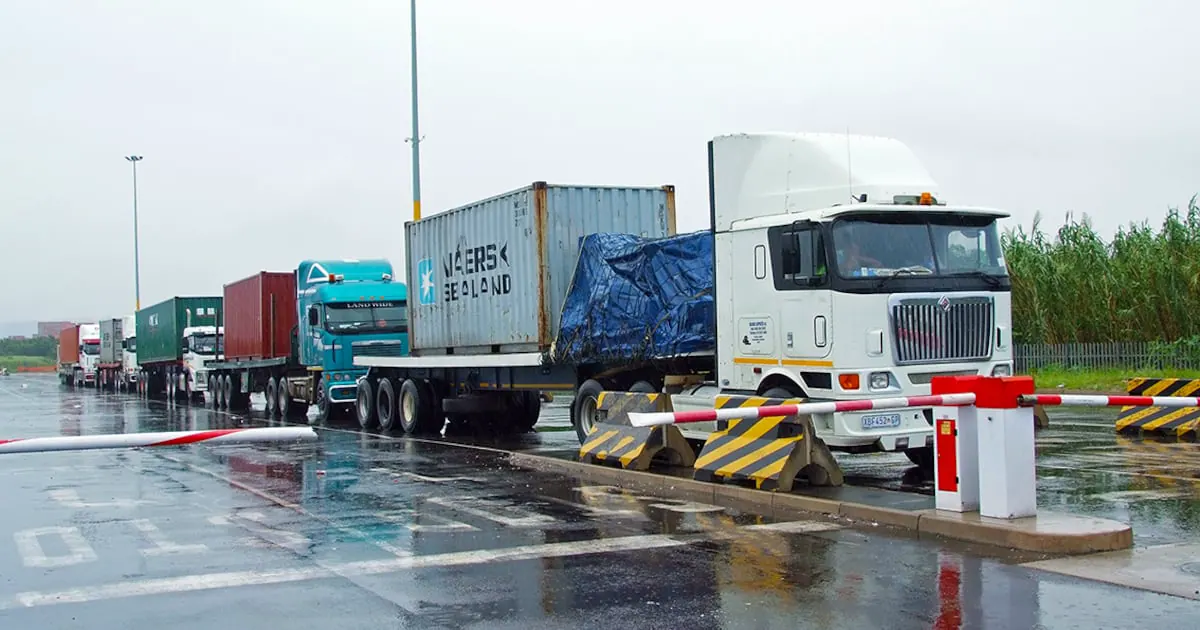
The S&P Global report reveals that South African companies reduced their activity in September for the first time in three months and to the greatest extent since May, largely due to weaker demand. Respondents also reported cutbacks resulting from input constraints and delays. The survey highlighted that increased congestion at the Port of Durban had reintensified domestic supply constraints, leading to longer supplier delivery times.
The South African Association of Freight Forwarders recently warned that operational, equipment, yard, and coordination constraints at the Durban terminal had severely disrupted cargo movement, with consequences spreading through the national supply chain. The congestion was partly linked to temporary measures and may start to ease, but the delays still added considerably to the challenges faced by firms.
Despite the current downturn, business expectations for the coming year improved again in September, reaching their highest level in four months. Companies hoped that easing supply issues and fuel prices would boost output growth, alongside a broadly positive outlook for demand and widespread expansion plans. Employment numbers in September were in line with the subdued trend seen in August.
S&P Global compiles the PMI from responses to questionnaires sent to purchasing managers in a panel of about 400 private sector companies. The PMI is a weighted average of five indices: new orders (30%), output (25%), employment (20%), suppliers' delivery times (15%), and stocks of purchases (10%).
Key points
- South Africa's private sector activity contracted in September due to a decline in new orders, rising costs, and supply chain bottlenecks.
- The surge in fuel prices is expected to continue, with domestic fuel prices set to jump even higher from Wednesday.
- Business expectations for the coming year improved again in September, reaching their highest level in four months.