South African businesses reported a second successive monthly fall in activity in October, as weak demand, rising fuel costs, and shipping delays continued to weigh on the private sector. According to S&P Global's October purchasing managers' index, the index recorded 49 for the second consecutive month, its joint-lowest so far in 2026. This indicates that business conditions have deteriorated compared to the previous month.
The decline in business activity was attributed to various factors, including weak customer demand, port and shipping disruptions, and higher fuel prices. Firms cut jobs at the sharpest rate in six years, while business confidence sank to a level last seen in mid-2020. The survey also revealed that new orders decreased, with companies citing weak client purchasing power, compounded by fuel costs linked to the Middle East conflict and broader economic uncertainty.
The survey showed that purchase price inflation quickened to the highest since June, while wage costs rose slightly faster than in September. Businesses often passed higher costs on to customers, leading to a solid increase in output charges that was the quickest in four months. However, construction firms bucked the trend, cutting prices for the first time in a year.
S&P Global Market Intelligence principal economist David Owen noted that the sharp drop in business confidence was a concerning signal. Expectations for activity over the next 12 months fell to their lowest since August 2020, with firms suggesting that the current economic and geopolitical environment had led to a reassessment of long-term risk.
The report pointed to a drop in employment for the third successive month in October, with the rate of job-shedding being the sharpest in six years. Firms cited redundancies, dismissals, and voluntary leavers, but weaker demand meant that backlogs of work decreased marginally. Business expectations for the coming year deteriorated markedly in October, sinking to the lowest since August 2020.
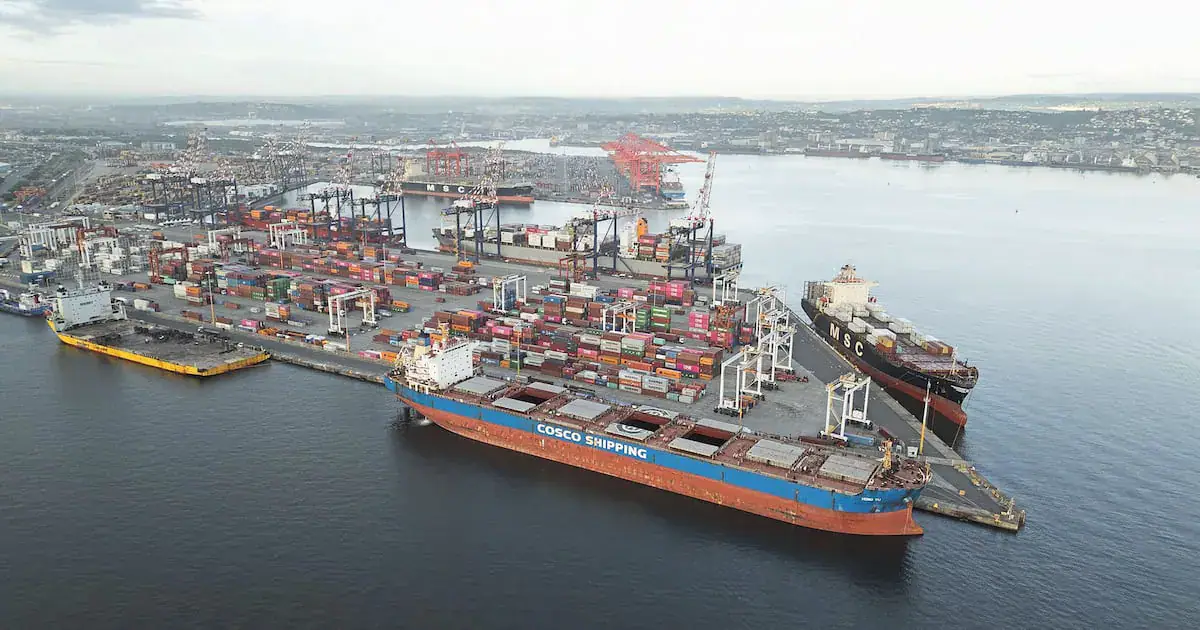
Supply chain pressures persisted, though suppliers' delivery times lengthened at a softer pace than in September. Companies again cited logjams at the Port of Durban, alongside global shipping delays, raw material shortages, and reduced transport capacity. Industrial firms faced the most severe delays.
A parallel survey of manufacturing purchasing managers sponsored by Absa and compiled by the Bureau for Economic Research showed that conditions for the sector improved slightly in October. However, underlying demand remained subdued, and the manufacturing sector's improvement was not enough to offset the decline in the private sector as a whole.
Key points
- South African private sector activity fell for the second consecutive month in October.
- Firms cut jobs at the sharpest rate in six years, while business confidence sank to a level last seen in mid-2020.
- Business expectations for the coming year deteriorated markedly in October, sinking to the lowest since August 2020.