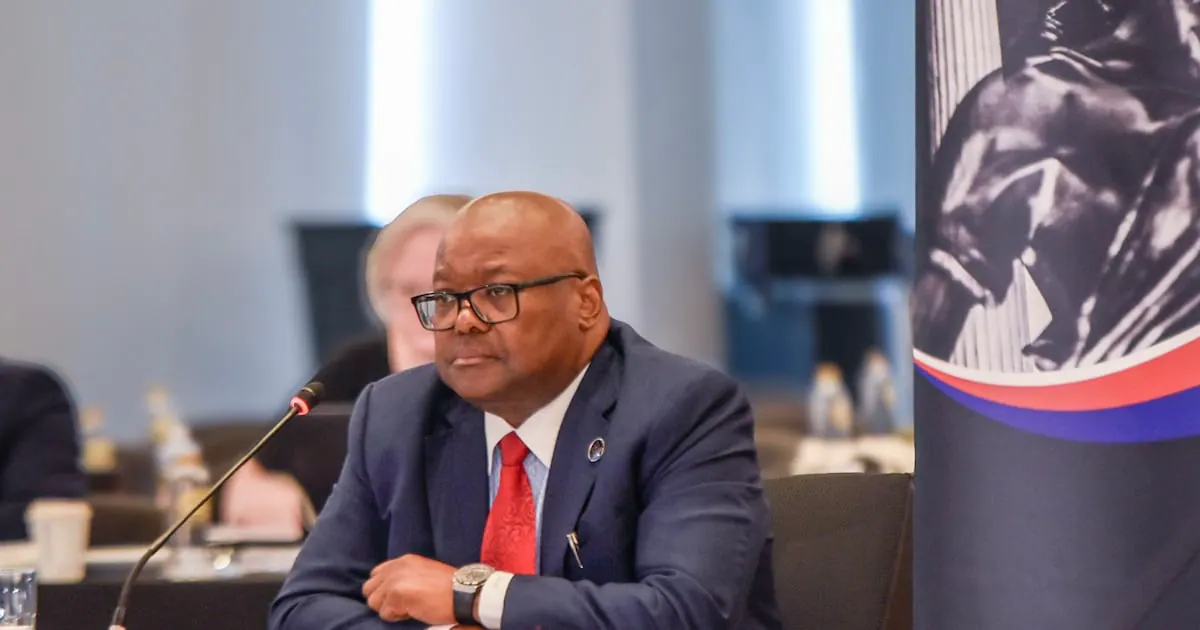
The Judicial Service Commission (JSC) has decided not to appoint either Judge Graham Moshoana or Judge Betty Mahalelo as the deputy president of the Labour Court and Labour Appeal Court. Moshoana, who has impressive academic qualifications in labour law, faced a tough interview from the JSC chaired by Chief Justice Mandisa Maya. The commission's decision leaves the courts without a permanent deputy president, adding to the challenges faced by the Labour Court.
Moshoana's troubles began when he was questioned about a full-court judgment he delivered without circulating it to a colleague, Judge Colleen Collis. The judgment was written after a judge failed to deliver a ruling seven months after the hearing. Moshoana described the case as peculiar, but his answers did not satisfy the panel. The JSC emphasized the importance of collegiality in the deputy judge president post.
The Labour Court is entrusted with resolving disputes timeously, and its decisions affect the economic interests of both workers and employers. The court's leadership crisis is set to worsen with the retirement of Judge President Mogomotsi Molahlehi in a few weeks. Molahlehi's departure will leave the court with both an acting deputy and acting judge president, creating what legal researcher Mbekezeli Benjamin called "an extraordinary situation".
Benjamin, from Judges Matter, a civil society research and advocacy group, said the JSC interviews for the Labour Court deputy judge president were robust, but the commission's failure to appoint a suitable candidate is concerning. He argued that the JSC should play a more proactive role in talent management, rather than waiting for incumbents to leave their positions before scheduling interviews.
The Labour Court has faced challenges in recent years, with several senior judges promoted to other courts or retiring. Benjamin said that the JSC's inaction could have far-reaching consequences for the court's ability to deliver judgments timeously. The court's leadership crisis is likely to have significant implications for workers and employers who rely on the court to resolve disputes.
Moshoana's fellow contender, Judge Betty Mahalelo, had a relatively easier interview, but there were concerns about her exposure to labour law. The JSC will have to start the process afresh in search of a deputy judge president for the Labour Court. The commission's decision has left the court facing an uncertain future, with the potential for further delays and disruptions.
The leadership crisis in the Labour Court highlights the need for the JSC to take a more proactive approach to talent management. With several senior judges set to retire in the next 12 months, the commission must act quickly to ensure that the court has the leadership it needs to deliver judgments timeously and effectively.
Key points
- The Judicial Service Commission's failure to appoint a deputy president for the Labour Court has created a leadership crisis, with the court facing an uncertain future.
- The Labour Court's leadership crisis is set to worsen with the retirement of Judge President Mogomotsi Molahlehi in a few weeks.
- The JSC must take a more proactive approach to talent management to address the court's leadership challenges.