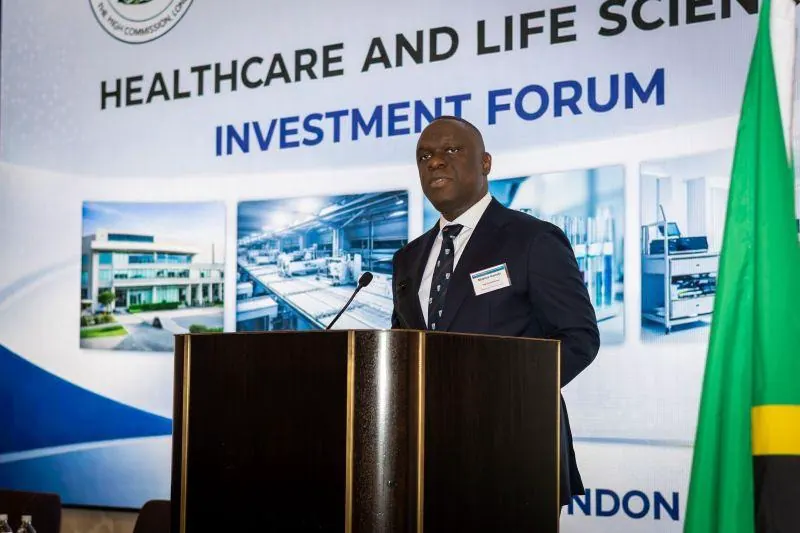
The competition for global capital is becoming more sophisticated, with African countries offering investors a broader proposition beyond natural resources and future growth. Tanzania is putting this proposition on the table, hosting the inaugural Tanzania Investment Forum 2026 in London on October 8. The forum brings together senior Tanzanian government officials, international investors, development finance institutions, and business leaders to connect global capital with opportunities across Tanzania's priority growth sectors.
The timing of the forum is significant, as Tanzania presents itself as an economy capable of sustaining 5–7% GDP growth, supported by economic reforms, political stability, and its Vision 2050 development agenda. The forum aims to turn opportunities into partnerships, investments, and projects, focusing on five key areas: critical minerals and mining, energy and renewable energy, infrastructure, transport and logistics, agribusiness and food processing, and manufacturing and industrial development.
Critical minerals are increasingly important as the global economy moves towards electric vehicles, renewable energy, and advanced technologies. Tanzania and other African resource-rich economies are looking beyond extraction and export, aiming to develop processing capacity, supporting industries, skills, and infrastructure around those resources. This approach also applies to agriculture, where Tanzania seeks to move beyond primary production towards food processing and more sophisticated agricultural value chains.
Infrastructure plays a crucial role in Tanzania's economic proposition, with ports, roads, railways, logistics networks, and energy systems determining the efficiency of businesses and competitiveness of investors. The country's geographic position and connections to neighboring markets make transport and logistics particularly important. The Tanzania Investment Forum 2026 will feature targeted business-to-business and business-to-government meetings to connect investors with Tanzanian companies, government representatives, and decision-makers.
The forum's focus on deal origination, partnerships, and capital mobilization is crucial, as Africa has hosted many investment conferences. Success should be measured by the number of projects that reach financial close, factories built, jobs created, and value remaining within the local economy. Tanzania's challenge is to convert investor interest into productive investment, requiring predictable regulation, efficient institutions, reliable infrastructure, skilled workers, and transparent investment processes.
Tanzania's goal is bigger than attracting capital; it is about using capital to build an economy that produces more, processes more, and exports more. This is also the wider African opportunity, as investors look across emerging markets for new sources of growth. African countries with resources, growing consumer markets, and ambitious development plans have an opportunity to compete for long-term capital.
The countries that succeed will not simply attract capital; they will make that capital build something that lasts. Tanzania's message in London is about more than Tanzania; it is a reminder that Africa's investment story is becoming increasingly diverse—and that the next phase of growth will depend on the continent's ability to transform investment interest into productive capacity.
Key points
- Tanzania is presenting itself as an economy capable of sustaining 5–7% GDP growth, supported by economic reforms, political stability, and its Vision 2050 development agenda.
- The Tanzania Investment Forum 2026 aims to connect international capital with opportunities across Tanzania's priority growth sectors, including critical minerals, energy, infrastructure, agribusiness, and manufacturing.
- The forum's focus is on turning opportunities into partnerships, investments, and projects, with a emphasis on deal origination, partnerships, and capital mobilization.