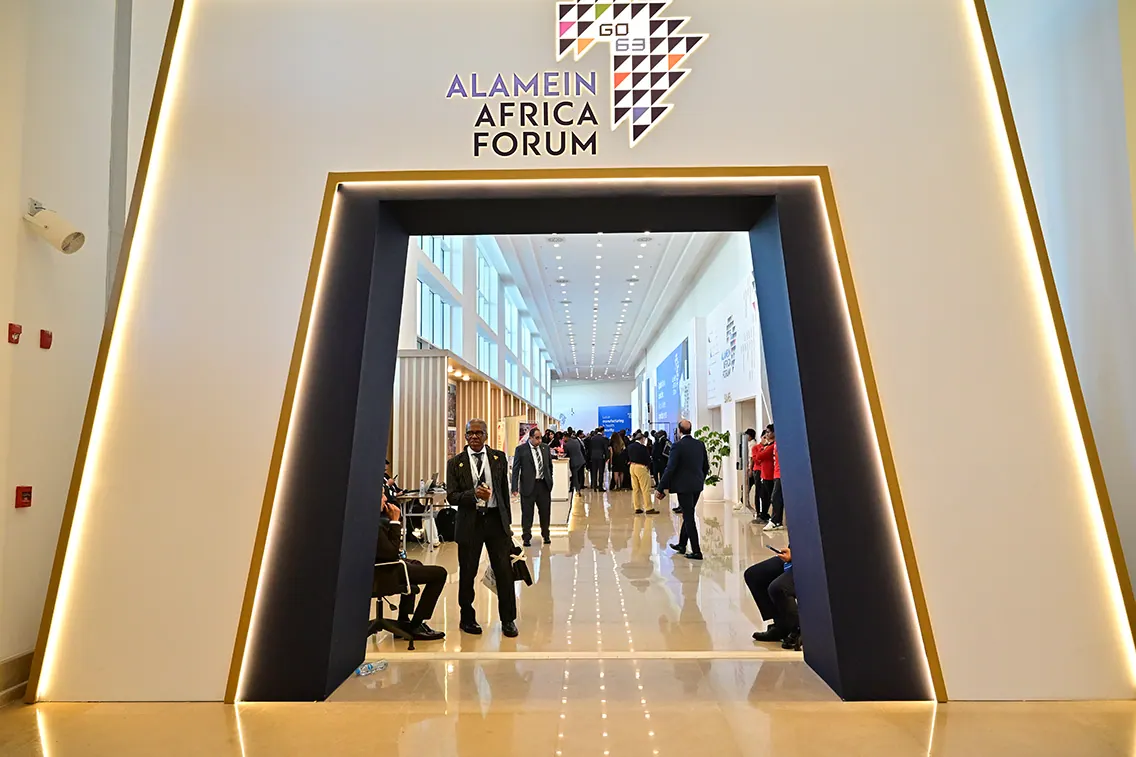
Egyptian Minister of Petroleum and Mineral Resources, Karim Badawi, has emphasized Egypt's commitment to collaborating with other African countries in the energy sector. At the Alamein Africa Forum in Egypt, Badawi stated that Africa must move beyond exporting raw resources and instead develop the necessary infrastructure, skills, and financing to build integrated value chains. He highlighted the importance of resilience in the energy sector, which means developing the capacity to process more of Africa's own resources.
Badawi pointed out that Egypt's existing refining, petrochemicals, ports, pipelines, and LNG infrastructure could serve as a platform for greater African cooperation. The country's facilities in Idku and Damietta, along with its petroleum ports, storage facilities, and international maritime connections, could link African producers with markets in Europe, the Middle East, and beyond. This, he said, would create the possibility of retaining a greater share of value within the African energy value chain.
Egypt intends to extend its technical capabilities across the continent, with Egyptian petroleum companies already operating in countries such as Libya, Algeria, Nigeria, and Angola. Badawi emphasized that financing would be critical to making this ambition possible and affirmed Egypt's support for the African Energy Bank. The bank aims to provide financing for energy projects in Africa, which is essential for the development of the sector.
A panel discussion at the forum highlighted the challenge of high project costs undermining Africa's energy resilience. Edu Okeke, CEO of Azura Power, noted that Africa's policymakers need to focus on reducing the cost of producing power and improving the speed with which power projects are completed on the continent. He cited the example of Nigeria, where it took six years to develop a power project, as evidence of the challenge facing power producers.
Okeke stressed that delays in project development, combined with high financing costs and other structural constraints, ultimately raise the cost of electricity. He noted that a gas-fired power plant in Africa costs about $1.5m per MW to build, compared with about $1m per MW in other regions. This high cost of generating power makes it challenging for Africa to achieve energy resilience.
Vanessa Baldwin Mushi, CEO of CATA Energy, identified political pressure to keep electricity tariffs low as a major challenge in attracting private investment into Africa's power sector. She noted that politicians often prioritize low tariffs to win votes, which can prevent projects from reaching financial close because the economics no longer support investment. Mushi advocated for closer coordination between governments and the private sector to find a realistic approach to cost-reflective tariffs.
Mushi suggested that subsidies still have a role in protecting consumers from high electricity costs, but they should be targeted rather than achieved by suppressing tariffs. The African Energy Bank and other initiatives aim to address these challenges and support the development of Africa's energy sector. Egypt's commitment to African partnerships in the energy sector is expected to contribute to the continent's efforts to achieve energy resilience and sustainability.
Key points
- Egypt commits to working with African countries to develop infrastructure, skills, and financing for integrated value chains in the energy sector.
- High project costs and financing challenges undermine Africa's energy resilience, with a gas-fired power plant in Africa costing $1.5m per MW to build.
- Political pressure to keep electricity tariffs low can prevent private investment in Africa's power sector, requiring closer coordination between governments and the private sector.