Student protests in France have continued for a third consecutive week, driven by concerns over the country's education system. Protesters are demanding improvements to the system, citing overcrowding in classrooms, a shortage of teachers, and inadequate school infrastructure. The protests have spread to multiple cities, including Paris, where thousands of students marched through the streets, chanting slogans against the government and President Emmanuel Macron.
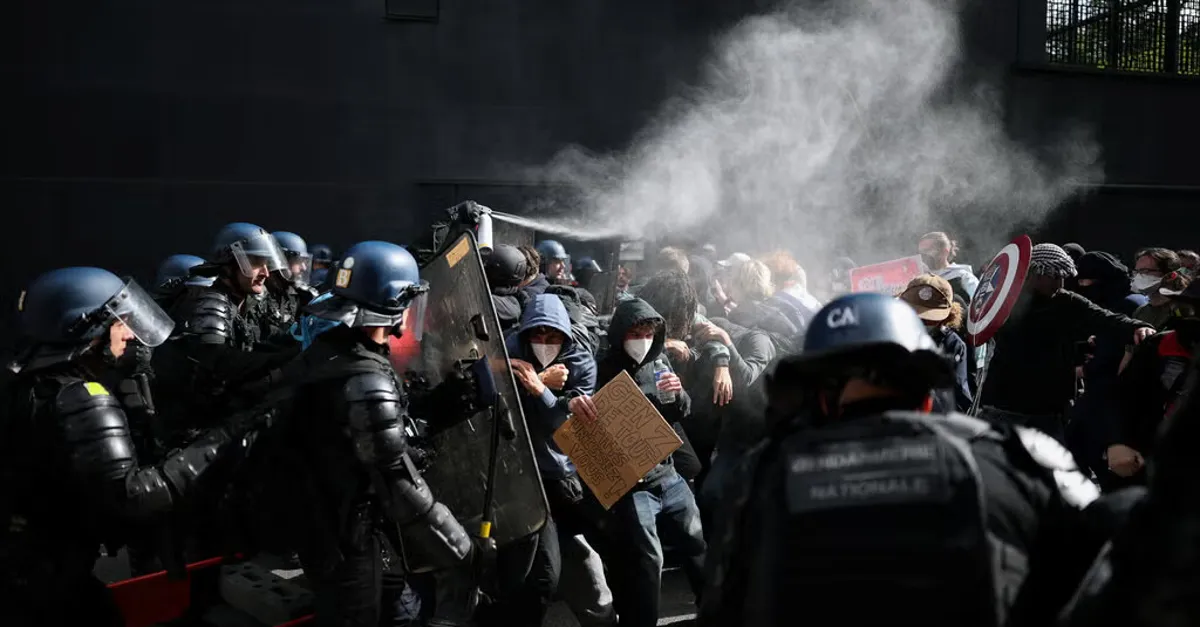
The protests have resulted in the closure of hundreds of schools, with the education ministry reporting that over 150 secondary schools were closed on Thursday. The ministry estimated that around 266,000 people participated in protests across the country on Tuesday, with 71,500 of those in Paris. However, union organizers put the numbers at over double those figures. The protests have been marked by clashes between police and protesters, with police using tear gas to disperse crowds.
The protests have sparked concerns about the potential for escalation, with some students drawing comparisons to the May 1968 protests that brought France to a standstill. However, historian Julian Bourg noted that the current protests are more focused on education issues, but warned that they could still develop into a broader political crisis if the demands and participation expand. The protests have also highlighted concerns about the government's handling of student issues, including the freezing of housing allowances and potential increases in university fees for foreign students.
Students are also protesting against police brutality, with many citing videos of police attacking secondary school students as evidence of the government's heavy-handed approach. Some students have expressed concerns that the police response is limiting their right to peaceful protest. In Paris, student Kiera Androod, 20, said that seeing police use force against secondary school students was "shocking". Business student Orian Lobskaand, 20, criticized the use of tear gas, saying it sent a message that students did not have the right to protest.
The protests have also highlighted broader social issues, with students expressing concerns about poverty, unemployment, and lack of access to education in disadvantaged areas. Some students have expressed solidarity with their peers in these areas, citing the need for greater support and resources. The protests have also sparked a national conversation about the state of education in France, with many calling for greater investment and reform.
In an effort to contain the crisis, Education Minister Edouard Geffray met with representatives from three main student groups on Thursday, discussing issues including school infrastructure, university admissions, and teacher shortages. The minister promised not to cut jobs in schools and announced the deployment of 3,000 temporary teachers in secondary schools most in need. However, the delay in announcing the new education budget has sparked student anger.
The government has promised to address the concerns of students and teachers, with Prime Minister Sebastian Lecornu pledging to fill vacant teaching positions and address urgent problems in school infrastructure. However, some protesters have expressed skepticism about the government's intentions, saying they will continue to protest until their demands are met. The protests are set to continue, with a third national day of action planned for next week.
Key points
- The protests have resulted in the closure of hundreds of schools, with thousands of students taking to the streets to demand improvements to the education system.
- The government has promised to address the concerns of students and teachers, but protesters remain skeptical about their intentions.
- The protests have highlighted broader social issues, including poverty, unemployment, and lack of access to education in disadvantaged areas.