The Competition Commission's 2026 Rural and Township Economy Report highlights the struggles of rural and township households, with up to 53% of rural and 39% of metro township households surviving on less than R3,500 a month. However, beneath these statistics lies a more insidious issue: the energy transition is locking townships out of the market. As billions in private capital build a new electricity market, a bifurcated energy economy is emerging, with corporate South Africa escaping the state's utility crisis while informal traders and local township manufacturers are left behind.
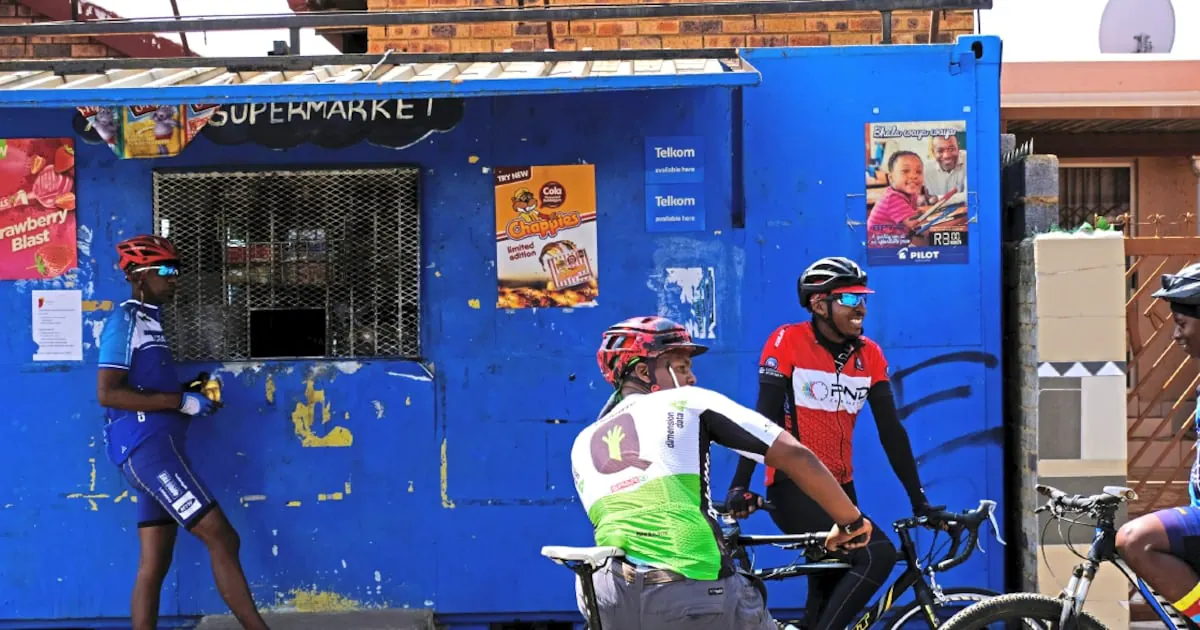
The commission's data exposes a stark structural divergence between corporate actors and independent township traders. National retail chains and mall developers are investing aggressively in private energy, securing predictable and lower operating costs via rooftop solar and private power purchase agreements. In contrast, township entrepreneurs face a different reality, relying purely on localised municipal supply lines and absorbing the direct brunt of runaway tariff hikes and persistent grid failures, compressing their margins.
The divergence is driven by systemic infrastructure failures at the local government level. For a township enterprise to formalise, scale or benefit from the liberalised energy market created by the Electricity Regulation Amendment Act, it requires a functional local network. However, local municipalities constantly fail to upgrade, secure and maintain local substations and distribution transformers, creating localised bottlenecks that prevent township micromanufacturers from procuring cheaper, wheeled private power or installing their own small-scale embedded generation systems.
The commission notes that business activity in historically underserved areas remains heavily dominated by independent and informal micro-enterprises. The conclusion is irresistible that these survivalist businesses rely purely on localised municipal supply lines and absorb the direct brunt of runaway tariff hikes and persistent grid failures, compressing their margins. This situation aptly fits under section 8(1)(c) of the Competition Act as an exclusionary act, defined as an act that impedes or prevents a firm from entering into or expanding within a market.
The commission holds substantial leverage over the private capital reshaping the energy landscape. The 2026 Rural and Township Economy Report must serve as an empirical baseline for the commission to radically redesign the enforcement of section 12A (3) public interest mandates in merger control. The commission should consider using its merger evaluation powers to demand that private renewable projects source components, maintenance and civil works from township-based suppliers.
Large-scale deployment should include ringfenced equity or revenue sharing models for the local communities and townships they bypass, as well as mandating that capital flowing into private grids directly finances the transformation of historically disadvantaged person-owned enterprises. Furthermore, private developers should be required to fund local substation upgrades or establish localised microgrids for informal business clusters as a condition for merger approvals.
If left entirely to the open market, the influx of private energy capital will widen the rural-urban and corporate-informal economic divides. Without deliberate regulatory intervention, the clean energy transition will enrich independent power producers and corporate consumers while leaving township economies in the dark. The commission must use its powers to ensure the energy transition and economic inclusion move forward together.
Key points
- The energy transition is locking townships out of the market due to a lack of access to private energy infrastructure.
- The Competition Commission should consider treating energy infrastructure as the ultimate barrier of market entry.
- The commission should use its merger evaluation powers to demand that private renewable projects source components, maintenance and civil works from township-based suppliers.