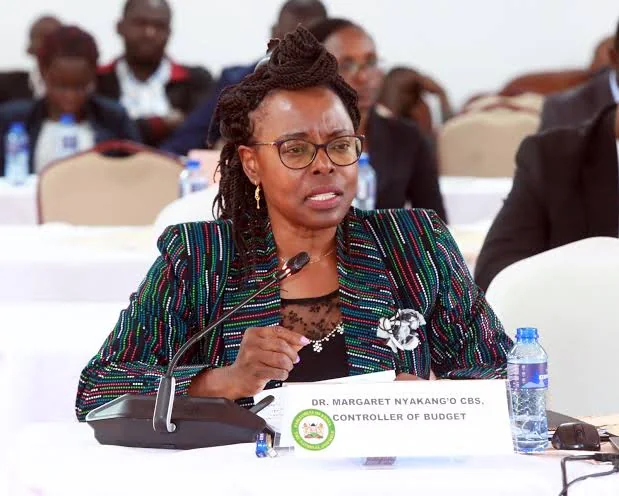
The Kenyan National Assembly Committee on Constitutional Implementation Oversight is calling for amendments to the Public Finance Management (PFM) Act to grant the Controller of Budget, Dr. Margaret Nyakang'o, authority to report on and independently monitor funds and levies operated by national and county governments. This move aims to bring billions of shillings held in government funds and collected through various levies under the Controller of Budget's oversight. The committee argues that the current legal framework has left a large amount of public money outside the direct reach of the Controller of Budget.
The proposed changes would give the Controller of Budget enforcement powers, require implementation of recommendations made by the office, remove restrictions on economic reporting, and provide sanctions for violations. Dr. Nyakang'o has highlighted that her office's oversight powers are directly tied to withdrawals from the Consolidated Fund, leaving standalone statutory and special funds outside her monitoring capabilities. This limitation affects various funds, including the National Infrastructure Fund (NIF), which has accumulated Sh104 billion from the sale of Kenya Pipeline Company (KPC) shares.
The Affordable Housing Levy is another major pool of money affected by the oversight gap, with about Sh65 billion collected from deductions made from Kenyans' earnings to finance low-cost housing. However, the Controller of Budget does not currently have direct oversight over how the money is used. The committee's report, tabled before the House, notes that the legal gap prevents any independent oversight of billions held in funds and levies, severely undermining the Controller of Budget's supervisory role over public finances.
Dr. Nyakang'o has named several government funds and levies that remain outside her office's ability to trace after collection, including the Social Health Insurance Fund (SHIF), Affordable Housing Levy Fund, Hustler Fund, National Infrastructure Fund (NIF), and Sovereign Wealth Fund. She has described these as blind spots in public financial management and questioned why funds worth billions of shillings can operate without strict systems for real-time reporting.
The oversight concerns are not limited to national government funds, as Auditor-General Nancy Gathungu has separately raised questions over the management of more than Sh30 billion held in county public funds. Gathungu warned Parliament that the money could have been misappropriated, citing the fact that county funds operate outside the Integrated Financial Management Information System (IFMIS). This system has helped increase visibility of government financial transactions.
The Primary Healthcare Fund was cited as an example of the challenge, where money is approved and released through lump-sum transfers, after which it moves from the Central Bank of Kenya to individual county or departmental accounts held in commercial banks. Once the funds reach those accounts, Dr. Nyakang'o said her office cannot track how they are spent or establish whether the money remains available for national projects.
The proposed amendments would seek to close the oversight gap by extending the Controller of Budget's oversight to funds and levies that currently fall outside the Consolidated Fund and are therefore beyond the office's direct monitoring. This move aims to enhance transparency and accountability in public financial management, ensuring that billions of shillings in state funds are properly tracked and utilized.
Key points
- The Kenyan National Assembly Committee on Constitutional Implementation Oversight is pushing for amendments to the Public Finance Management (PFM) Act to grant the Controller of Budget enhanced powers to track state funds.
- The proposed changes aim to bring various funds, including the National Infrastructure Fund (NIF) and Affordable Housing Levy Fund, under the Controller of Budget's oversight.
- The enhanced oversight powers would improve transparency and accountability in public financial management, addressing concerns over potential misappropriation of state funds.