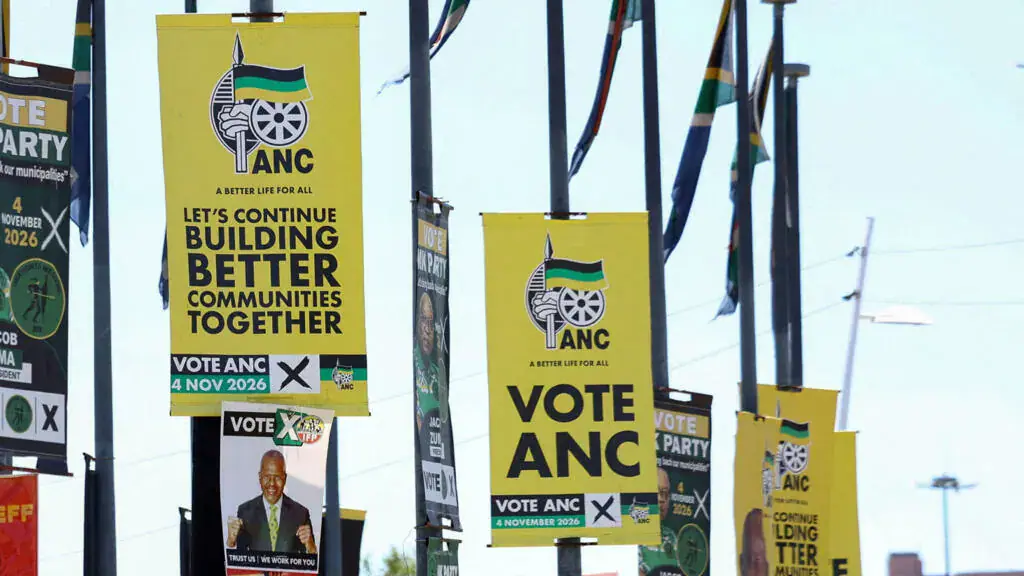
The African National Congress (ANC), once the dominant force in South African politics, has recorded its lowest score since the end of apartheid in the recent local elections. Held on November 4, the elections saw the ANC garner only 30.76% of the votes, a significant decline from its 54% share a decade ago. This downward trend has been evident over the past five years, with the party's vote share dropping below 50% for the first time in 2021.
The decline of the ANC can be attributed to various factors, including growing disillusionment with the party's handling of key issues such as corruption, unemployment, and public services. The party has been marred by numerous scandals, which have eroded the trust of its traditional supporters. Additionally, the ANC's inability to effectively address the country's challenges, including high unemployment, frequent power outages, and water shortages, has further contributed to its decline.
The ANC's decline has created an opportunity for other political parties to gain traction. The Democratic Alliance (DA) and the MK party, led by Jacob Zuma, have been among the beneficiaries of the ANC's decline. The emergence of a multiparty system could lead to a more competitive and representative political landscape, which may ultimately strengthen South Africa's democracy.
Despite the ANC's decline, some observers have expressed concerns about the potential consequences of the party's weakened state. There are fears that a significant decline in the ANC's influence could lead to social unrest or the resurgence of old conflicts. However, it is also possible that the ANC's decline could prompt a period of renewal and rejuvenation, as the party is forced to adapt to a changing political landscape.
The ANC's decline has also been attributed to the changing nature of South African society. The country has made significant progress in addressing the inequalities of the apartheid era, but new challenges have emerged. The ANC, which was once the symbol of resistance against apartheid, has struggled to adapt to these new challenges and to respond to the needs of a changing electorate.
The recent local elections have highlighted the need for the ANC to reassess its strategy and reconnect with its supporters. The party's leadership has acknowledged the need for reform and renewal, but it remains to be seen whether these efforts will be sufficient to reverse the party's decline. The ANC's ability to adapt to a changing political landscape will be crucial in determining its future.
The decline of the ANC has significant implications for South Africa's democracy. While the party's weakened state presents challenges, it also creates opportunities for other parties to gain traction and for the country to develop a more representative and competitive political system. Ultimately, the future of the ANC and South Africa's democracy will depend on the party's ability to adapt and respond to the changing needs of its citizens.
Key points
- The ANC's decline has created an opportunity for other parties to gain traction and for South Africa to develop a more representative and competitive political system.