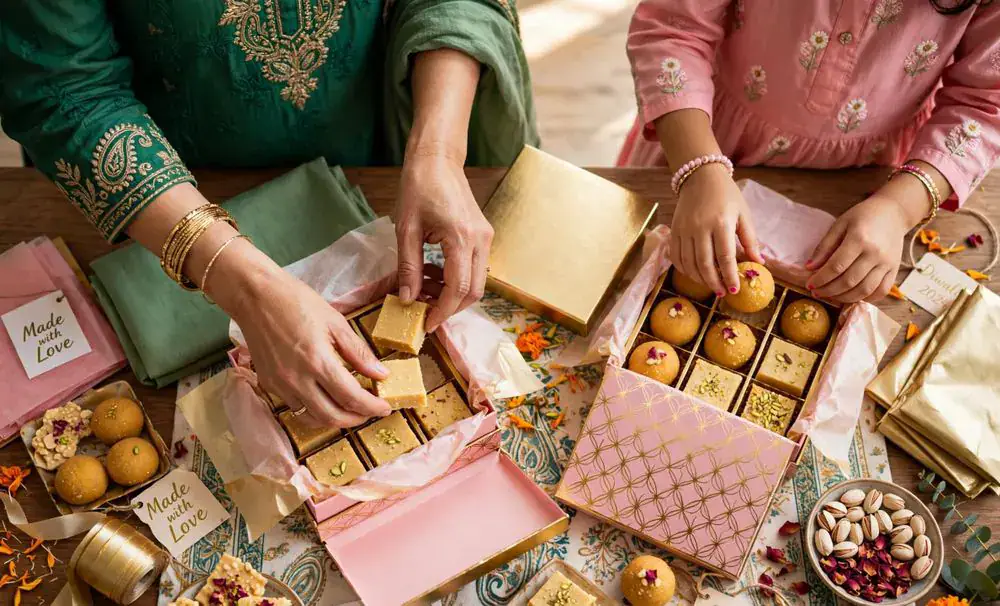
The writer, Krsangi Radhe, reminisces about her childhood in Isipingo, South Africa, where Diwali was a time for homemade sweets and neighbourhood gatherings. The air was filled with the scent of roasting cardamom and frying jalebis. Radhe recalls the excitement of offering beautifully packaged sweets to her neighbours, made with love and care throughout the week. This nostalgia serves as a backdrop for her reflections on the modern pressures that often overshadow the joy of celebration.
Radhe notes that the world seems heavier now, with numerous challenges such as geopolitical crises, financial burdens, rising unemployment, and poverty, as well as gender-based violence. She invites readers to pause and look within, questioning what it truly means to welcome the light during Diwali. According to Radhe, ancient philosophy views Diwali as a living metaphor for the human journey, where the ultimate triumph of light over darkness occurs within one's own heart.
The writer highlights the importance of self-love and self-compassion in embracing the true spirit of Diwali. She draws on Neuro-Linguistic Programming (NLP) principles, which suggest that an individual's reality is shaped by their internal language. Radhe argues that rewriting one's internal code from scarcity to self-compassion is essential. When individuals actively heal, accept, and love themselves, their inner flame stabilises, and they naturally begin to contribute positively to those around them.
Radhe stresses that true prosperity is not about accumulation but about creating space for others. She suggests that engaging in acts of kindness, such as visiting old-age or children's homes, or gifting food parcels to those in need, can profoundly impact both the giver and the receiver. By doing so, individuals can experience personal healing and transformation. This approach to Diwali celebrations fosters a sense of social responsibility and community.
The writer also addresses the pressing issue of Gender-Based Violence (GBV) in society. She emphasises that abuse thrives in isolation and secrecy, and that language has the power to either normalise or condemn violence. Radhe urges readers to use their voices to shatter the silence surrounding GBV and to actively protect one another. By doing so, individuals can create a safer and more supportive environment for everyone.
As Diwali is celebrated, Radhe encourages readers to focus on the internal rather than the external. She suggests looking into the mirror with kindness, reaching out to neighbours with genuine compassion, and speaking up for those who have been silenced. By embracing this approach, individuals can create a different kind of brightness, one that is rooted in love, kindness, and hope.
The writer concludes by highlighting the significance of the month of Kartik and the story of Mother Yashoda binding Lord Damodar. This story serves as a reminder of the bounds of love and the importance of focusing on the divine. As individuals light their diyas this year, Radhe hopes that they will not only illuminate their porches but also serve as a promise to be the light of love, kindness, and hope in their communities.
Key points
- The writer urges readers to focus on self-love and kindness to truly celebrate the spirit of Diwali.