The South African Department of Electricity and Energy has failed to award any generation capacity under the first bid window of its 2000MW Gas Independent Power Producer Procurement Programme. This decision was made after all four bidders, who submitted offers totaling 2830MW, failed to meet the mandatory requirements for securing gas supplies. The department received these bids on 29 May 2026, exceeding the targeted 2000MW capacity. Despite the interest shown, none of the bidders could provide sufficient assurances of gas supply as required by the tender.
A significant challenge faced by the bidders was South Africa's heavy dependence on imported gas, particularly from Mozambique. The country also lacks a liquefied natural gas (LNG) receiving terminal, which presents an additional constraint to securing reliable fuel supplies. The Department of Electricity and Energy noted that South Africa has potential domestic natural gas resources, but these are not being utilized effectively. This situation highlights the complexities of developing a gas-to-power sector in the country.
The first bid window was launched under the Gas Independent Power Producer Procurement Programme, in line with South Africa's Integrated Resource Plan (IRP) 2019 and IRP 2025. The department issued a revised request for proposals on 20 October 2025, following stakeholder consultations. Despite this, no preferred bidders were appointed, and no generation capacity was awarded due to the bidders' inability to meet the mandatory requirements.
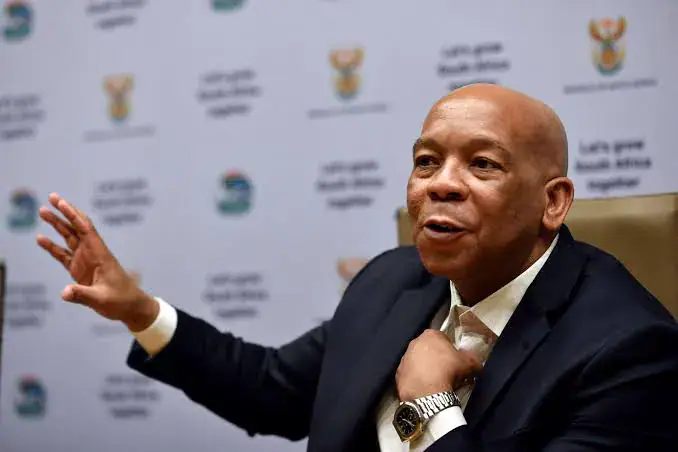
Electricity and Energy Minister Kgosientsho Ramokgopa stated that the outcome would not change the government's commitment to incorporating gas-to-power into the country's electricity mix. He emphasized that the first procurement process provided practical lessons on the infrastructure, commercial, and institutional conditions needed to translate market interest into viable projects. The government views gas-to-power as crucial for supporting electricity supply adequacy and flexibility.
The Department of Electricity and Energy highlighted the interdependence between tender requirements, technical feasibility, fuel supply arrangements, supporting infrastructure, affordability, environmental obligations, and project readiness. The procurement process underscored the need for a comprehensive approach to developing the gas-to-power sector. The department plans to engage further with bidders and other market participants to inform the future direction of the programme.
The department acknowledged the significant time and resources invested by the four bidders and other stakeholders in the first procurement round. They expressed appreciation for the efforts made and emphasized that any subsequent procurement process would be subject to statutory, governance, and procurement approvals. This suggests that the department is committed to moving forward with the gas-to-power programme, albeit with a revised approach.
The failure to award the 2000MW gas-to-power tender highlights the challenges facing South Africa's efforts to diversify its energy mix. However, the government remains committed to gas-to-power as an important component of the country's future energy mix, as identified in IRP 2025. The lessons learned from the first procurement process will likely inform future efforts to develop the sector and ensure a more successful outcome in subsequent bid windows.
Key points
- The Department of Electricity and Energy received four bids offering a combined 2830MW but failed to award any generation capacity due to bidders' inability to meet mandatory gas supply requirements.
- South Africa's dependence on imported gas and lack of an LNG receiving terminal are significant constraints to securing reliable fuel supplies for gas-to-power projects.
- The government remains committed to incorporating gas-to-power into the country's electricity mix, with the first procurement process providing valuable lessons for future projects.