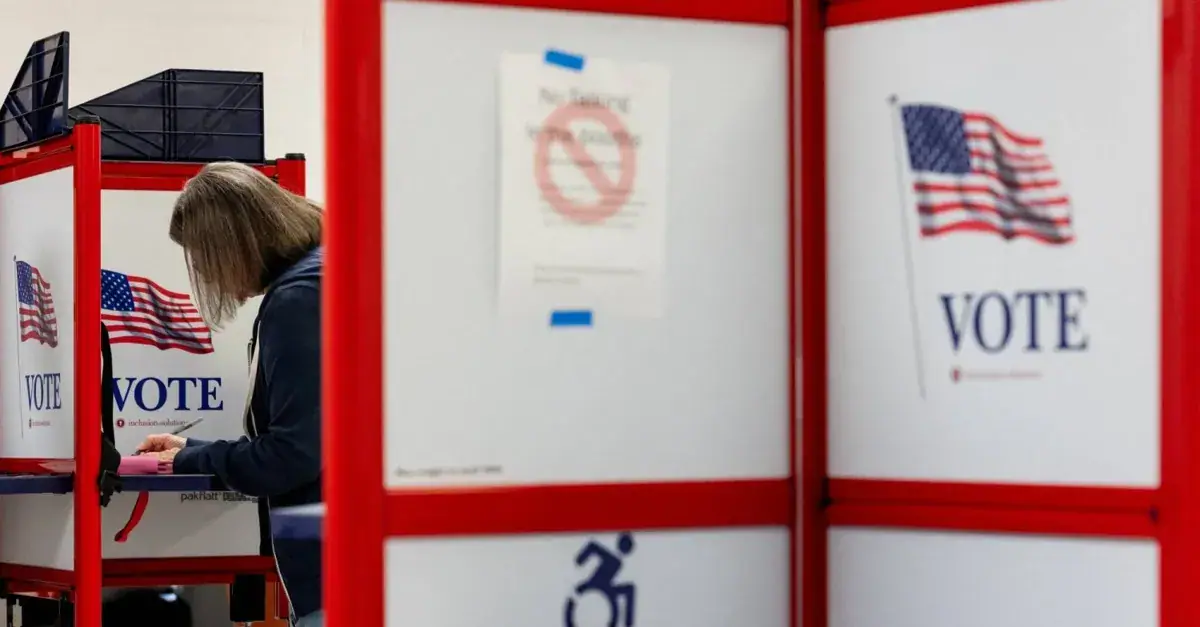
As the US midterm elections approach, researchers have raised concerns about the increasing use of AI-powered chatbots that provide misleading information to voters. These chatbots, which are being used by millions of voters to obtain political information, have been found to rely on unreliable online sources, potentially undermining public trust and spreading misinformation. According to a study by Forum AI, a start-up that evaluates AI models, nearly 40% of chatbot responses to election-related questions contained at least one factual error.
The study tested eight AI models and found that they were more likely to provide incorrect answers to questions about voting procedures than about political candidates. For example, when asked about voting in Pennsylvania, Google's Gemini 3.6 Flash chatbot incorrectly stated that November 3 was the deadline for requesting mail-in ballots, when in fact the deadline was a week earlier. This type of error could have serious consequences for voters who rely on the information.
The chatbots also incorrectly attributed hundreds of statements to candidates, officials, and observers, and frequently relied on low-quality sources, including discussions and posts on Reddit. Furthermore, researchers found that the chatbots were susceptible to foreign influence operations, with some models repeating debunked claims. This has raised concerns about the potential for AI-powered chatbots to be used as a tool for spreading disinformation.
One example of this was a video that was fact-checked and found to be false, which appeared to show a former student of US Senate candidate James Talerico making accusations of misconduct. However, the video was found to have been manipulated using AI and had indicators of Russian disinformation campaigns. This highlights the potential for AI-powered chatbots to be used to spread false information.
Despite the potential risks, researchers also found that chatbots could be used to help counter conspiracy theories and educate voters. However, this would require significant improvements to the accuracy and reliability of the information provided by these chatbots. The study's findings have implications for the use of AI-powered chatbots in future elections and highlight the need for greater scrutiny of these technologies.
The use of AI-powered chatbots in the midterm elections is a new development, with 2022 being the first federal election in which millions of voters actively used these tools to obtain political information. While chatbots have the potential to provide helpful information to voters, their reliance on unreliable sources and tendency to spread misinformation has raised concerns among researchers and election officials.
As the use of AI-powered chatbots continues to grow, researchers are calling for greater transparency and accountability in the development and deployment of these technologies. This includes ensuring that chatbots are designed to provide accurate and reliable information, and that they are not used to spread misinformation or manipulate voters.
Key points
- AI-powered chatbots are spreading misinformation to American voters ahead of the midterm elections.
- Nearly 40% of chatbot responses to election-related questions contained at least one factual error.
- Chatbots were more likely to provide incorrect answers to questions about voting procedures than about political candidates.