South Africa is seeking ways to create jobs, ease its energy crisis, and restart economic growth. A recent forum in Fuzhou, Fujian province, China, showcased the province's growth model, which could offer valuable lessons for South Africa. The 2026 Media Cooperation Forum on Belt and Road, held on November 3 and 4, brought together over 200 delegates from 182 media outlets and institutions in 100 countries. The forum was co-hosted by the People's Daily and the Fujian provincial government.
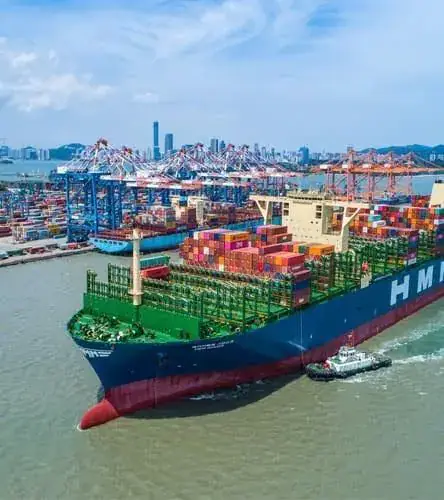
Fujian's economic growth has been remarkable, with its per capita GDP rising from 273 yuan in 1978 to an economy worth approximately $836 billion by 2025. The province achieved this growth through a long-term development strategy, which included investing in clean energy and digital infrastructure. Fujian's ports, particularly Fuzhou Port, have played a crucial role in its trade growth, handling over 100 million tonnes of foreign-trade cargo. The province has also become a hub for digital enterprises, with nearly 200,000 digital companies and over 165,000 5G base stations.
One key aspect of Fujian's growth model is its focus on long-term planning. In 1992, Fuzhou's leaders adopted the "3820" strategy, a plan that spanned three, eight, and 20 years, with targets for infrastructure development, industry, and the Min River waterfront. Successive administrations adhered to this plan, demonstrating the importance of patient, steady effort in achieving lasting results. This approach contrasts with South Africa's policy, which often shifts with each political cycle.
Another crucial factor in Fujian's growth has been its support for private business. In 1978, the province was largely rural, with no major state industrial projects and limited central investment. Officials responded by reducing regulatory hurdles, allowing ordinary people to start businesses, known as the "Jinjiang Experience". Today, private firms account for over 70% of the province's GDP, 80% of urban employment, and 90% of market entities. This approach has enabled local entrepreneurs to create jobs without relying on state funding.
Fujian has also invested heavily in digital and clean energy infrastructure. The province hosts the annual Digital China Summit and has a digital economy worth over $473.5 billion, accounting for more than 56% of its provincial GDP. Additionally, non-fossil sources supply over 50% of the province's power, with 3.83 million kilowatts of offshore wind capacity. Battery maker CATL, based in Fujian, reported $59 billion in revenue in 2025.
The province's strong trade links, particularly with Africa, have also contributed to its growth. Fujian has been designated as the core zone of the 21st-Century Maritime Silk Road, with direct shipping routes to South Africa, Kenya, Egypt, and Nigeria. Annual trade with Africa reached $14.98 billion, with $9.06 billion in Fujian exports and $5.92 billion in African imports. However, this trade surplus has raised concerns about the imbalance in trade between China and South Africa.
Finally, Fujian's growth model has been accompanied by significant social progress. The province ended absolute poverty by 2020, ten years ahead of the UN's 2030 goal, and narrowed its urban-to-rural income ratio to 2.04 to 1. Per capita disposable income stood at $7,042, and unified health insurance and pension systems cover all residents. As South Africa seeks to address its own social and economic challenges, Fujian's experience offers valuable lessons in achieving sustainable and inclusive growth.
Key points
- Long-term planning and private business growth have driven Fujian's economic success.
- Investment in digital and clean energy infrastructure has contributed to Fujian's growth.
- Strong trade links and social protection have accompanied Fujian's economic growth.
Reporting sources
- What South Africa can take from Fujian's growth · The Mercury