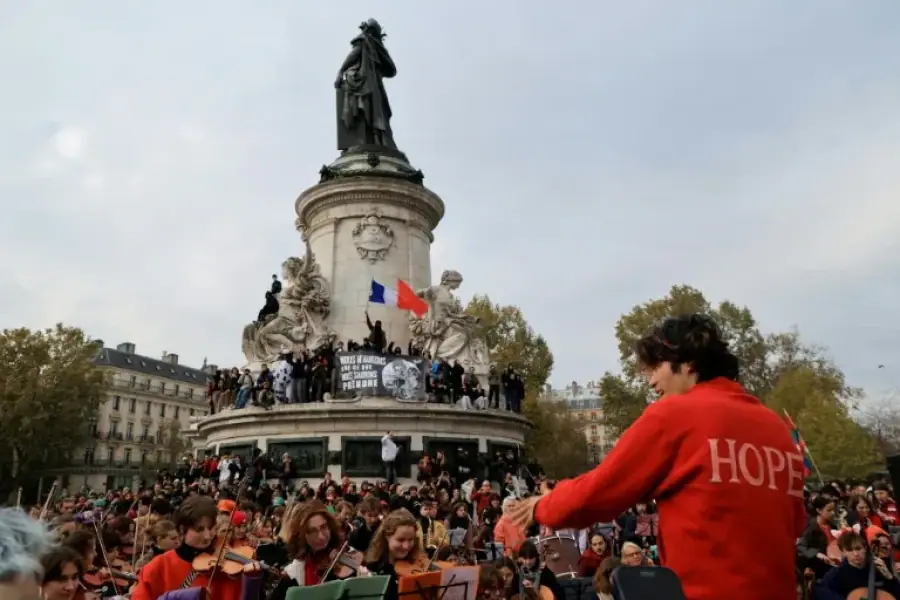
France is gearing up for another day of protests on Saturday as unions and student groups plan to take to the streets to voice their concerns over the rising cost of living. The yellow vest movement, which has been a thorn in the side of the government for months, has called for a separate rally in the center of Paris, despite the authorities' ban on the event. The government has deployed 70,000 police officers and security personnel across the country to maintain order.
The protests are part of a larger movement that has seen hundreds of thousands of workers take to the streets to protest against the government's economic policies. The movement has been marked by widespread demonstrations, strikes, and clashes between protesters and police. The government has faced criticism for its handling of the protests, with many accusing the police of using excessive force against demonstrators. The interior minister, Laurent Nunez, has vowed to take a tough stance against any would-be rioters or looters.
The yellow vest movement, which emerged in 2018, has been a major headache for the government. The movement's leaders have called for a "mass civil disobedience" campaign, which has raised concerns about the potential for widespread disruption. The government has tried to address some of the protesters' concerns, including announcing measures to help low-income households cope with rising fuel costs. However, the protesters are demanding more significant changes, including an increase in the minimum wage and a reduction in taxes.
The protests have also been marked by clashes between different groups, including the yellow vests and more radical left-wing activists. The government has struggled to contain the movement, which has spread to other countries, including Belgium and the Netherlands. The French economy has been hit hard by the protests, with many businesses forced to close due to the disruptions.
The government has announced that it will engage in talks with union leaders and other stakeholders on Monday to discuss the protesters' demands. The talks will focus on wages, purchasing power, and other economic issues. The government has limited room for maneuver, given the country's high debt levels and the need to comply with EU fiscal rules.
The protests have also raised concerns about the potential impact on the country's presidential election, which is scheduled for next year. The far-right is currently leading in the polls, and the protests have added to the sense of uncertainty and instability in the country. The government has vowed to do everything in its power to prevent a repeat of the violent clashes that occurred on October 17.
The situation remains tense in France, with many people fearing that the protests could escalate into further violence and instability. The government has urged calm and restraint, but the protesters remain determined to make their voices heard. The outcome of the protests and the government's response will have significant implications for the country's future.
Key points
- The French government has deployed 70,000 police officers and security personnel across the country to maintain order during the protests.
- The yellow vest movement has called for a "mass civil disobedience" campaign, which has raised concerns about the potential for widespread disruption.
- The government has announced that it will engage in talks with union leaders and other stakeholders on Monday to discuss the protesters' demands.
Reporting sources
- La France se prépare à des manifestations... · Maliweb.net