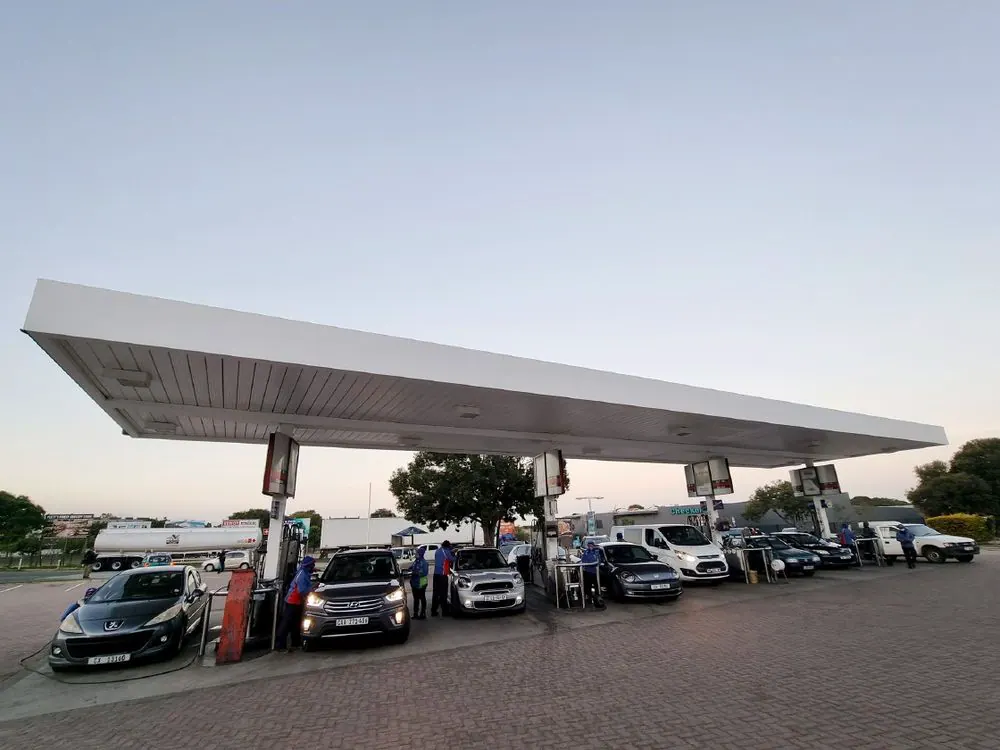
South Africa is bracing for a significant increase in fuel prices come October, with projections indicating that petrol and diesel prices could rise to record levels. According to the Central Energy Fund's latest daily snapshot, petrol price increases of between R2.83 for 95 Unleaded and R2.66 for 93 Unleaded are predicted. Diesel prices are also expected to rise, with increases of between R2.60 for 500ppm and R3.01 for the cleaner 50ppm.
If these projections materialize, 95 Unleaded petrol is expected to reach R28.88 at the coast and R29.75 in Gauteng, while 93 Unleaded will rise to around R29.42. The wholesale price of 500ppm diesel is predicted to reach around R30.83 at the coast and R31.71 inland. These projections represent a significant increase from the previous week's predictions, when petrol was expected to rise by around R2.40 and diesel by between R2.04 and R2.40.
The impending fuel price hikes are attributed to strong under-recoveries for petrol and diesel, which have worsened over time. The situation is further complicated by elevated international oil prices, with Brent crude having touched a four-month high of $108 per barrel last week. Although Brent has since subsided to around $101 per barrel, the large under-recoveries that have developed on international fuel prices continue to exert pressure on fuel prices.
The fuel price crisis is not unique to South Africa, with other countries also feeling the pinch. French fishermen, for instance, have blocked ports and a fuel depot in protest at soaring diesel prices. The cost of fuel nears a record high amid the US-Iran conflict, highlighting the global nature of the fuel price challenge.
In response to the looming fuel price hikes, Mineral and Petroleum Resources Minister Gwede Mantashe has indicated that no immediate intervention is planned to cushion households and businesses from rising fuel prices. However, the minister has stated that a review of the fuel price structure is underway, which could potentially lead to some form of relief in the future.
The Slate Levy, which compensates oil companies for fluctuations in the preceding month, could add further pressure to fuel prices in October. This development has raised concerns about the impact of fuel price hikes on inflation and the overall economy. As the situation continues to unfold, markets are watching for possible US-Iran talks at the UN General Assembly, which could help reduce some of the risk premium built into crude prices.
The impact of fuel price hikes on the economy and households is a pressing concern, with many calling for urgent action to mitigate the effects of rising fuel costs. As the situation continues to evolve, one thing is clear: South Africa is bracing for a significant increase in fuel prices, which will have far-reaching consequences for the economy and households alike.
Key points
- Petrol and diesel prices in South Africa are expected to rise by up to R3.01 per litre in October.
- The fuel price hikes are attributed to strong under-recoveries for petrol and diesel, as well as elevated international oil prices.
- The situation is being closely monitored, with possible US-Iran talks at the UN General Assembly seen as a potential factor in reducing some of the risk premium built into crude prices.