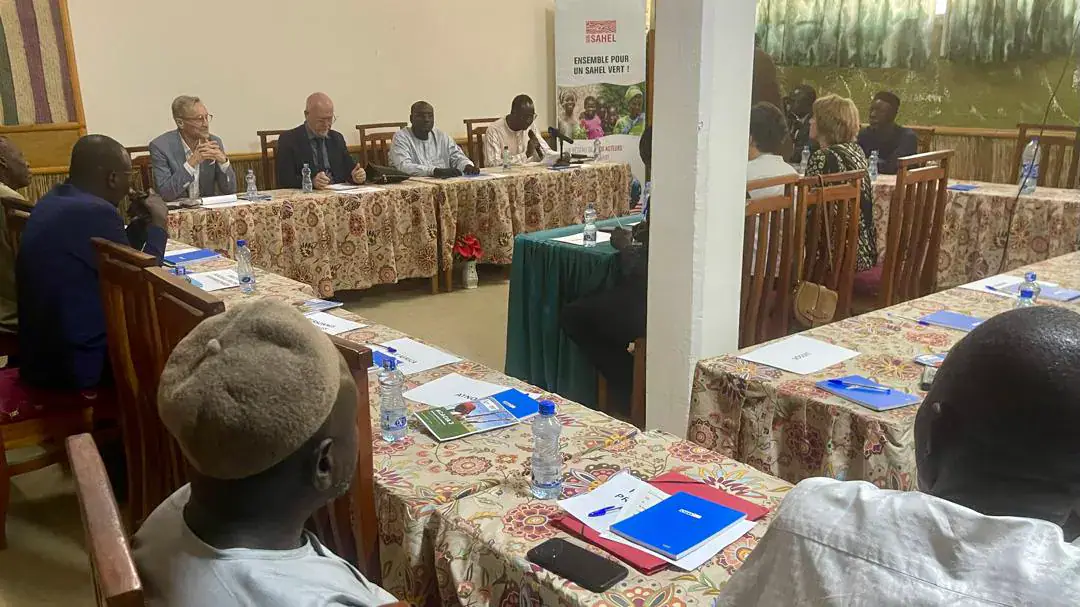
SOS Sahel officially launched the pilot phase of its Acacia 3 program on November 5, 2026, at the CEFOD in N'Djamena, Chad. The ceremony was attended by government authorities, technical and financial partners, producer organizations, and actors in the gum arabic value chain. The program's pilot phase will be implemented in Awiya and Dourbali, in the Chari-Baguirmi province, with financial support from the French Embassy in Chad.
The Acacia 3 program builds on the success of its predecessors, Acacia 1 and 2, which were implemented in Chari-Baguirmi and Guera. The new phase will expand interventions to six provinces: Chari-Baguirmi, Guera, Batha, Wadi Fira, Hadjer-Lamis, and Kanem. The program focuses on the development of agricultural service centers, agroforestry, and carbon sequestration. Guillaume Doulkom, Country Director of SOS SAHEL International in Burkina Faso, emphasized the innovative approach of the project, which combines tree planting with agricultural production.
Doulkom highlighted the importance of ensuring the survival and growth of planted trees, which will provide income to producers through the sale of gum arabic and other products. He stressed that the pilot phase aims to convince partners to fully commit to the program and align with Chad's national ambitions for land restoration, particularly those of the National Agency for the Great Green Wall. The program prioritizes the involvement of producers and their cooperatives in the implementation and management of the project.
Gaëtan Pellan, representative of the French Embassy's Cooperation and Cultural Action Service, praised the transversal nature of Acacia 3, which combines environmental restoration, economic development, and education. He welcomed the support of the French Embassy, co-financing by French company Nexira, and the long-term commitment of SOS Sahel to Chad. Pellan expressed his hope that the pilot phase will be successful and inspire other European and international partners to support the creation of agricultural service centers.
Idriss Oumar Idriss, representative of the Director General of NGOs at the Ministry of Finance, Economy, Planning, and International Cooperation, anchored Acacia 3 in Chad's Vision 2030 and National Development Plan. He emphasized the strategic importance of the gum arabic value chain for economic diversification, job creation, and climate change resilience. Oumar Idriss noted that the pilot phase is an opportunity for learning and that its results will guide the program's scaling up.
The Acacia 3 program is expected to contribute significantly to Chad's rural economy, community resilience, and environmental preservation. SOS Sahel aims to promote sustainable land management practices, improve the livelihoods of rural communities, and support the country's efforts to combat climate change. The program's success will depend on the effective involvement of producers, cooperatives, and partners in its implementation and management.
The launch of Acacia 3's pilot phase marks a significant milestone in Chad's efforts to promote sustainable development and environmental restoration. The program's innovative approach and focus on community engagement are expected to yield positive impacts on the environment, economy, and social well-being of rural communities.
Key points
- SOS Sahel has launched the pilot phase of its Acacia 3 program in Chad, aiming to expand sustainable land management and economic development in six provinces.