Somalia is experiencing a period of political uncertainty, with the mandates of the Federal Parliament and the Presidency having ended in April and May 2026, respectively. To avoid a constitutional vacuum, the parliament passed a resolution to extend both its mandate and the presidential term by one year, but opposition coalitions vehemently opposed it, leading to brief public protests and attempts to spill political tensions into the streets.
The opposition's strategy in dealing with the perceived power imbalance has varied, with some exercising restraint and focusing on addressing grievances directly with the political adversary, while others have chosen to broaden their line of attack, throwing accusations not just at political rivals, but also at international allies, including Turkey, in an attempt to create enough diplomatic noise to compel external intervention.
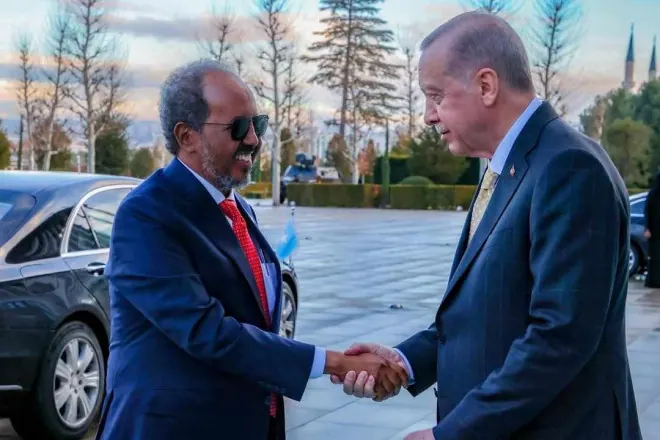
Turkey has played a monumental role in Somalia's development, particularly since President Recep Tayyip Erdogan's landmark visit to Mogadishu in August 2011. The visit marked a turning point in the international community's engagement with Somalia, and Turkey's support has been undeniable across multiple sectors, including security, healthcare, and education, with the establishment of modern medical facilities, police and military academies, and fully funded scholarships for Somali students.
The relationship between Somalia and Turkey is built on massive sacrifices and state-building support, and it is not an arrangement with the incumbent. Similar accusations were levelled at Qatar, another major partner of Somalia, during the electoral crisis of 2022, but Qatar's relationships with Somalia survived the crisis, and the Somali-Turkish bond must also prevail and deepen.
The Somali poet Abwaan Maxamed Xaashi Dhamac "Gaarriye" embodied the wisdom of protecting ties with friends, neighbours, and allies, and keeping disputes to concerned parties. His poem highlights the importance of confining differences to relevant parties and not causing grievance to relationships.
Attacking Turkey's role in Somalia, the very ally who stepped forward during Somalia's hour of greatest need, does not weaken a local political rival; it weakens the Somali nation as a whole. True diplomacy requires leaders to match their words to their true weight and stature and show the Somali public and the world at large that when national security, stability, and historic and strategic friendships are on the line, Somali politicians can rise above partisan instincts.
The strained relationship between Somalia and Turkey has raised concerns about the country's long-term future and its ability to maintain strategic friendships. Somali intellectuals and the public at large know exactly who is a true ally and who is merely an actor, and it remains to be seen how the situation will unfold in the coming days.
Key points
- Turkey's support has been instrumental in Somalia's development, particularly in the areas of security, healthcare, and education.
- The relationship between Somalia and Turkey is built on massive sacrifices and state-building support, and it is not an arrangement with the incumbent.
- Attacking Turkey's role in Somalia weakens the Somali nation as a whole and does not weaken a local political rival.