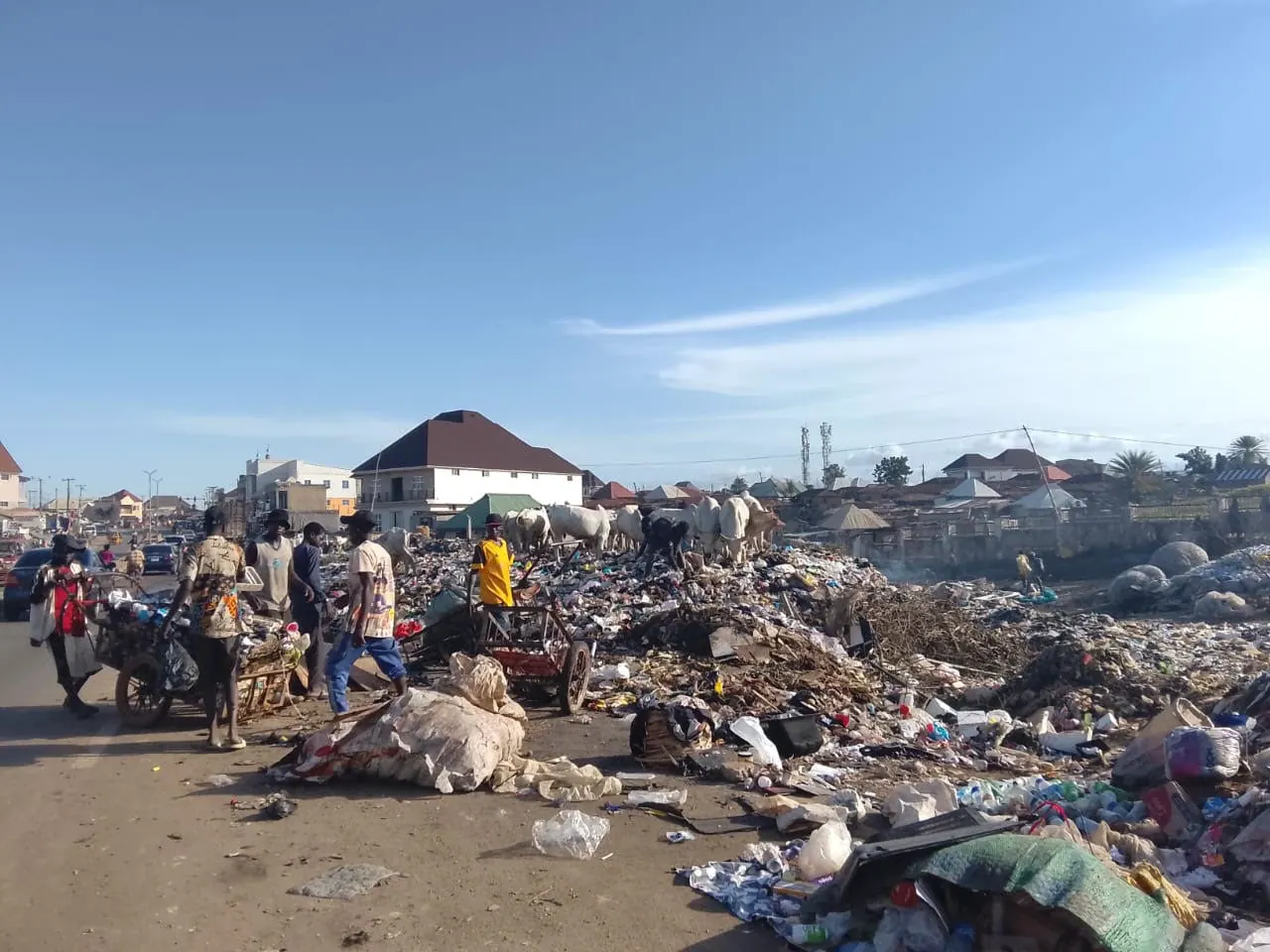
Abuja, known for its clean and well-planned appearance, is now facing a resurgence of illegal waste dumps in its city centre. Heaps of refuse line major roads, markets, and newly constructed corridors, interrupting the neat picture of the nation's capital. Residents say the trend has returned in recent months, threatening the aesthetic and environmental status of the capital. A visit to the city centre shows the scale of the problem, with dumpsites visible along major roads and in markets.
The situation extends beyond central markets, with field observations across various districts showing a consistent pattern of absent or poorly maintained waste bins and refuse piles in the open. Residents describe these locations as "land dustbins," admitting that environmental degradation has become normalised in parts of the Federal Capital City (FCT). Experts warn that the implications go beyond aesthetics, as refuse left to rot in the open becomes a breeding ground for disease-transmitting flies, rodents, and mosquitoes.
The newly reconstructed Nyanya-Orozo-Karshi expressway, a flagship project under President Bola Tinubu's Renewed Hope agenda, has become a corridor of stench, with heaps of solid waste lining the median, drainage channels, and designated collection points. Commuters describe the sight as embarrassing, with motorists forced to wind up their windows to escape the offensive odour. A road user, Dede Agana, expressed frustration, highlighting the flooding caused by the dump site during rains.
Traders at Karu Market, one of the worst-hit points, say the problem has persisted for over a year. Sanitation officials sometimes clear the waste every two or three days, but the relief is temporary as new refuse is dumped almost immediately. In Nyanya, residents describe the situation as a daily nightmare, with the stench of decomposing waste hanging in the air and scavengers and stray animals roaming freely around dumpsites.
The Federal Capital Territory Administration (FCTA) attributed the lapses to the expiration of waste management contracts, with the three-year cleaning contracts awarded in 2022 expiring in April 2025. The Coordinator of the Satellite Towns Development Department (STDD), Hon. Abdulkadir Zulkiflu, explained that emergency evacuation was resumed in August 2025, but despite this intervention, the filth has resurfaced.
Minister of the FCT, Barr. Nyesom Wike, expressed anger over the heaps along the Orozo-Karshi corridor during an inspection tour, issuing a three-day ultimatum for evacuation and warning officials responsible for sanitation that he would not hesitate to terminate appointments if negligence continued. Wike assured that new waste disposal contracts would be awarded to competent contractors based on capacity, not political connection.
The STDD says it will appeal to the Minister for relocation of existing roadside dumpsites, admitting that current collection points are too small to accommodate waste from the rapidly growing population. Until a permanent system is in place, residents and road users continue to battle with the reoccurring filth, calling on the Abuja Environmental Protection Board (AEPB) and STDD to provide dustbins, sustain evacuation, and enforce sanitation laws to prevent a public health crisis.
Key points
- The resurgence of refuse dumps in Abuja city centre poses significant public health concerns, with experts warning of the potential for disease transmission.
- The situation has been exacerbated by the expiration of waste management contracts and poor enforcement of sanitation laws.
- The FCTA has pledged to award new waste disposal contracts to competent contractors and relocate existing roadside dumpsites to mitigate the crisis.