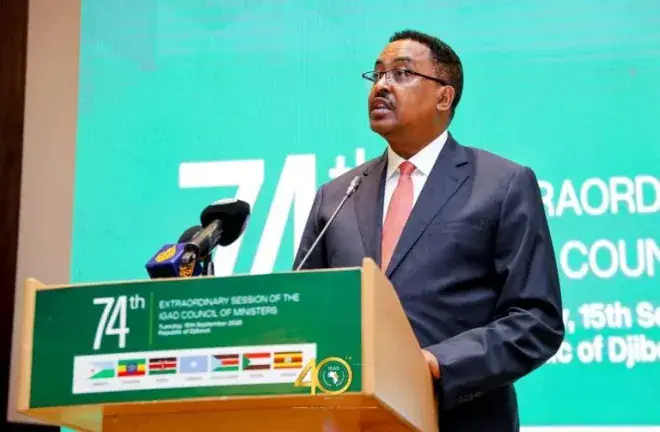
The 2023 Treaty Establishing the Intergovernmental Authority on Development (IGAD) has come into effect on November 16, 2026, after Somalia ratified it in January, meeting the required threshold for implementation. This development marks a significant milestone in regional cooperation, with Somalia and Kenya issuing separate statements congratulating IGAD member states and the organisation's Secretariat. The treaty strengthens IGAD's legal and operational framework, enhancing its capacity to address regional challenges.
Somalia, a founding member of IGAD, noted that the treaty's entry into force coincides with 40 years of regional cooperation since the establishment of the Intergovernmental Authority on Drought and Development (IGADD) in 1986. The Somali Ministry of Foreign Affairs and International Cooperation welcomed the development, reaffirming the country's commitment to regional cooperation, peace, security, economic integration, and sustainable development. Somalia also commended the IGAD Secretariat, led by Executive Secretary Dr. Workneh Gebeyehu, for advancing the organisation's mandate.
Kenya's Ministry of Foreign and Diaspora Affairs also congratulated IGAD on the treaty's entry into force, noting that it succeeds the 1996 Agreement Establishing IGAD. The organisation has evolved significantly, expanding its mandate to promote trade, free movement, infrastructure development, innovation, climate resilience, peace, and security. Kenya expressed confidence that the new legal framework would transform IGAD into a rules-based institution capable of advancing regional prosperity and addressing longstanding challenges.
The treaty's entry into force comes as IGAD marks four decades since its establishment in 1986. Initially formed as IGADD to address drought and desertification, the organisation was later transformed into IGAD in 1996, broadening its mandate to cover regional development, economic cooperation, and security. The 2023 treaty seeks to provide a stronger legal basis for IGAD to coordinate these responsibilities and improve cooperation among member states.
Both Somalia and Kenya have reaffirmed their commitment to working through IGAD to advance regional peace, security, and economic integration. The two countries expressed support for the organisation's efforts to strengthen cooperation among member states as the Greater Horn of Africa confronts persistent political, economic, and environmental challenges. This development is seen as a significant institutional step for IGAD as it seeks to deepen regional integration.
The treaty comes into force at a challenging time for the region, which continues to face political, security, economic, and climate-related vulnerabilities. Despite these challenges, Kenya and Somalia remain committed to IGAD's principles of sovereignty, territorial integrity, mutual respect, and regional solidarity. The two countries have expressed readiness to work together to ensure the full implementation of the treaty and strengthen cooperation across the region.
The entry into force of the treaty marks a new phase in IGAD's efforts to strengthen regional cooperation and address shared challenges. With a stronger legal framework, IGAD is expected to enhance its capacity to respond to regional challenges, promote prosperity, and improve the lives of people in the Greater Horn of Africa. The organisation's Executive Secretary, Dr. Workneh Gebeyehu, has been commended for his leadership in advancing IGAD's mandate.
Key points
- The 2023 IGAD treaty strengthens the organisation's legal and operational framework, enhancing its capacity to address regional challenges.
- Somalia and Kenya have reaffirmed their commitment to working through IGAD to advance regional peace, security, and economic integration.
- The treaty's entry into force marks a significant milestone in IGAD's 40-year history, providing a stronger legal basis for regional cooperation and development.
Reporting sources
- Somalia, Kenya welcome enforcement of new IGAD treaty · Hiiraan Online