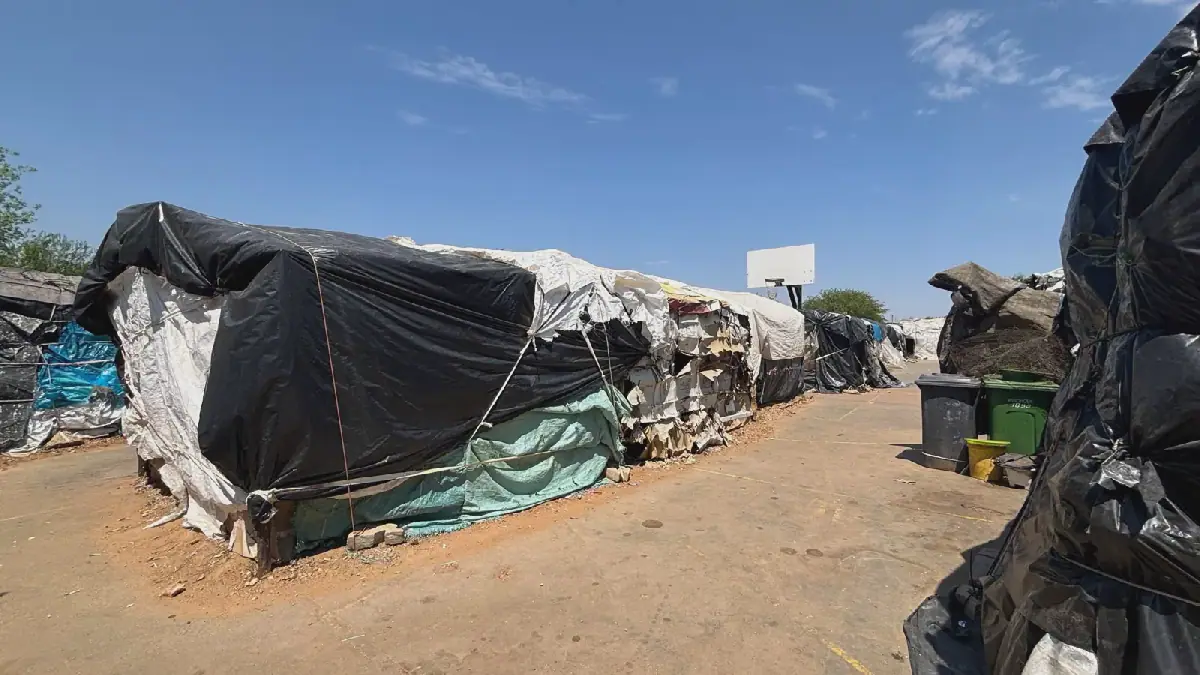
More than 150 people have spent six years living in makeshift shelters near a youth complex in Katutura, Windhoek, Namibia. The temporary refuge, established on 14 March 2020, during the Covid-19 pandemic, has become a permanent home for many. The shelters, made from weathered plastic sheeting, provide little protection from the elements, and residents rely on collected and stored water for cooking, washing, and other basic needs.
Residents face significant challenges, including limited access to clean water, electricity, toilets, and adequate food. Containers of stored water stand nearby, with flies gathering around some of them, a troubling sight in a community where access to clean water remains a significant difficulty. Previously, residents paid N$10 for water, but that arrangement reportedly ended as the number of people at the complex increased.
Food is another concern, particularly in households with little or no income. Pensioner Gerhard Tjambiru said some residents frequently suffer from diarrhoea and vomiting after eating the available food. According to Tjambiru, residents receive no government food assistance and must make do with whatever they can find. Although some pensioners receive social grants, residents say most people at the complex have no dependable financial support.
The lack of basic services and uncertainty about their future have significant consequences for residents, particularly children. Some children do not have necessary identification documentation, complicating their access to education, healthcare, and other essential services. This can have long-term effects on their well-being and opportunities in life.
Residents are frustrated and concerned about their situation. Tjambiru questioned what it means to belong to a country when the most basic comforts remain beyond reach. “You can say I’m Namibian, but for me I’m not,” he said. His words reflect the frustration of someone who has watched years pass without seeing a lasting improvement in his circumstances.
Personal safety is another concern for residents. A resident who requested anonymity said people sometimes enter the settlement at night looking for trouble, adding to the anxiety of families raising children in structures that offer little security. Residents remain uncertain about when they might leave the complex or whether a lasting solution will ever be found.
As another year approaches, the question is no longer how they have managed to survive for so long, but how much longer they will be expected to wait. The situation raises uncomfortable questions about how long people should be expected to survive without basic services or a clear future.
Key points
- Over 150 people have spent six years living in makeshift shelters in Katutura, Namibia.
- Residents lack access to basic services, including clean water, electricity, toilets, and adequate food.
- The situation has significant consequences for residents, particularly children, who may not have necessary identification documentation.