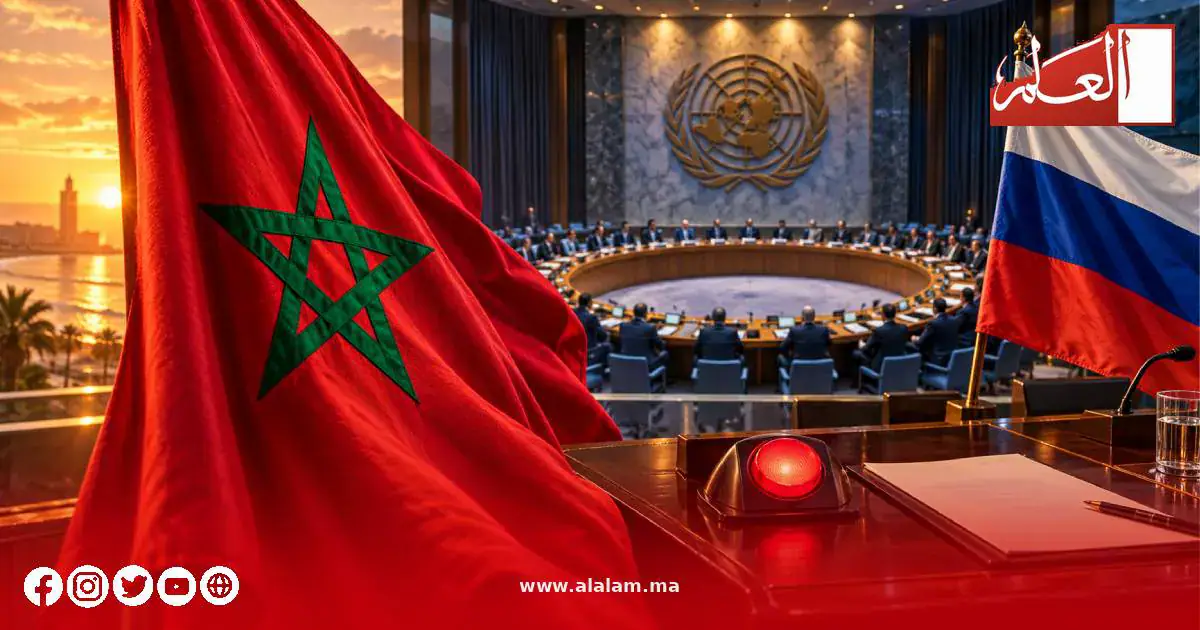
The UN Security Council has failed to adopt a US resolution on Western Sahara due to a Russian veto. The resolution, which aimed to extend the mandate of the UN Mission for the Referendum in Western Sahara (MINURSO), received 11 votes in favor, with three countries abstaining. The veto comes amid a shift in the international approach to the Western Sahara conflict, with the US pushing for a new framework that prioritizes Morocco's autonomy initiative.
The US resolution sought to make Morocco's autonomy initiative the basis for future negotiations, while also proposing changes to the MINURSO's mandate, including a review of its structure and resources. However, Russia's veto has put these plans on hold. The Russian move reflects the complex geopolitics surrounding the Western Sahara conflict, with Moscow seeking to assert its influence in the region.
The Western Sahara conflict has been a longstanding issue, with Morocco and the Polisario Front disputing control over the territory. The UN has been involved in efforts to resolve the conflict since the 1990s, but a lasting solution has yet to be found. The autonomy initiative proposed by Morocco has gained traction in recent years, with several countries expressing support for the plan.
The Moroccan autonomy initiative proposes a degree of self-governance for Western Sahara under Moroccan sovereignty. The plan has been endorsed by several countries, including the US, which sees it as a viable solution to the conflict. However, the Polisario Front and its backers, including Algeria, reject the plan, arguing that it does not address the core issues of the conflict.
The Russian veto has highlighted the challenges facing the international community in resolving the Western Sahara conflict. The veto has also underscored the need for a more nuanced approach to the conflict, taking into account the complex interests and competing claims of the parties involved. The Moroccan government has reiterated its commitment to finding a solution to the conflict, while also emphasizing the importance of preserving the country's territorial integrity.
The future of MINURSO remains uncertain, with the Russian veto casting doubt on the mission's mandate and operations. The UN has expressed concern over the situation, with Secretary-General António Guterres urging the parties to work towards a peaceful resolution. The situation in Western Sahara remains volatile, with ongoing tensions between Morocco and the Polisario Front.
The international community has called for a renewed effort to resolve the Western Sahara conflict, with a focus on finding a mutually acceptable solution. The conflict has had significant humanitarian and economic impacts on the region, with thousands of people displaced and economic development hindered. A lasting solution to the conflict is seen as essential to promoting stability and prosperity in the region.
Key points
- Russia vetoes US resolution on Western Sahara at UN Security Council
- US resolution sought to prioritize Morocco's autonomy initiative
- Conflict remains a major challenge to regional stability and development