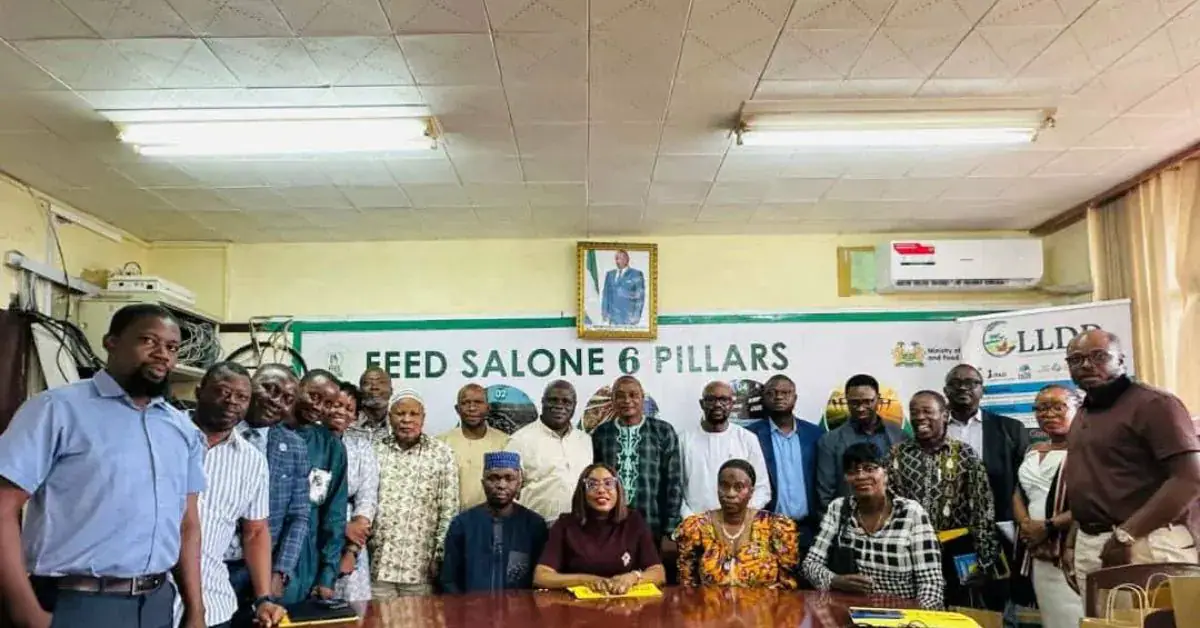
The National Steering Committee of Sierra Leone's Livestock and Livelihoods Development Project (LLDP) convened in Freetown to review the project's progress and discuss its proposed 2027 work plan and budget. The meeting, held at the Ministry of Agriculture and Food Security conference hall, brought together representatives from various government ministries and organizations. Deputy Minister I of Agriculture and Food Security, Dr. Isata Kamanda, expressed gratitude to committee members for their continued support towards the project's implementation.
Dr. Kamanda emphasized the importance of livestock development in driving agricultural productivity, improving household incomes, and enhancing nutrition, particularly in rural communities. She noted that the project aligns with the government's Feed Salone initiative, which aims to boost local production, reduce dependence on imported livestock products, and create employment opportunities for young people. The Deputy Minister urged committee members to contribute actively to discussions on the proposed 2027 work plan to ensure the project delivers meaningful results.
LLDP Project Coordinator, Mr. Tejan Koroma, provided an update on the project's implementation, highlighting its objectives to strengthen food security, improve nutrition, and expand livelihood opportunities for rural communities. The US$107.3 million project targets 62,250 households across the Eastern and Southern regions of Sierra Leone, with specific provisions for women, young people, and persons with disabilities. Koroma disclosed that 159 Farmer Field Schools have been established, supported by 159 facilitators and 22 master trainers who have undergone training.
The project has made significant progress, with over 4,000 people connected to the Farmer Field Schools and 48 clusters confirmed across 11 districts. Koroma revealed that the project is working towards securing 8,000 birds and small ruminants for beneficiaries. Additionally, 22 out of 36 animal health scouts and paravets have completed the first phase of training, while 16 candidates have been submitted to Njala University for screening.
Beyond livestock production, the LLDP prioritizes nutrition, gender inclusion, and youth employment as part of its broader development objectives. Koroma noted that key policy documents, including the Nutrition Strategy and the Gender and Youth Inclusion Strategy, have been approved to guide the project's interventions. Approximately 350 community champions have been selected, with 82 already trained to support community-level activities.
The project has also made progress in environmental and social safeguards, with six safeguard instruments reviewed and 82 facilitators trained on environmental and climate-related issues. Grievance committees are now operational in first-phase project communities. The National Steering Committee's review is expected to provide further direction for the project's implementation, particularly as members consider priorities and resource allocations for the 2027 work plan and budget.
The LLDP's progress review and planning for 2027 are crucial in ensuring the project's continued success in strengthening food security, improving nutrition, and expanding livelihood opportunities for rural communities in Sierra Leone. The project's alignment with the government's Feed Salone initiative and its focus on nutrition, gender inclusion, and youth employment are expected to have a positive impact on the country's agricultural sector and rural development.
Key points
- The Livestock and Livelihoods Development Project has established 159 Farmer Field Schools, supporting 4,000 people and targeting 62,250 households across Sierra Leone's Eastern and Southern regions.
Reporting sources
- LLDP Reviews Project Progress, Sets Sights on 2027 Work Plan and Budget · sierraloaded.sl