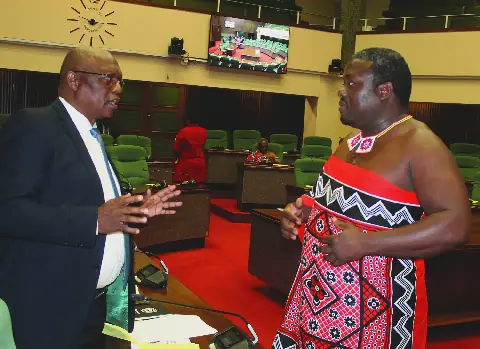
President Julius Maada Bio of Sierra Leone has referred key constitutional questions to the Supreme Court regarding the contentious Constitutional Amendment Bill. The court is set to hear the matter on October 7, 2026. This move comes after the President withheld approval of the bill, which has sparked controversy over the parliamentary process used to pass it. The decision has raised concerns among Sierra Leoneans about the potential impact on the country's constitution.
The controversy surrounding the bill began on August 10, 2026, when Parliament managed the bill. According to Section 108(2)(b) of the 1991 Constitution, any amendment must receive support from at least two-thirds of Members of Parliament during the second and third readings. However, the Speaker ruled that a simple majority was sufficient, prompting opposition MPs to walk out. The bill was subsequently declared passed, and the Speaker submitted a related question to the Supreme Court for guidance.
President Bio's recent actions have garnered attention and raised concerns about the potential influence of political agendas on the Supreme Court's decision. If the Executive truly believes in the constitutional process, the Supreme Court must operate without pressure from political expectations or agendas. There should be no efforts to influence the Court's decision or create a political environment that favors a specific outcome. Public sentiment is split, with some fearing the Supreme Court may validate a decision made elsewhere.
The Supreme Court has the authority to interpret the Constitution, particularly when the dispute involves altering its framework. This presents a crucial opportunity for the Court to uphold the Constitution, free from the influence of political factions or interests. The proceedings on October 7 must not be overshadowed by the ongoing political fray – this is about the Constitution, not individual parties. The fundamental question is whether constitutional principles can be manipulated for political expediency.
The true measure of a Constitution lies in its application during challenging times, when those in power might benefit from skewing its interpretation. For the Supreme Court to maintain its legitimacy, its proceedings must be transparent and rooted in legal principles. If the Court determines the parliamentary process was constitutional, that conclusion must be well articulated. Conversely, if it finds procedural shortcomings, it must state so unequivocally without fear of reprisal.
Sierra Leone can't afford an outcome that leaves significant portions of the population believing the Constitution has been tailored to fit a predetermined political choice. The President's call for judicial interpretation could lead to a crucial constitutional milestone or further fuel controversy, depending on the forthcoming actions. The real risk lies not in the Court making an unpopular ruling, but in eroding the public's trust in its authority due to perceptions of political pre-determination.
Therefore, it is crucial for all involved – from the President and Parliament to civil society – to refrain from interfering in the judicial process. Ultimately, the judges must be allowed to perform their duties independently, ensuring that the Constitution is respected. If political convenience is allowed to overrule constitutional integrity, no future government can be assured of those protections when needed most.
Key points
- President Julius Maada Bio refers constitutional questions to Supreme Court amid controversy over amendment bill
- Supreme Court to hear matter on October 7, 2026
- Controversy surrounds parliamentary process used to pass Constitutional Amendment Bill