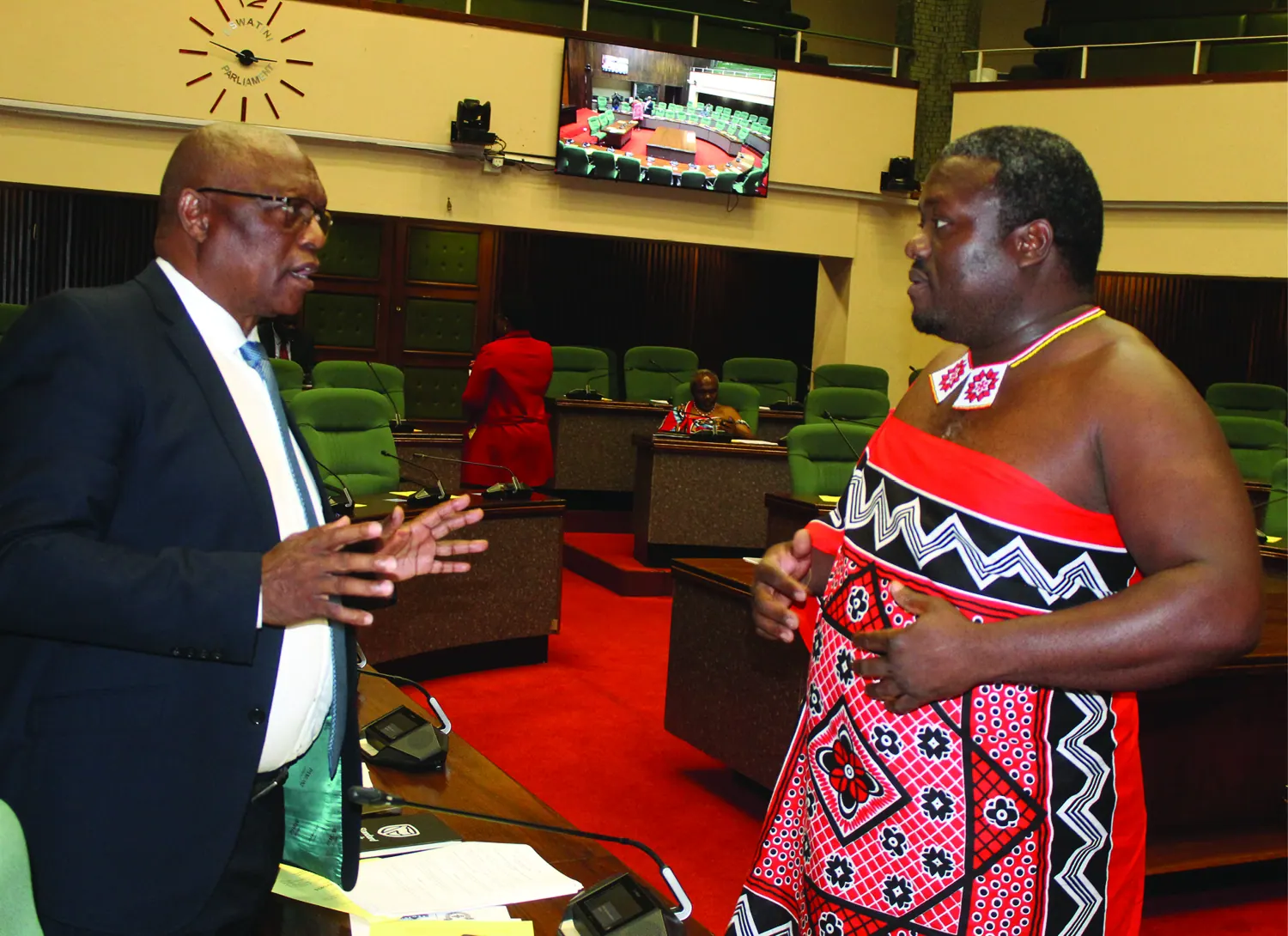
A parliamentary select committee in Eswatini has found that staff members from the Eswatini Broadcasting and Information Services (EBIS) and Eswatini TV received threats after making submissions about victimisation, travel bias, and workplace abuses. The committee's report revealed that 52 staff members who appeared before the committee were threatened and monitored. The appearances were initially held in Parliament, then moved to the archives and finally to Happy Valley to protect the members from victimisation.
The committee's findings were presented by Member of Parliament Sandile Nxumalo, who stated that staff members who raised concerns about irregularities were excluded from activities and monitored. He added that the media was considered an essential service, but not taken seriously in Eswatini. The committee also discovered ambiguity regarding essential services, with the stations not being considered essential while their jobs placed them under essential services.
Nxumalo stated that reporters in the newsroom were supposed to get international trips, but broadcasters were being sidelined even when promoted from the newsroom. He added that there were concerns of favouritism in the allocation of foreign trips and professional training. The committee also uncovered that specific reporters covered assignments from certain countries, raising questions about fairness.
The committee's report recommended that the ministry review labour practices and institute an enquiry within three months to ascertain the issue of victimisation at the stations. The report also suggested that a framework be developed for allocating international assignments within 21 days. Additionally, the committee recommended that the stations be merged, with the minister being given six months to work on this.
Seconding the motion, Matsanjeni South MP Sibongile Mamba stated that there was a lot of public interest in the investigation, with some workers claiming they were well taken care of while others reported being abused. Mamba also mentioned that the director of EBIS stated that the mover of the motion, Nathi 'Mdockies' Hlophe, was enjoying international trips while working at the station.
Other MPs, including Welcome Dlamini and Sifiso Magagula, expressed concerns about the report's recommendations and the ministry's ability to address labour issues. Dlamini stated that the issue of international travel was a problem everywhere and that the ministry needed time to review and consult on existing policies. Magagula defended the ministry of labour, stating that it was not useless, but rather faced many problems.
The committee's findings have raised concerns about the treatment of workers in government parastatals and the need for a code of ethics for those holding public office. The report's recommendations aim to address the issues of victimisation, favouritism, and unfair labour practices at EBIS and Eswatini TV.
Key points
- Eswatini parliamentary committee uncovers threats and abuses at EBIS and Eswatini TV.
- Staff members faced victimisation and intimidation after testifying about workplace abuses and travel bias.
- Committee recommends review of labour practices and merger of the stations.