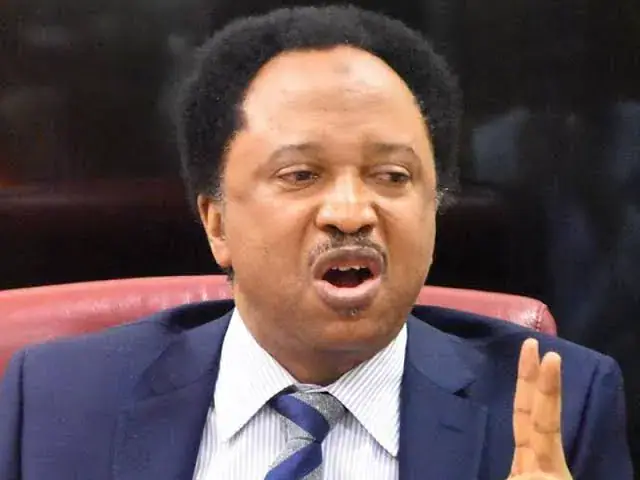
Former Senator representing Kaduna Central, Shehu Sani, has urged Osun State Governor, Ademola Adeleke, to prioritise good governance, accountability, and institutional reforms in his second term. Sani gave the advice while delivering a keynote lecture at the inauguration programme for Adeleke's second term at the Aurora Event Centre, Osogbo. He challenged the governor to use his renewed mandate to deepen democratic institutions, drive economic transformation, and deliver measurable improvements in the lives of residents.
Sani described Adeleke's re-election as a social contract that came with greater expectations and responsibilities. He urged the governor to consolidate the achievements of his first term, address identified shortcomings, and build institutions that would outlive his administration. According to Sani, elections determine who occupies public office, but the strength of institutions and quality of governance determine whether political power translates into meaningful development.
The former lawmaker acknowledged the Adeleke administration's reported achievements in road infrastructure, education, healthcare, social welfare, and public finance. These include the provision of free surgical interventions to over 70,000 people through the Imole Free Surgical Scheme, the rehabilitation of 120 schools, and efforts to develop Osun State University and the University of Ilesa. He also cited a growth in internally generated revenue from N27.72 billion in 2023 to N54.7 billion in 2024.
However, Sani stressed the need for the government to demonstrate that such interventions were delivering sustainable benefits to the people. He identified the political and institutional challenges confronting Adeleke, particularly the difficulties of governing a state under a political platform different from that controlling the Federal Government. The prolonged local government crisis in Osun was another major challenge, disrupting grassroots administration and affecting council workers.
Sani urged political stakeholders to put public interest above partisan considerations, respect court judgments, and resolve outstanding disputes through constitutional and lawful means. He cautioned that political hostility should not become a governing philosophy, advising Adeleke to address disagreements through dialogue, institutional strengthening, transparent administration, and demonstrable results. On institutional independence, Sani maintained that a governor was the chief executive of a state, not its proprietor.
The former senator advocated for an independent judiciary, a professional civil service, and accountability institutions free from intimidation and partisan interference. He proposed that local governments publish their monthly receipts, allocations, budgets, contracts, and expenditures, while council chairmen should hold regular town hall meetings and subject their activities to independent audits. Sani also urged Adeleke to reduce the state's dependence on federal allocations through strategic investments in agriculture, tourism, mining, and other sectors.
Sani called for improved access roads, sanitation, visitor safety, hospitality facilities, and digital promotion to enable local businesses and host communities to benefit from tourism. He also advocated for increased investment in education, vocational training, and healthcare, stressing the need to equip young people with practical skills that could improve their access to employment. On healthcare, Sani urged the administration to build on its free surgical interventions and primary healthcare improvements by establishing a dependable system supported by adequate personnel and essential medicines.
Key points
- Shehu Sani urges Ademola Adeleke to prioritise good governance and accountability in his second term.
- Sani advocates for institutional reforms, including an independent judiciary and civil service.
- The former senator proposes measures to improve local government autonomy and transparency.