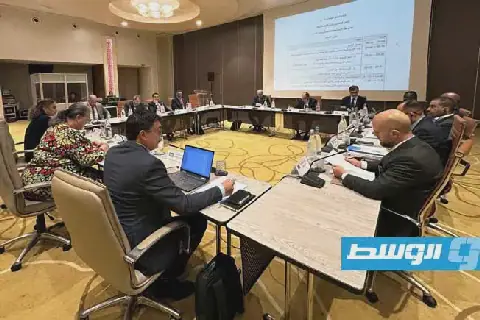
Seven OPEC+ countries, including Saudi Arabia, Russia, Iraq, Kuwait, Kazakhstan, Algeria, and Oman, agreed to maintain their November oil-production targets at September levels. This decision was made during a virtual meeting to review global market conditions, according to an official OPEC statement. The countries will meet again on 1 November to reassess the situation. The current targets are a continuation of the pause already in place for October.
The seven producers had previously retained September targets for October at their meeting on 6 September. This latest announcement carries those same targets into November, demonstrating the group's ongoing efforts to stabilize the market through monthly reviews. However, the decision only concerns the production levels required under their agreement and does not establish how much oil will actually reach the market next month.
A separate meeting of the Joint Ministerial Monitoring Committee highlighted significant risks to energy supplies. The committee noted that attacks on infrastructure and disruptions to international shipping routes pose substantial threats. Restoring damaged energy assets to full capacity is not only expensive but also time-consuming, affecting available supply. These factors contribute to market volatility and undermine efforts to maintain stable markets.
The Joint Ministerial Monitoring Committee reviewed July and August production data during their meeting. They emphasized the importance of continued monitoring of compliance with agreed production adjustments. The committee retains the ability to convene further meetings when needed, with their next scheduled meeting on 29 November. This flexibility allows them to respond promptly to any changes in the market.
For South African motorists and businesses, the OPEC+ decision is one development in the wider international fuel market. The Department of Mineral and Petroleum Resources explains that local fuel prices are influenced by international refined-product prices, import-related costs converted into rand, taxes, levies, margins, and transport charges. Therefore, Sunday's OPEC+ decision does not by itself determine South Africa's next pump-price adjustment.
The OPEC+ decision reflects the complex dynamics of the global oil market. The group's efforts to stabilize prices and maintain supply are ongoing, with a focus on monitoring compliance and addressing potential risks. As the global economy continues to recover, the oil market is likely to face ongoing challenges, making the role of OPEC+ crucial in maintaining market stability.
The impact of the OPEC+ decision on South Africa's fuel prices will be closely watched. As the country continues to navigate the complexities of the global oil market, the Department of Mineral and Petroleum Resources will play a key role in determining the local fuel price adjustments. The OPEC+ decision is just one factor that will be considered in this process.
Key points
- OPEC+ countries are maintaining their November oil-production targets at September levels.
- The Joint Ministerial Monitoring Committee highlighted risks to energy supplies from attacks on infrastructure and disruptions to international shipping routes.
- The OPEC+ decision does not by itself determine South Africa's next pump-price adjustment.