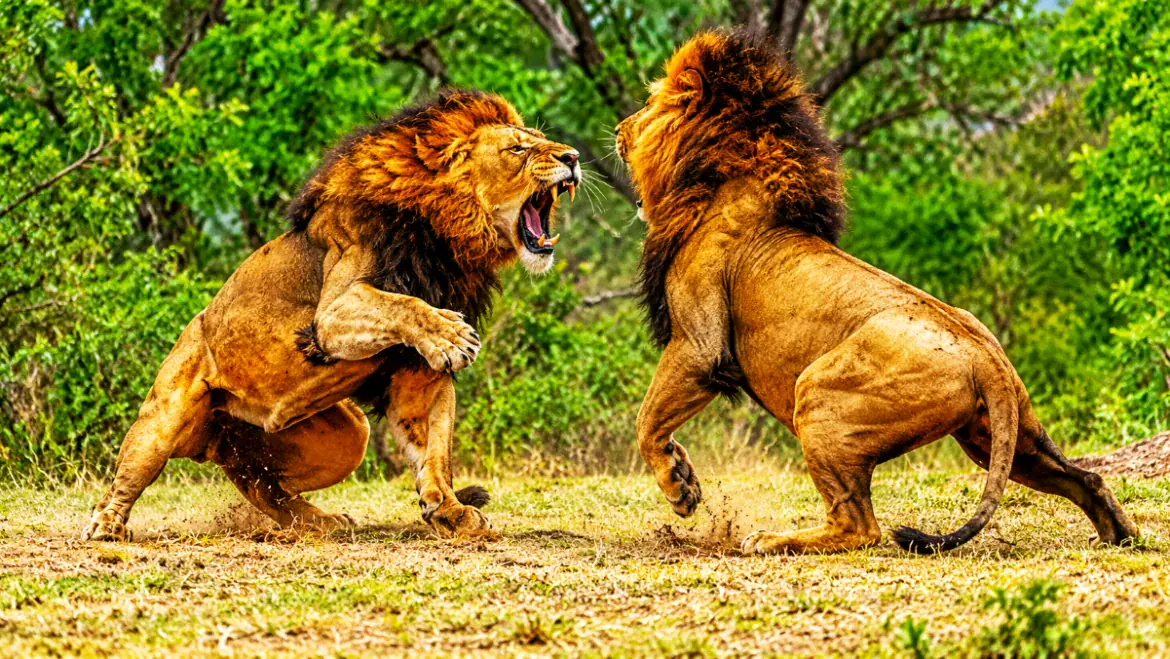
A recent study by the Korongo Peoples Lion Initiative (KopeLion) has revealed that prides of lions in the Ngorongoro Conservation Area are fiercely defending their territory against intruding lions from the adjacent Serengeti National Park. The territorial battle between the apex hunters has been ongoing, with clashes occurring on the crater rim. According to Dr. Ingela Jansson, Co-Founder and Principal Investigator for KopeLion, there have been increasing movements of lions between Ngorongoro and Serengeti.
The study, which has been conducted over 15 years, shows that the residential cats of the crater have always fought off alien Serengeti lions seeking new abodes in the caldera. Dr. Jansson added that the conflicts usually occur around the crater rim, where the cats and pastoralists come across each other in the mixed conservation area. The organization has been working with the Tanzania Wildlife Research Institute to collar lions and educate people on reducing livestock numbers to minimize conflicts.
Tanzania has launched a five-year strategic plan to address human-wildlife conflict, particularly between lions and pastoralists. The plan, unveiled in Arusha, aims to strengthen human-lion coexistence in the Ngorongoro Conservation Areas and the wider Serengeti ecosystem. The Executive Director of KopeLion, Ololotu Munka, explained that the organization has been specializing in lion protection across Ngorongoro and Serengeti, with an emphasis on ensuring humans stop hunting down the cats.
Munka added that lion killings are usually driven by tradition and culture, including marking Moran age set ceremonies, as well as retaliations when the cats attack livestock. The organization has been working with traditional elders, especially Maasai leaders, to raise awareness on the importance of protecting lions and educating the youth to take pride in protecting instead of killing the wild cats. Data has revealed that human-lion conflicts usually occur during drought periods when wild ungulates become scarce.
According to KopeLion, they want to maintain Ngorongoro's status as a World Heritage Site and ensure that lions remain an iconic species of wildlife for Tanzania and East African tourism. The organization has been working with village game scouts, such as Lazaro Lesere and Silo Gisung'da, who track lions through GPS collars and warn pastoralists to clear the path for them to pass without harming livestock. This has helped avert conflicts between the two parties.
Tanzania has a total of 17,200 lions, accounting for around 68.5 percent of the total count of lions existing in the world today, according to recent data from the Tanzania Wildlife Research Institute. The Northern Zone circuit has the biggest number of lions, totaling 5,844, equivalent to 33.7 percent. The Director General of Tanzania Wildlife Research Institute, Dr. Eblate Ernest Mjingo, revealed that the lion population is significant in the country.
The conservation efforts by KopeLion and the Tanzania Wildlife Research Institute have been useful in averting human-wildlife conflict in the conservation area. Flora Assey, a conservation officer, said that KopeLion works with three different departments at the Ngorongoro Conservation Area Authority. With a significant lion population in Tanzania, conservation efforts are crucial to maintaining the country's wildlife heritage and ensuring the coexistence of humans and lions.
Key points
- The territorial battle between Serengeti lions and Ngorongoro wild cats occurs on the crater rim.
- Human-lion conflicts usually occur during drought periods when wild ungulates become scarce.
- Tanzania has a total of 17,200 lions, accounting for around 68.5 percent of the world's lion population.
Reporting sources
- Serengeti Lions caught in epic battle against the wild cats of Ngorongoro · The Tanzania Times – News from Tanzania, Africa, World, Breaking News, Weather, Environment and Climate Change