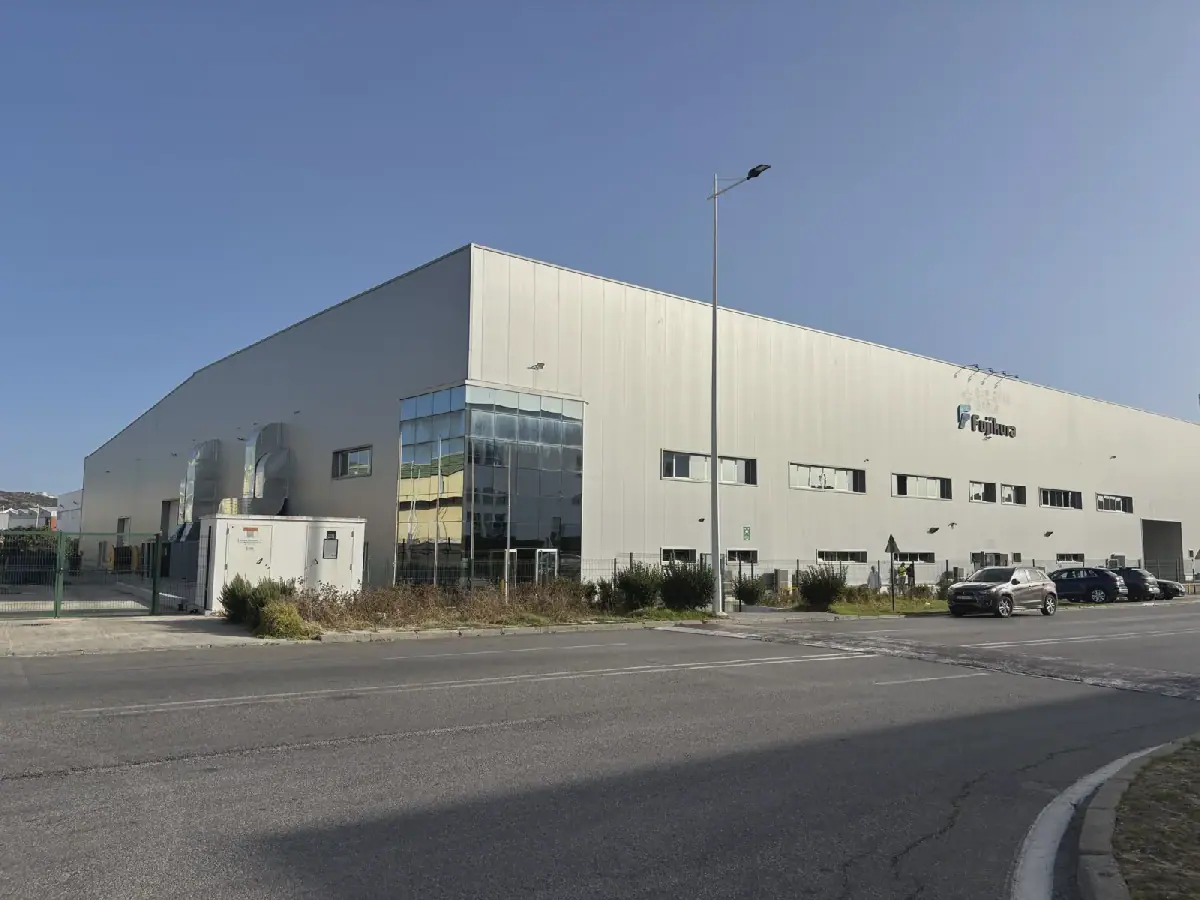
Japanese manufacturer Fujikura has begun full-scale production of fiber optic cables at its Fujikura Automotive Morocco Tangier (FAMT) facility. The company announced on November 9 that it had established a mass-production system at its Tangier facility, with operations starting in August 2026. This development marks an expansion of the plant's activities beyond the automotive industry.
The FAMT facility, previously dedicated to manufacturing automotive products, is now producing Fujikura's Wrapping Tube Cable (WTC), a thin-diameter, high-density fiber optic cable designed for telecommunications networks and data centers. The cables incorporate Fujikura's proprietary Spider Web Ribbon (SWR) technology, which connects individual optical fibers at intervals, making them more flexible and allowing more fibers to fit into a smaller space.
According to Fujikura, the WTC design is thinner than conventional fiber optic cables, which allows it to fit into existing underground ducts and reduces the time required for installation. This development comes as demand for fiber optic infrastructure increases worldwide, driven by the rapid adoption of generative artificial intelligence and the expansion of cloud computing services.
Fujikura selected Morocco as a strategic production base to strengthen supplies to Europe, the Middle East, and Africa. Manufacturing in Tangier is expected to shorten delivery times to these markets and help the company respond more quickly to growing demand. The expansion is also expected to support job creation and the development of local industries in Morocco.
The new production line will supply European, Middle Eastern, and African markets, where demand for fiber optic cables is growing. Data centers and telecommunications networks increasingly require high-capacity connections to transfer large volumes of information. Fujikura's move into the fiber optic cable market adds to Morocco's growing industry, with another Moroccan company, FBR Cables, inaugurating a new production facility in Berrechid in February 2026.
FBR Cables' new production facility in Berrechid followed an investment of MAD 200 million and is expected to produce 70,000 kilometers of fiber optic cables annually, creating 165 direct jobs. This development highlights Morocco's growing importance as a hub for fiber optic cable manufacturing. Fujikura's expansion into the fiber optic cable market is expected to contribute to this growth.
The growth of the fiber optic cable industry in Morocco is driven by increasing demand for high-capacity connections. With Fujikura's new production line and FBR Cables' recent investment, Morocco is well-positioned to meet this demand and become a major player in the global fiber optic cable market.
Key points
- Fujikura begins mass production of fiber optic cables at its Tangier facility to supply European, Middle Eastern, and African markets.