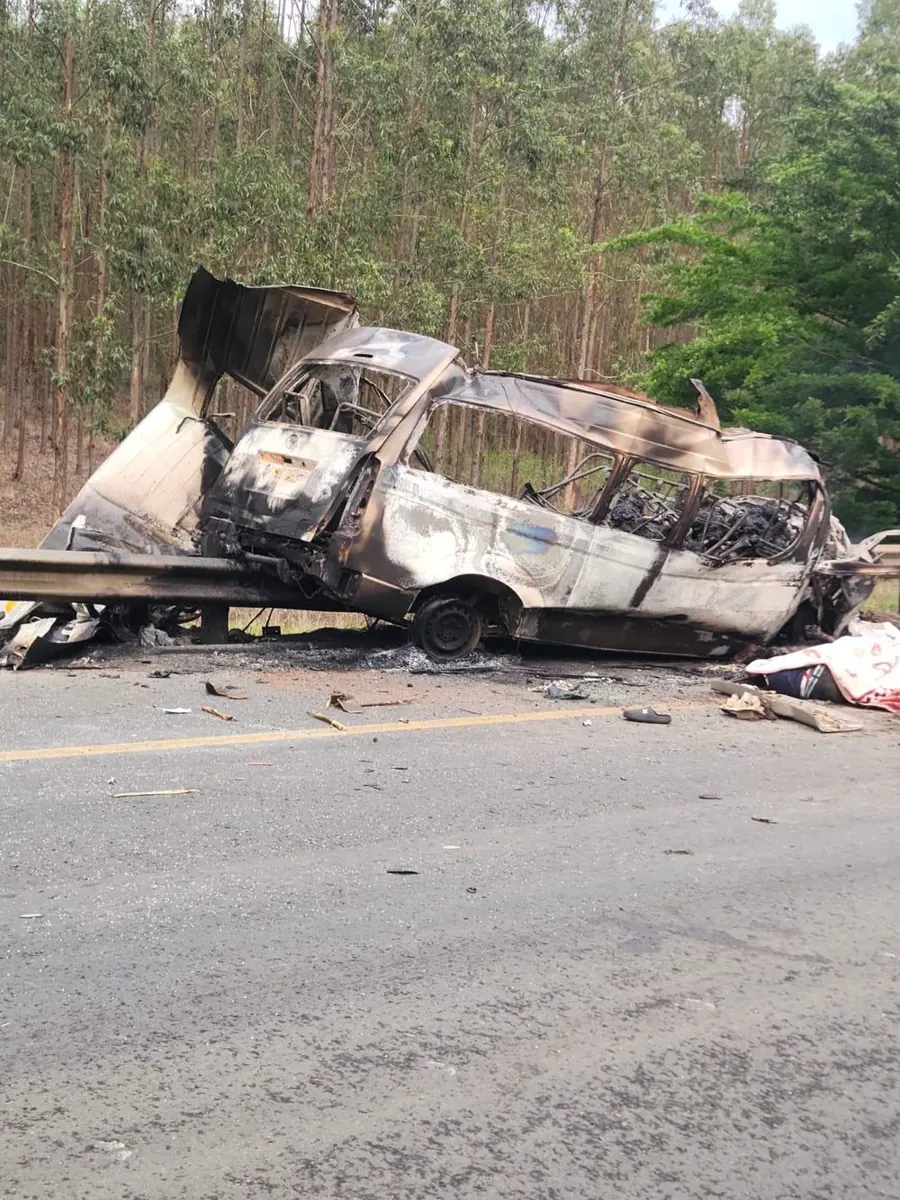
A series of devastating crashes across South Africa in September has resulted in at least 40 fatalities, prompting concerns about road safety and renewed calls for more stringent enforcement. One of the most tragic incidents occurred on September 27 in KwaZulu-Natal, where 11 people were killed and eight others injured in a head-on collision between a minibus taxi and a truck on the N2 near Mtubatuba.
The September crashes are not isolated incidents, but rather part of a larger trend that has seen significant numbers of fatalities on South Africa's roads. On September 14, 21 people died when two minibus taxis and a station wagon crashed on the N1 between Leeu-Gamka and Prince Albert in the Western Cape. Another crash on September 13 claimed eight lives when two sedans collided head-on on the N17 between Ermelo and Davel in Mpumalanga.
These recent crashes have occurred just days after the Road Safety Colloquium, where Transport Minister Barbara Creecy highlighted significant milestones achieved by the department and provinces over the past two years. According to the department, over 6% fewer annual crashes and fatalities were recorded in 2025 compared to 2024. From January 1 to August 23, 2026, there were 6,457 road deaths, representing a 9% overall reduction compared to 2025.
Despite the reported reduction in road deaths, road safety advocates argue that more needs to be done to address the issue. Advocate Johan Jonck from Arrive Alive emphasized that road deaths do not wait for the festive season or Easter, but rather occur 24/7. He stressed that road safety starts with rooting out corruption in the licensing process and vehicleworthiness testing, and that a 24/7 approach to enforcement is necessary.
Jonck also highlighted the need for education and awareness among motorists, particularly when driving in wet conditions. He noted that rain frequently causes issues because South African motorists fail to adapt their driving to wet conditions, and that defensive driving practices are essential to prevent accidents. Drive More Safely founder Alida Venter echoed these sentiments, citing the high number of fatalities and crashes during last year's festive season when it was raining.
Venter emphasized that people often take chances and fail to obey road rules when driving in wet conditions, and that more visibility on the road is needed. She also called for an increase in traffic officers, stating that there are currently not enough to effectively enforce road safety. Venter stressed that education has a significant role to play in road safety and that collaboration between the department and stakeholders is essential.
The recent crashes have reignited calls for stronger road-safety enforcement, cleaner licensing systems, and more cautious driving practices. As the festive season approaches, road safety advocates are urging the Department of Transport to take a proactive approach to addressing the issue. With pedestrians accounting for 48% of all fatalities and over a third of fatalities occurring in Gauteng and KwaZulu-Natal, it is clear that more needs to be done to make South Africa's roads safer.
Key points
- At least 40 people have died in major crashes in South Africa's September.
- Road safety advocates are calling for stronger enforcement, cleaner licensing systems, and more education to prevent accidents.
- Pedestrians account for 48% of all road fatalities in South Africa.